Dow, Nasdaq Slip as Oil Spikes on Gulf Tensions
Oil jumped nearly 7% to $89.61 as Gulf tensions rattled stocks and snapped Nasdaq’s 13-day winning streak.
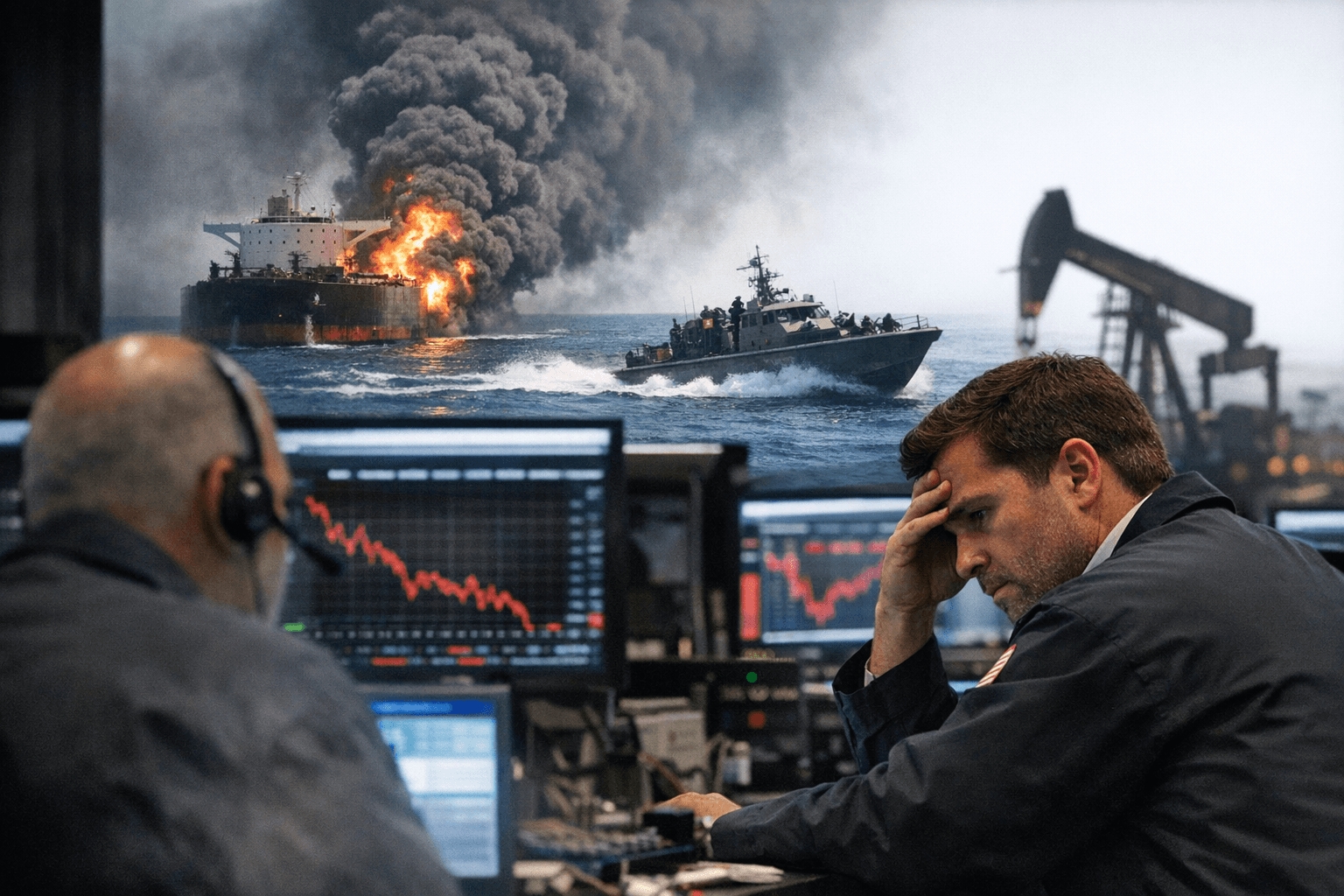
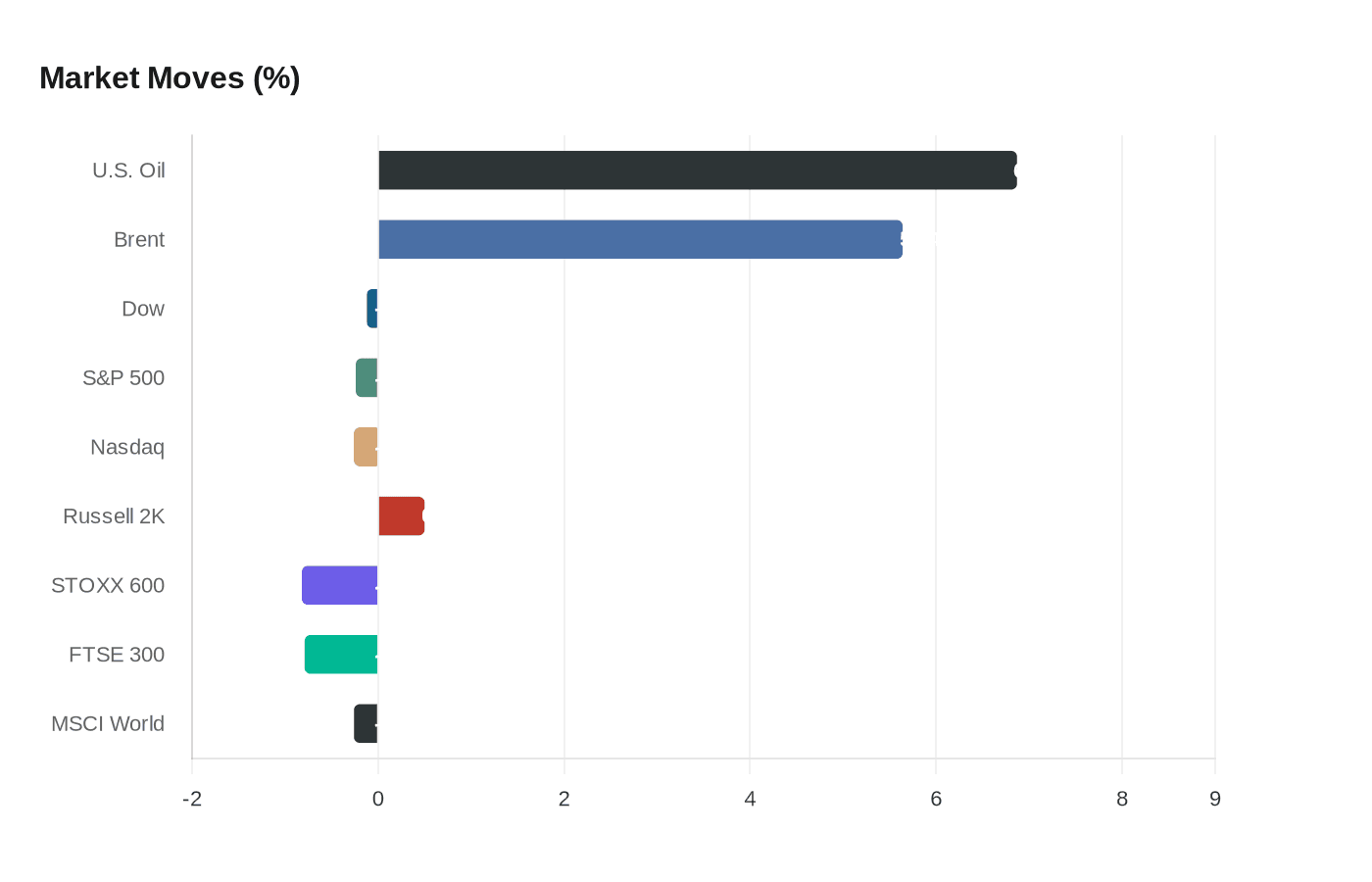
Wall Street lost altitude as crude surged and traders recalibrated the risk from a widening Gulf standoff. U.S. oil jumped 6.87% to $89.61 a barrel and Brent rose 5.64% to $95.48, while the Dow Jones Industrial Average fell 60.54 points to 49,386.89, the S&P 500 dropped 19.73 points to 7,106.33 and the Nasdaq Composite slid 87.30 points to 24,380.45.
The selloff came as the Nasdaq appeared set to snap a 13-day winning streak, its longest since January 1992, and the broader market eased back from record territory. By the close, the S&P 500 had slipped 0.24% to 7,109.14, the Nasdaq was down 0.26% at 24,404.39 and the Dow was nearly flat, down 4.87 points to 49,442.56. The Russell 2000 moved in the opposite direction, rising 0.5% to an intraday record, a reminder that the pressure was concentrated in the biggest indexes rather than the entire market.
The trigger was a fresh escalation around the Strait of Hormuz, the narrow waterway that carries about one-fifth of global oil and natural gas supply. President Donald Trump said the U.S. had seized an Iranian-flagged cargo ship in the Gulf of Oman, and U.S. Marines were also reported to have seized an Iran-flagged container ship after two Indian ships came under fire in the Strait of Hormuz. Iran had not decided whether to join another round of peace talks, and the fragile U.S.-Iran ceasefire appeared to hang in the balance.
That is the cause-and-effect chain now driving markets: shipping risk in the Gulf pushes crude higher, higher crude threatens gasoline and freight costs, and those costs can feed into inflation expectations just as investors have been hoping for easier monetary policy. Oil trading near $90 a barrel is enough to make central bankers and equity investors alike more cautious, especially if traffic through the Strait of Hormuz remains largely halted and supply disruptions persist.
The tension did not stop at U.S. markets. European shares also fell, with the STOXX 600 down 0.82% and the FTSEurofirst 300 off 0.79%, while the MSCI all-country world index slipped 0.26%. The move showed how quickly sentiment can reverse when geopolitics starts to threaten a key energy corridor, even after a strong run that had carried U.S. stocks to repeated highs.
This article was produced by Prism’s automated news system from verified source data, official records, and press releases, then run through automated quality and moderation checks before publishing. The system is built and supervised by the people who set the standards it runs under. Read our full AI policy.
Did this article answer your question?