Dow Rallies 400 Points as Trump Signals Willingness to End Iran War
The Dow surged 514 points on March 31 after a report Trump would end the Iran war without reopening the Strait of Hormuz, even as U.S. gas prices crossed $4 a gallon.
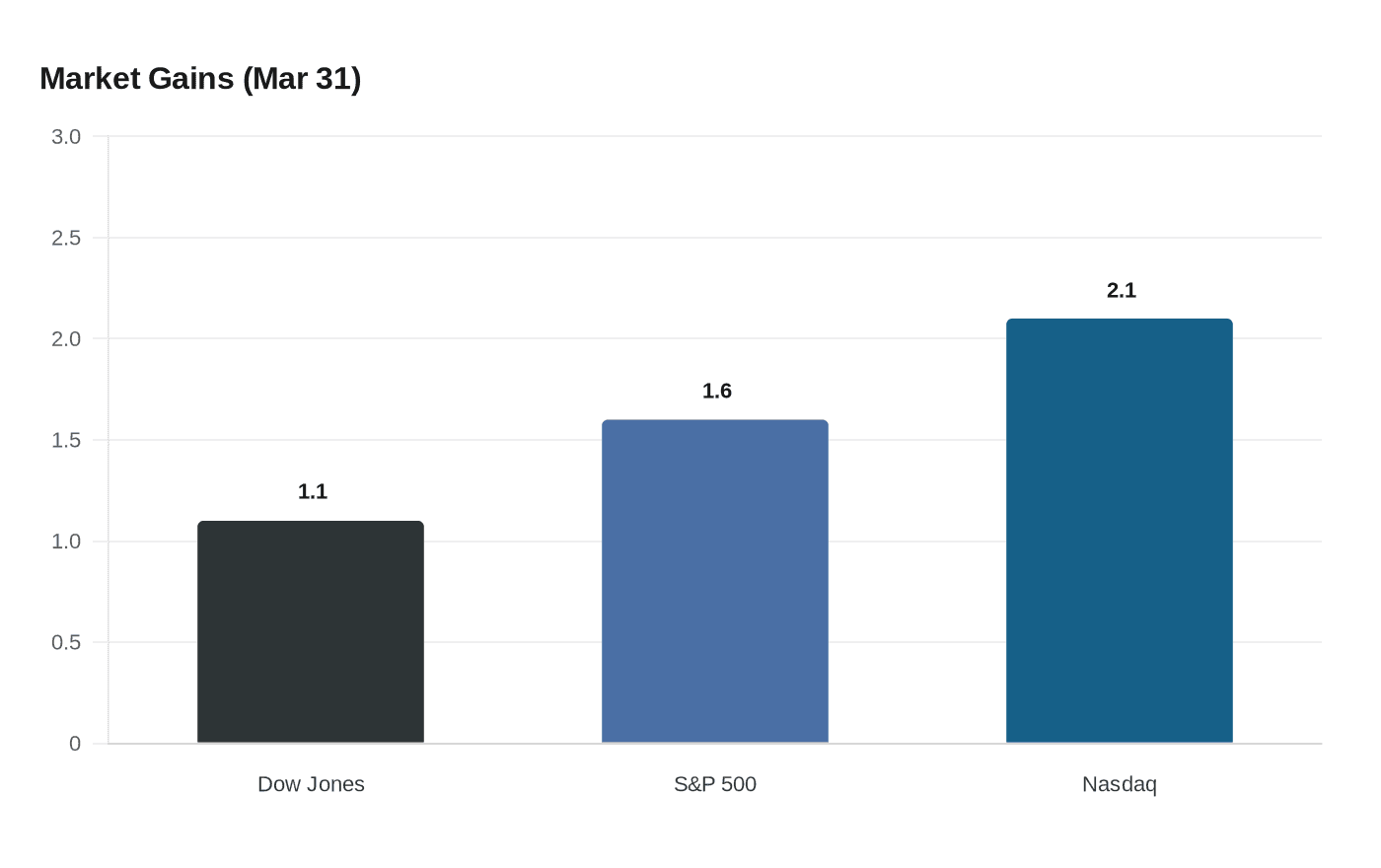
The Dow Jones Industrial Average surged 514 points, or 1.1%, on the final day of March after a report that President Donald Trump was willing to end U.S. military operations in Iran without first reopening the Strait of Hormuz, offering Wall Street its clearest peace signal yet even as the shooting war continued on the same day.
The S&P 500 gained 1.6% and the Nasdaq Composite advanced 2.1%, clawing back from what had become the worst monthly performance for U.S. equities since 2022. The moves were a textbook example of how quickly markets reprice war risk when diplomatic signals shift: a single unverified report moved trillions in market value within hours, even as a Kuwaiti oil tanker burned off Dubai.
The rally's catalyst was a Wall Street Journal report that Trump had told aides he was prepared to walk away from the conflict without resolving the Hormuz crisis, leaving a complex reopening operation for a later date. The Strait of Hormuz, a roughly 100-mile-long waterway bordering Iran, handles approximately 20% of the world's oil supply. Iran has effectively shut it down since the war began, sending energy prices into historic territory.
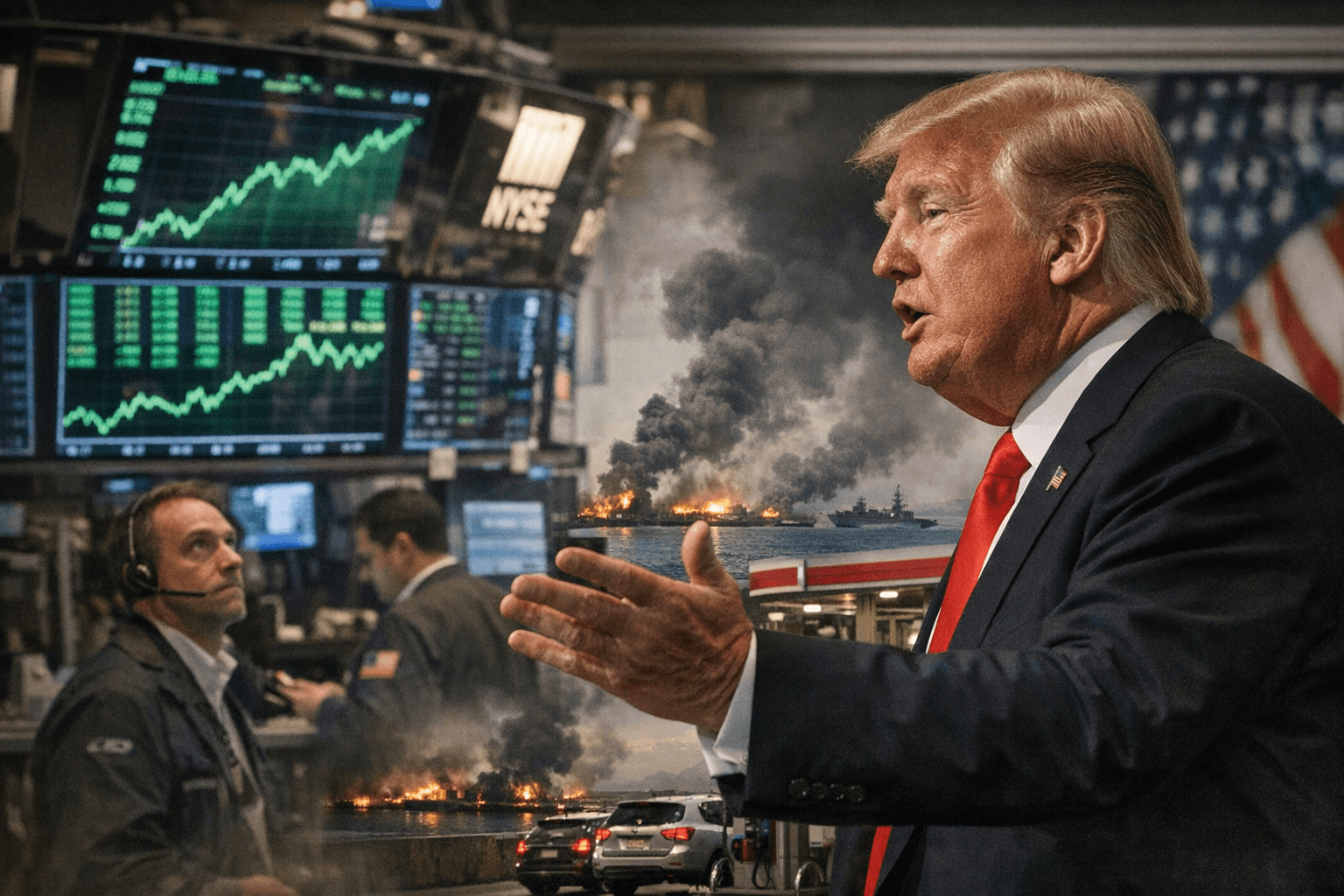
The same afternoon, a Kuwait-flagged crude carrier, the Al-Salmi, was struck by an Iranian drone off the coast of Dubai, causing material damage to the hull and raising the risk of an oil spill. U.S. strikes also hit a city home to one of Iran's main nuclear sites. Oil prices wavered, suspended between the peace signal and the fresh evidence of an ongoing war, which is precisely the dynamic that makes these relief rallies so fragile.
For the tens of millions of Americans holding retirement accounts tied to broad equity indices, the day offered a moment of recovery after weeks of losses. But the household pain from the war remained raw. Average U.S. gasoline prices crossed $4 a gallon for the first time since 2022, reaching $4.01 according to AAA data, as the Hormuz shutdown's energy shock registered at every pump in the country. The 10-year Treasury yield hovered near 4.41%, holding elevated as investors remained skeptical that a single diplomatic signal would dissolve the war-driven inflation baked into the economy.
Trump's public posture stayed combative even as the back-channel signals emerged. He told European allies to "go get your own oil" and wrote that the United States "won't be there to help you anymore," while urging nations dependent on Hormuz to "build up some delayed courage, go to the Strait, and just TAKE IT."
The peace prospect itself has a complicated history. Trump delivered a 15-point plan to Tehran through Pakistani intermediaries, declared the U.S. and Iran were "in negotiations right now," and said earlier in March the war would end "very soon." Iran has publicly denied direct talks at each turn. Every shift in that narrative has moved markets; every subsequent counterpunch from Tehran has reversed the move.
The question April now presents is whether Trump's reported willingness to declare an end becomes an actual end, or whether the next drone strike resets the clock on a rally that, for all its size, remains entirely conditional on diplomacy holding.
Know something we missed? Have a correction or additional information?
Submit a Tip

