Drexel study: 3D-printed LM-PAEK porous topologies outperform PEEK in knee implants
LM‑PAEK samples recorded higher ultimate loads than PEEK and every tested porous sleeve design sustained about 5.5 kN in 45° shear, a Drexel-led study reports.
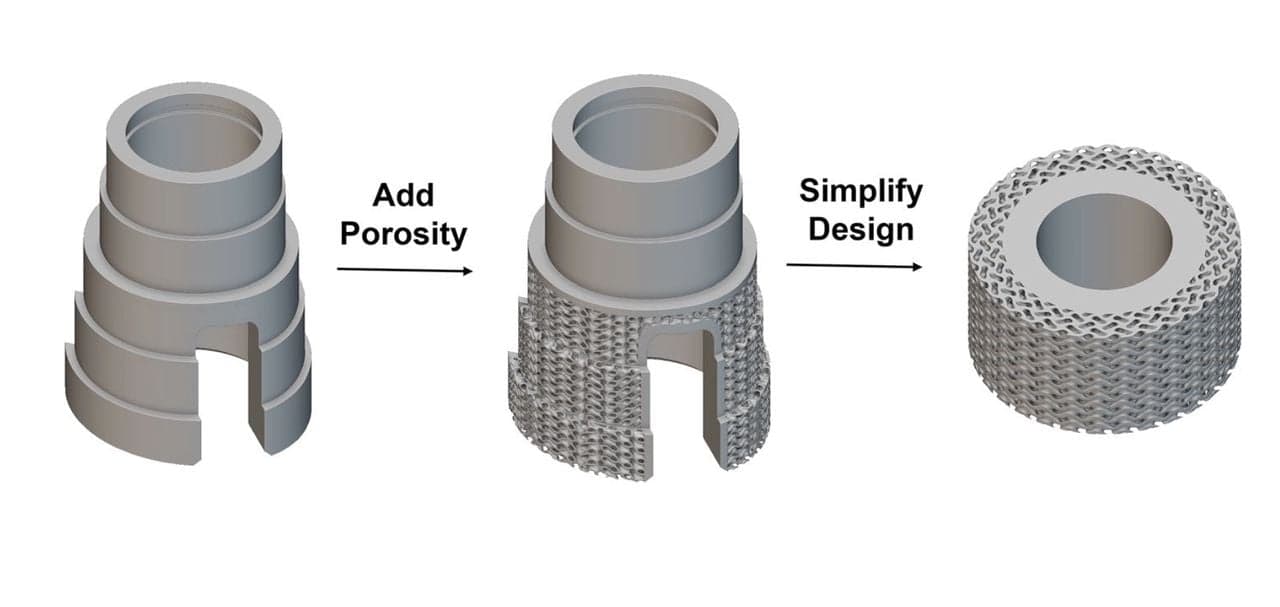
LM‑PAEK samples produced the highest ultimate loads in 45° shear-compression and the study found that all printed porous sleeve and cone designs met a theoretical worst-case benchmark of approximately 5.5 kN in 45° shear. The Drexel-led team tested additively manufactured porous metaphyseal sleeve/cone topologies intended for proximal knee revision and reported that Low-melt (LM) PAEK sample means exceeded all polyetheretherketone (PEEK) means.
The team used 45° shear-compression mechanical testing and micro-CT imaging to evaluate print porosity quality for each experimental group. Micro-CT was explicitly used to evaluate the quality of the print porosity for each experimental group, and the paper frames the work as a proof-of-concept for 3D printing highly porous non-metal metaphyseal sleeves/cones.
Quantified porosity errors and parameter sensitivities were central to the results. The mean errors for percent porosity were measured at -8.46% for the PEEK group and -12.25% for the LM‑PAEK group, and the paper reports that those error differences were not statistically significant (p > 0.05). For LM‑PAEK, geometry and percent porosity were identified as the most significant parameters affecting mechanical response; for PEEK, nozzle temperature, chamber temperature, and layer height were the most significant (all significance calls reported at p < 0.05).
The study explicitly states that LM‑PAEK sample means exceeded PEEK means and that the highest ultimate load occurred in 45° shear-compression, underlining a material-led performance advantage in the tested configurations. All samples passing the theoretical ~5.5 kN ultimate load in 45° shear provides a concrete mechanical benchmark for engineers designing metaphyseal sleeves and cones for demanding knee revision applications.
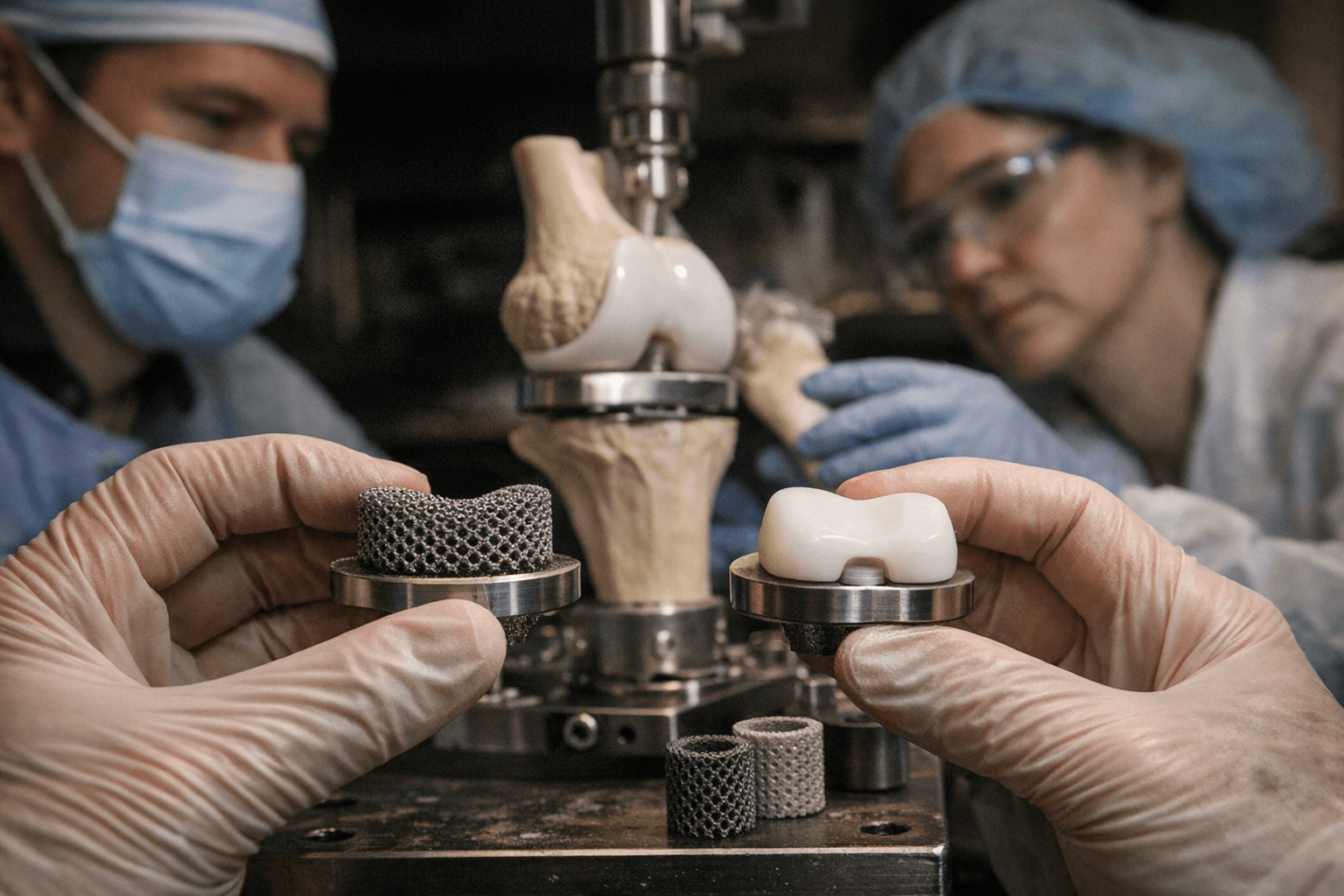
For materials context, Victrex has described LMPAEKs as polymers engineered to lower melting temperature without lowering glass transition temperature. Victrex text notes that these polymers typically have a lower Tm:Tg ratio of 1.35, which it says reduces Tm and processing temperature by about 40°C while maintaining a Tg at least as good as PEEK’s, and identifies products such as VICTREX AE™ 250 UD tape and VICTREX AM™ 200 filament. The Drexel paper uses the term Low-melt (LM) PAEK in its experimental descriptions; the supplied excerpt does not specify material supplier or exact formulation.
The study’s conflict of interest disclosure names SINTX Technologies and Stryker and notes that Drew Mike and Corey Perine are paid employees of Maxx Orthopedics, Inc., adding that results and findings presented in the study were obtained independently and without undue influence. The paper’s keywords include 3D printing, additive manufacturing, metaphyseal cone, metaphyseal sleeve, PAEK, and PEEK, tying the work directly to orthopedic implant design and polymer additive manufacturing.
By reporting both mechanical benchmarks and manufacture-sensitive parameters, the paper presents a focused proof-of-concept that LM‑PAEK porous topologies can outperform PEEK for proximal knee revision topologies while identifying geometry and porosity as critical levers for LM‑PAEK performance.
Know something we missed? Have a correction or additional information?
Submit a Tip