SFU uses pressure-mapping and AI to 3D-print custom prosthetic sockets
SFU embedded a miniature 3D‑printed pressure‑sensing mat inside a silicone liner and used AI to convert the pressure map into a gyroid‑lattice 3D‑printed socket (DOI 10.1016/j.bios.2026.118560).
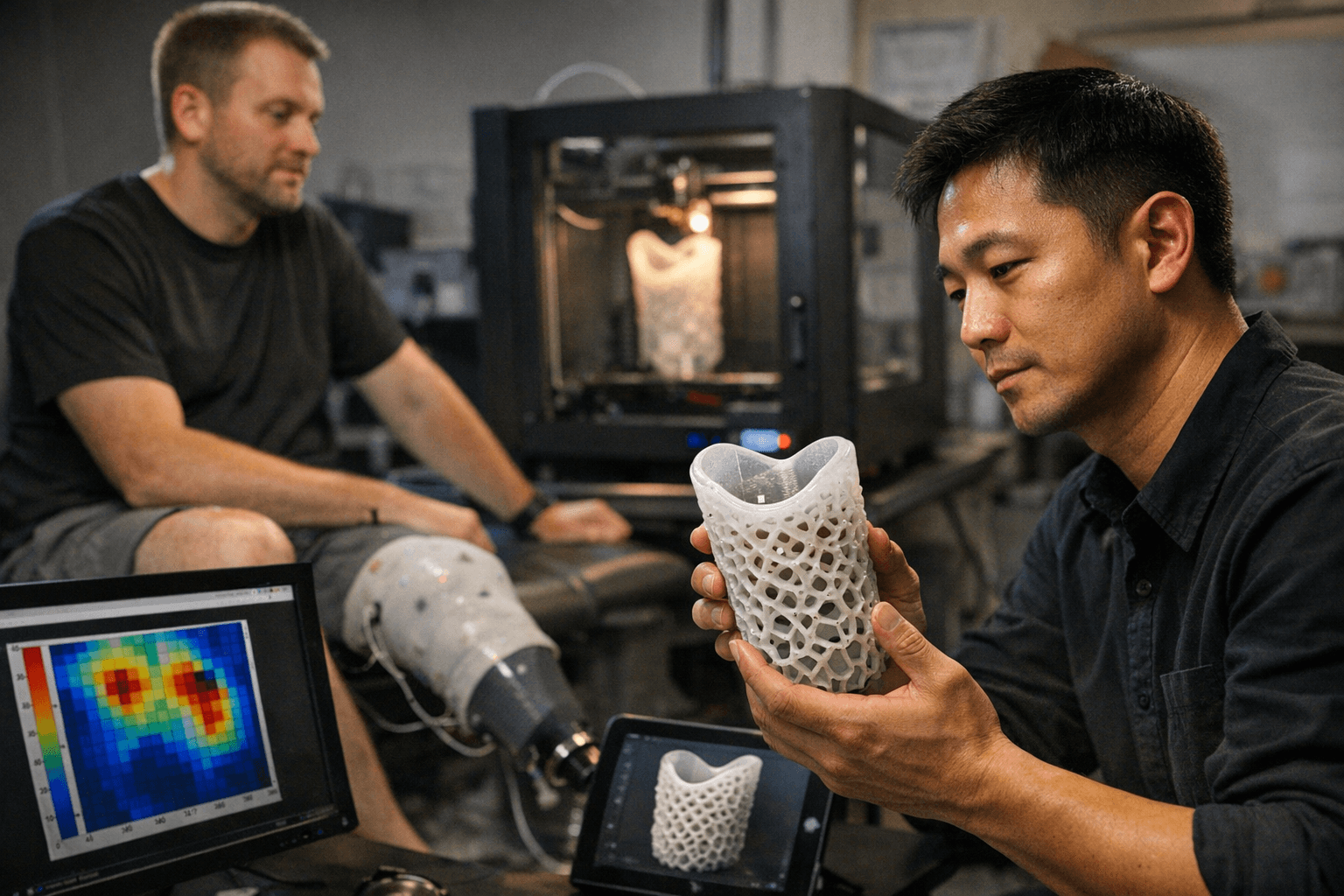
Simon Fraser University researchers described a workflow that embeds a miniature 3D‑printed pressure sensing mat inside a silicone liner, maps forces during everyday tasks, and feeds that biomechanical profile into AI to produce a patient‑specific 3D‑printed socket geometry. The work is reported in the peer‑reviewed article by Kim, W. S., et al., in Biosensors and Bioelectronics (DOI 10.1016/j.bios.2026.118560), with an article publication date listed as 16‑Jun‑2026; SFU issued a media release describing the system on March 2, 2026.
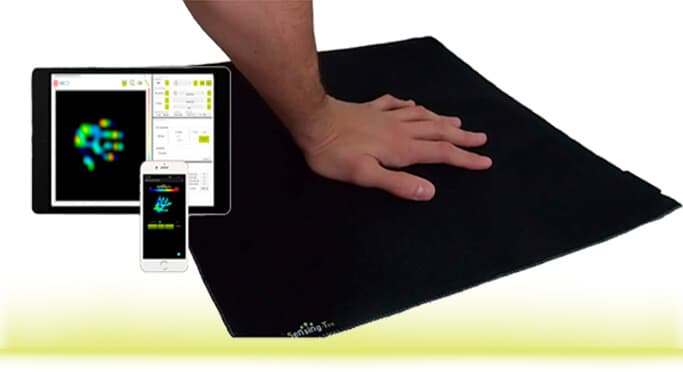
The hardware centers on a silicone liner embedded with a miniature 3D‑printed pressure sensing mat built from a network of origami sensors. In the SFU description the test patient wore that pressure‑mapping liner inside a temporary socket while performing standing, walking on a flat surface, walking down a ramp, and leaning left and right to mimic everyday activity. The measured data, the release explains, “continuously maps the distribution of forces across the residual limb” and produces the biomechanical profile that the project’s AI uses to generate socket geometry.
The researchers moved from mapping to manufacture by converting the pressure map with AI algorithms and printing sockets that use a gyroid lattice pattern rather than conventional solid infill. Voxelmatters and SFU materials describe the gyroid as a continuous three‑dimensional network geometry inspired by honeycomb and trabecular bone structural principles, producing more “spongey” structures. Testing in the press materials states that lattice‑based sockets “absorbed energy at significantly higher rates than traditional designs,” though the supplied reports do not include numeric values, sample sizes, or statistical tests.
Clinical translation involved Hodgson Group Orthotics and Prosthetics as a partner. Loren Schubert, prosthetist at Hodgson Group, said, “Being involved in the development and evaluation of the 3D‑printed pressure‑mapping system has highlighted how ‘data‑driven design can meaningfully improve prosthetic fit, comfort, and long‑term skin health—areas that have challenged our profession for decades.’” Carl Ganzert, orthotist at Hodgson Group, added, “This work demonstrates how innovative, customizable, and more cost‑effective solutions can reshape the future of prosthetic liners and sockets, ultimately expanding access and improving the everyday experience of patients.” The authors acknowledge funding from the Natural Sciences and Engineering Research Council of Canada (NSERC) Grant # ALLRP 580287 - 22 and the Hodgson Orthopedic Group.
The reporting materials flag clear gaps that matter for deployment: only a single “test patient” is described in the supplied accounts, there are no detailed sensor specs (resolution, sampling rate, durability), no breakdown of the AI model or training data, no numerical energy absorption values, and no human‑subjects approvals shown in the press copy. SFU’s press assets note “High res images and video available: Download here” and include the image credit line “Credit: Simon Fraser University,” while the SFU top matter contains an unexplained fragment, “F T I YT L.”
By combining an embedded origami sensor mat, AI conversion of pressure maps, and a gyroid lattice print strategy, the project presents a concrete workflow from data capture to a 3D‑printed socket; the journal citation and DOI provide a reference point for readers seeking the full methods and figures in Kim, W. S., et al., Biosensors and Bioelectronics, DOI 10.1016/j.bios.2026.118560, article date 16‑Jun‑2026.
Know something we missed? Have a correction or additional information?
Submit a Tip