Drone strike hits LNG tanker in Strait of Hormuz, fire erupts
A drone struck the Qatari LNG carrier Al Rekayyat near Oman, setting off an engine-room fire and rattling the world’s most sensitive oil and gas corridor.
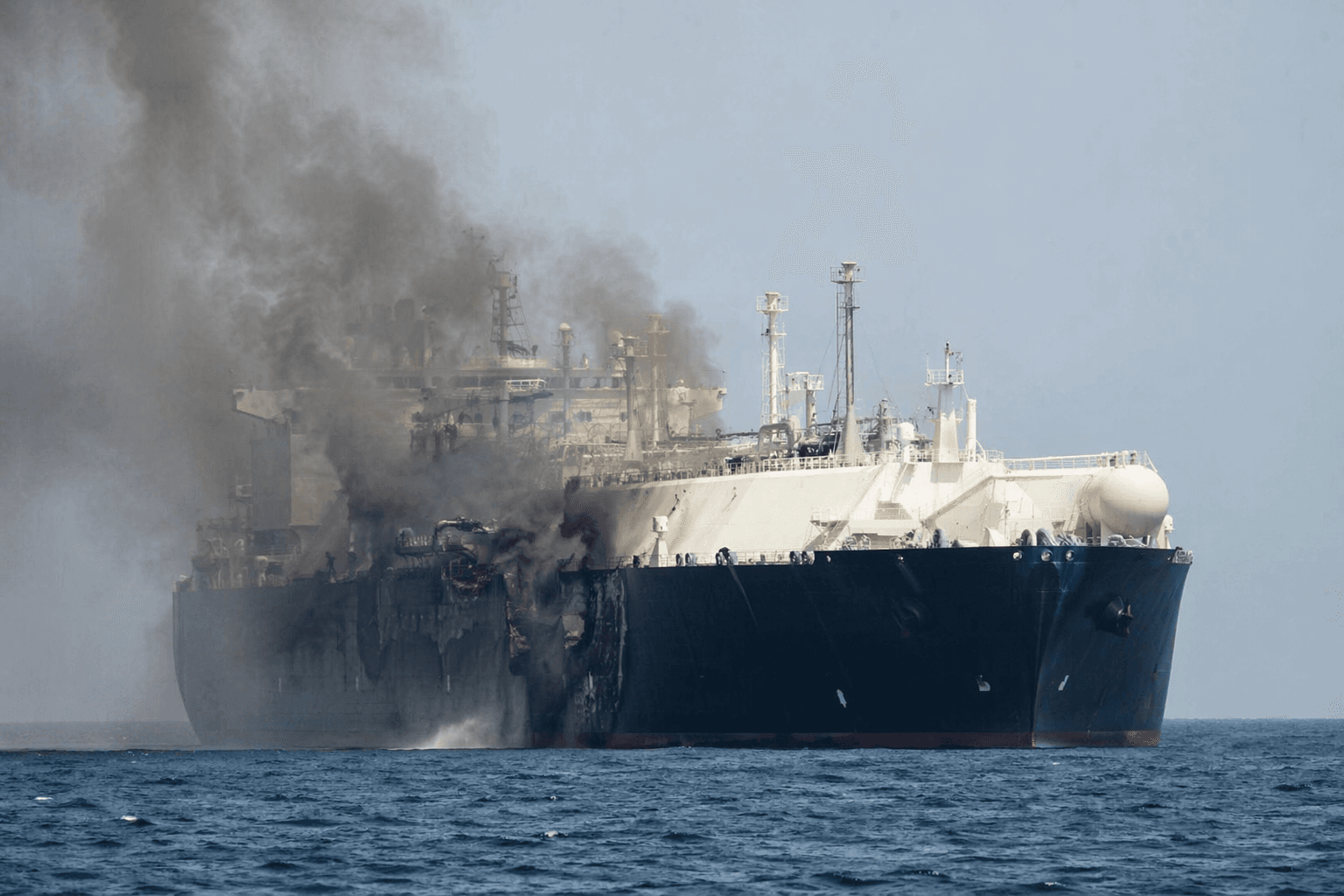
The Qatari LNG carrier Al Rekayyat was struck about 8 nautical miles east of Limah, Oman, in the Strait of Hormuz, where a drone attack set off a fire in its engine room and put the vessel at risk of explosion. United Kingdom Maritime Trade Operations said the tanker had been hit by an unidentified projectile while transiting the waterway, and the crew were reported safe and in the process of being evacuated.
The incident came as the strait, a narrow passage only 29 nautical miles wide at its tightest point, remained central to global energy flows. UK Maritime Trade Operations said there were no casualties or environmental impact reported at the time, but the damage to a Qatari LNG ship immediately sharpened concern about the security of shipping in one of the world’s most exposed chokepoints.
A second vessel was also damaged nearby. The Saudi-flagged crude oil tanker Wedyan was hit off Oman’s coast, and the cause was not immediately clear. UK Maritime Trade Operations said that vessel was believed to have suffered structural damage, adding to uncertainty over whether the two incidents were connected.
Qatar moved quickly to blame Iran for the attack on Al Rekayyat. Majed Al Ansari, the Qatar foreign ministry spokesperson, called the targeting of the vessel an “unacceptable attack on the security of international navigation and global energy supplies.” Qatar said Iran bore full legal responsibility for the attack, a charge that deepened the risk of confrontation in a region already on edge.
The stakes reach far beyond the Gulf. The International Energy Agency said the Strait of Hormuz carried an average of 20 million barrels per day of crude oil and oil products in 2025. The U.S. Energy Information Administration said more than one-quarter of global seaborne oil trade passed through the strait in 2024, while around one-fifth of global LNG trade also transited the passage. Any sustained disruption can move fuel prices, tighten shipping insurance, and force cargoes onto longer and costlier routes.

The waterway has been a flashpoint before, including the 1980s Tanker War and tanker attacks in 2019 and 2021. Each episode lifted maritime risk calculations, and the latest strikes revived fears that even a limited attack could trigger another cycle of retaliation across a corridor that remains critical to energy supplies in Europe and Asia.
This article was produced by Prism’s automated news system from verified source data, official records, and press releases, then run through automated quality and moderation checks before publishing. The system is built and supervised by the people who set the standards it runs under. Read our full AI policy.
Did this article answer your question?