Drone Strikes on Kuwait Airport Fuel Tanks Spark Fire, Halt Flights
Drone strikes ignited Kuwait's airport fuel depot on April 1, grounding flights and marking a sharp escalation in targeting commercial aviation infrastructure across the Gulf.

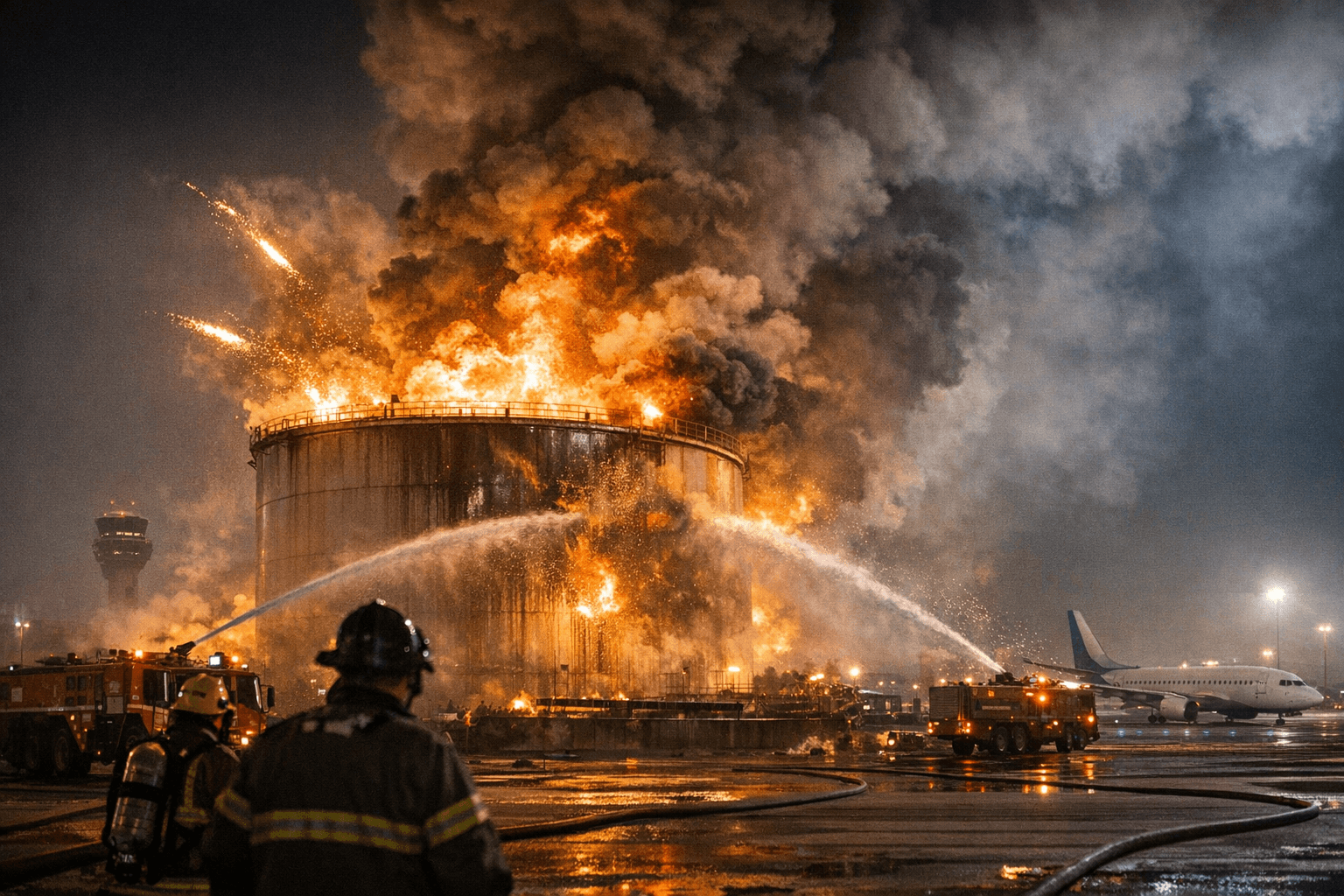
Fuel tanks at Kuwait International Airport burned for hours Tuesday after drone strikes that grounded commercial passenger flights and disabled critical fueling operations at one of the Gulf region's most active aviation hubs.
Kuwait's Directorate General of Civil Aviation confirmed the attack targeted facilities operated by the Kuwait Aviation Fueling Company (KAFCO), igniting a large fire that required emergency firefighting and hazardous-materials teams to contain. Spokesman Abdullah Al Rajhi publicly described the strikes as "blatant attacks by drones from Iran and Iran-backed armed groups." Officials reported no human casualties in initial assessments, though the full extent of material damage remained under evaluation as of April 2.
The airport stayed closed to commercial flights through the remainder of April 1 as crews worked to extinguish the blaze. Because the strikes hit fuel depots rather than passenger terminals, the damage was invisible to travelers but operationally decisive: without functioning on-site fuel supplies, airlines could not service aircraft, forcing cancellations and rerouting across regional networks. The cascading effect extends to cargo operations, energy logistics, and insurance exposure for carriers flying Gulf routes.
The choice of target signals a visible expansion in the geography of a conflict that has gripped the Gulf since U.S.-Israeli strikes on Iran in late February. Previous strikes had concentrated on military installations, government facilities, ports, and energy production sites. KAFCO's fuel depot at Kuwait International sits at the intersection of energy infrastructure and civilian aviation logistics, and disrupting it simultaneously hits commercial schedules and broader fuel supply chains across the Arabian Gulf.
Analysts noted the pattern is consistent with a broader campaign targeting commercial and economic nodes rather than strictly military objectives, a shift that amplifies disruption without direct attacks on civilian populations. Airports present particular vulnerabilities: open airspace, mandatory fuel storage requirements, and civilian operational constraints make them structurally harder to harden than military installations.
For international aviation regulators and Gulf governments, the attack sharpens pressure to coordinate intelligence sharing and develop contingency protocols for rerouting aircraft and protecting ground infrastructure. Fuel storage facilities require inspection, repair, and regulatory clearance before resuming normal operations, and the psychological effect on carriers and insurers may reshape routing decisions well beyond the immediate closure.
This article was produced by Prism’s automated news system from verified source data, official records, and press releases, then run through automated quality and moderation checks before publishing. The system is built and supervised by the people who set the standards it runs under. Read our full AI policy.
Did this article answer your question?