Dublin researchers find oldest surviving English poem in Rome manuscript
A 9th-century Rome manuscript moved the oldest surviving English poem three centuries earlier than scholars expected, rewriting where the language’s earliest texts were preserved.
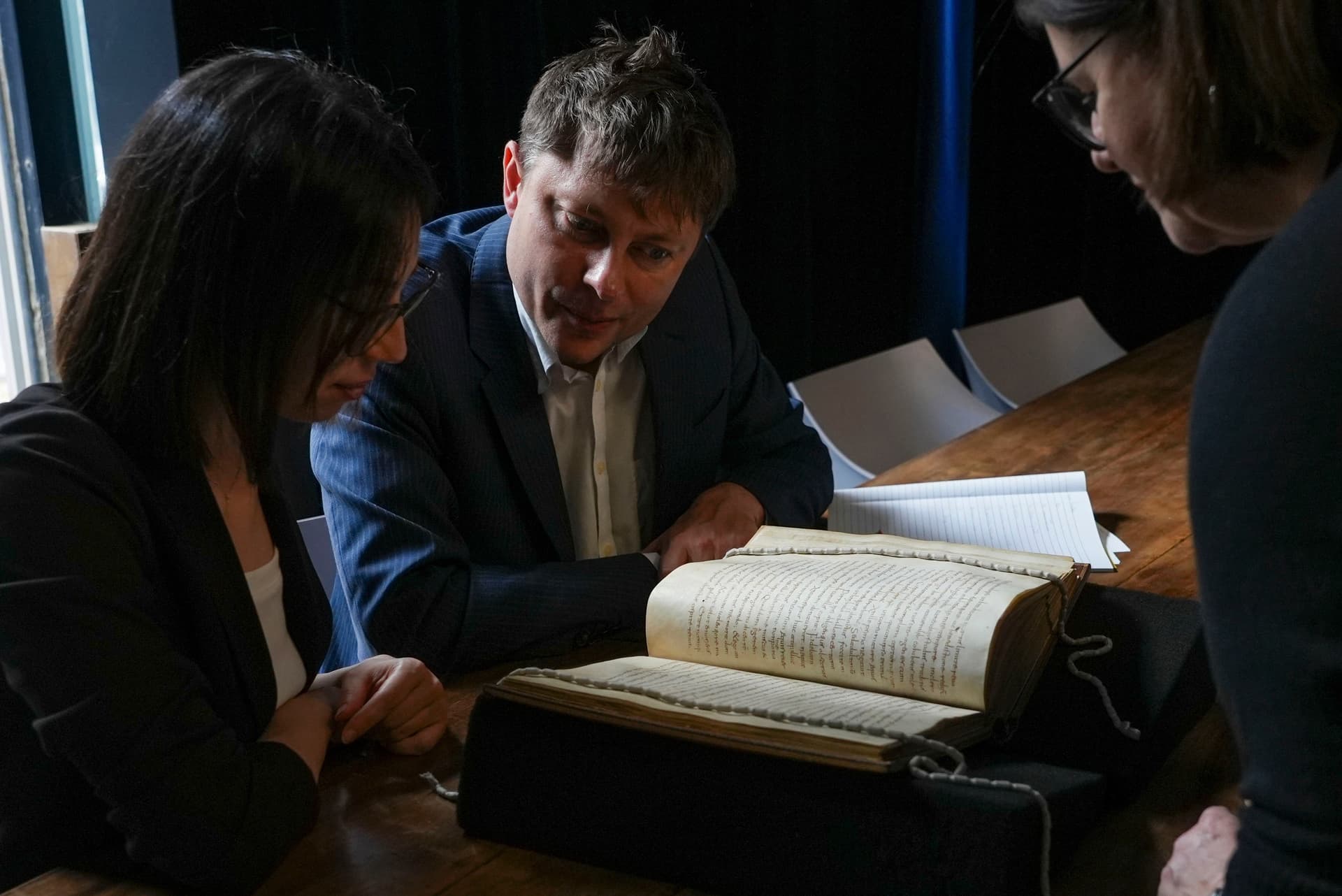
Dublin researchers have identified the oldest surviving English poem in a manuscript held in Rome, a find that pushes the known survival of Caedmon’s Hymn back by three centuries and shows how much of England’s literary past still depends on library archives far from home.
The discovery was made by Dr Elisabetta Magnanti and Dr Mark Faulkner of Trinity College Dublin’s School of English while they were examining conflicting references to Bede’s Historia ecclesiastica gentis Anglorum in Rome. The manuscript, now held at the National Central Library of Rome, dates to between 800 and 830 and contains Caedmon’s Hymn, the nine-line Old English poem praising God for the creation of the world.

That makes the Rome manuscript the third oldest surviving copy of the poem identified so far, behind two older copies in Cambridge and St Petersburg. It is also significant because the Old English text appears in the main body of the Latin manuscript, rather than as a later note in the margin or at the end, suggesting that early medieval readers treated the English poem as part of the text’s core transmission rather than as an afterthought.
Magnanti said she and Faulkner were “extremely surprised” and “speechless” when they first saw the poem after the library digitized the manuscript for them. She said the find shows the power of digitization and libraries to enable new research, a reminder that major historical discoveries can come from re-reading material long stored in plain sight.
Faulkner said about three million words of Old English survive in total, but most surviving texts date from the 10th and 11th centuries, making a 9th-century witness especially important. Before this discovery, the earliest known copy of Caedmon’s Hymn was from the early 12th century. The Rome manuscript therefore moves the evidence for the poem’s survival back by roughly 300 years.
The manuscript also strengthens the study of Bede, whose Historia ecclesiastica gentis Anglorum survives in almost 200 manuscripts and remains one of the most widely reproduced texts from the Middle Ages. By recovering a rare early witness to that tradition, the Dublin team has added fresh evidence to the transmission of one of the foundational works of English history and literature. Their findings were published by Cambridge University Press in Early Medieval England and its Neighbours.
This article was produced by Prism’s automated news system from verified source data, official records, and press releases, then run through automated quality and moderation checks before publishing. The system is built and supervised by the people who set the standards it runs under. Read our full AI policy.
Did this article answer your question?


