Duckworth, Baldwin press FAA on flight attendant cuts, evacuation safety
The senators warned that some wide-body jets could have more exit doors than flight attendants, raising doubts about whether reduced crews could still meet the FAA’s 90-second evacuation standard.
Could a wide-body jet be safer with fewer flight attendants at the moment passengers need to get out fast? Sens. Tammy Duckworth of Illinois and Tammy Baldwin of Wisconsin pressed the Federal Aviation Administration on that question, warning that reduced cabin staffing could leave more emergency exits than trained crew in a crisis.
In a May 15, 2026 letter to FAA Administrator Bryan Bedford, the senators asked for a status update on the EVAC Act and urged the agency to study whether reduced minimum cabin crew on some dual-aisle aircraft could weaken evacuation performance. Their concern is not limited to a full-scale evacuation. Duckworth and Baldwin said fewer flight attendants could also slow response to onboard fires, medical emergencies and security threats, and could leave gaps if one crew member were incapacitated during an incident.
The senators said the FAA has allowed lower minimum crew requirements on certain aircraft flown by American Airlines, United Airlines and Delta Air Lines, despite what they called the longstanding industry norm of one flight attendant per floor-level exit on dual-aisle aircraft. They argued that standard matters because passengers should not be left vulnerable without a certified flight attendant at every exit, especially when an emergency unfolds under stress and limited time.
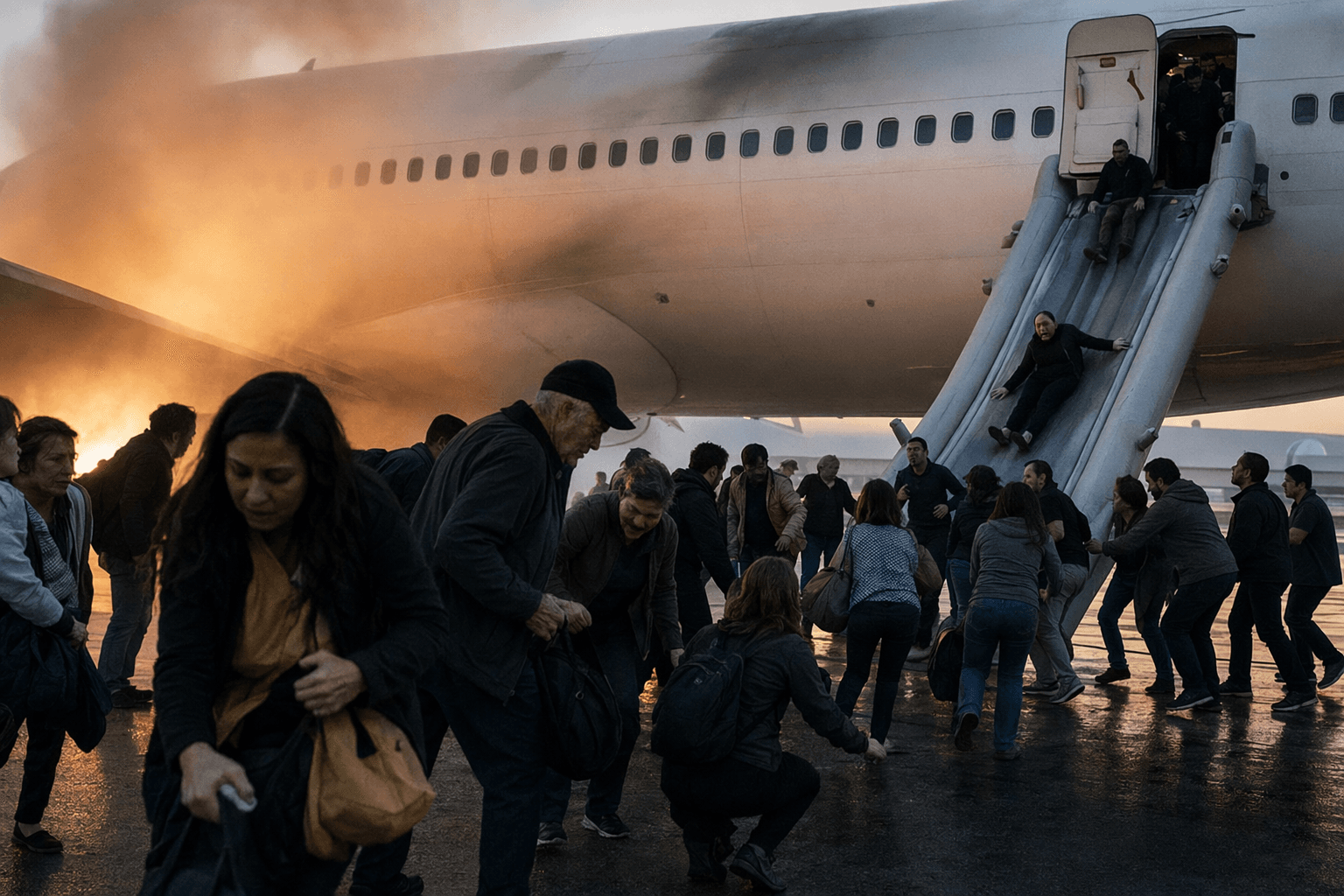
Federal rules require manufacturers or operators to prove that aircraft with more than 44 seats can be fully evacuated, including crewmembers, in 90 seconds or less. Duckworth and Baldwin said that benchmark is already difficult to meet in practice, pointing to a series of high-profile emergency evacuations over the last year and arguing that airlines rarely, if ever, hit the target even when planes are fully staffed.
Their letter also revived concerns that have followed the 2020 Department of Transportation Inspector General report on FAA evacuation standards. That report said the agency largely updated those standards only after accidents, had not sufficiently studied carry-on bags, passenger demographics, seat dimensions or other evacuation factors, and lacked a systematic process for collecting comprehensive evacuation data.
The EVAC Act became law as part of the FAA Reauthorization Act of 2024, signed May 16, 2024. It required the FAA to update evacuation standards to reflect real-world conditions such as carry-on bags and passengers who are senior citizens, children or people with disabilities, and to complete a study by May 16, 2025. Duckworth and Baldwin said that study was still unfinished nearly two years after enactment. The broader reauthorization law runs through fiscal year 2028, and the FAA has said it is committed to implementing it efficiently.
The immediate backdrop includes American Airlines’ FAA-approved reduction in the minimum crew on its premium-heavy Boeing 787-9P Dreamliners from eight flight attendants to seven after a successful evacuation demonstration on June 25, 2025. The FAA said that aircraft has lower seating capacity than other American 787 variants, which still require eight flight attendants. Bedford was confirmed as FAA administrator on July 9, 2025, and the agency announced his appointment the next day.
Know something we missed? Have a correction or additional information?
Submit a Tip