Duckworth, Baldwin urge FAA review of reduced flight attendant staffing
More exits than attendants could slow evacuations, and Tammy Duckworth and Tammy Baldwin want the FAA to prove those staffing cuts do not endanger passengers.

Reduced flight attendant staffing can turn an evacuation into a race against distance, seconds and human error: one attendant may have to manage two exits as much as 19 feet apart while hundreds of passengers move across two aisles and a middle column. Sens. Tammy Duckworth of Illinois and Tammy Baldwin of Wisconsin said that risk is why the Federal Aviation Administration should review whether smaller crews on some widebody jets weaken passenger safety when an emergency unfolds.
The senators asked FAA Administrator Bryan Bedford for a status update on implementation of the EVAC Act, which was folded into the Bipartisan FAA Reauthorization Act of 2024. The law required the FAA evacuation study to be finished by May 16, 2025, but Duckworth and Baldwin said the report remained incomplete as of May 15, 2026. The act directs the agency to update evacuation standards so they reflect real-world conditions, including carry-on bags and passengers who are senior citizens, children or people with disabilities.
Their concern centers on the gap between the FAA’s 90-second benchmark and what passengers actually experience. Duckworth and Baldwin said carriers rarely, if ever, complete evacuations within that window even when aircraft are fully staffed. They also pointed to FAA approvals allowing American Airlines, Delta Air Lines and United Airlines to reduce the number of flight attendants on some aircraft under a rule that requires one flight attendant for every 50 passengers.
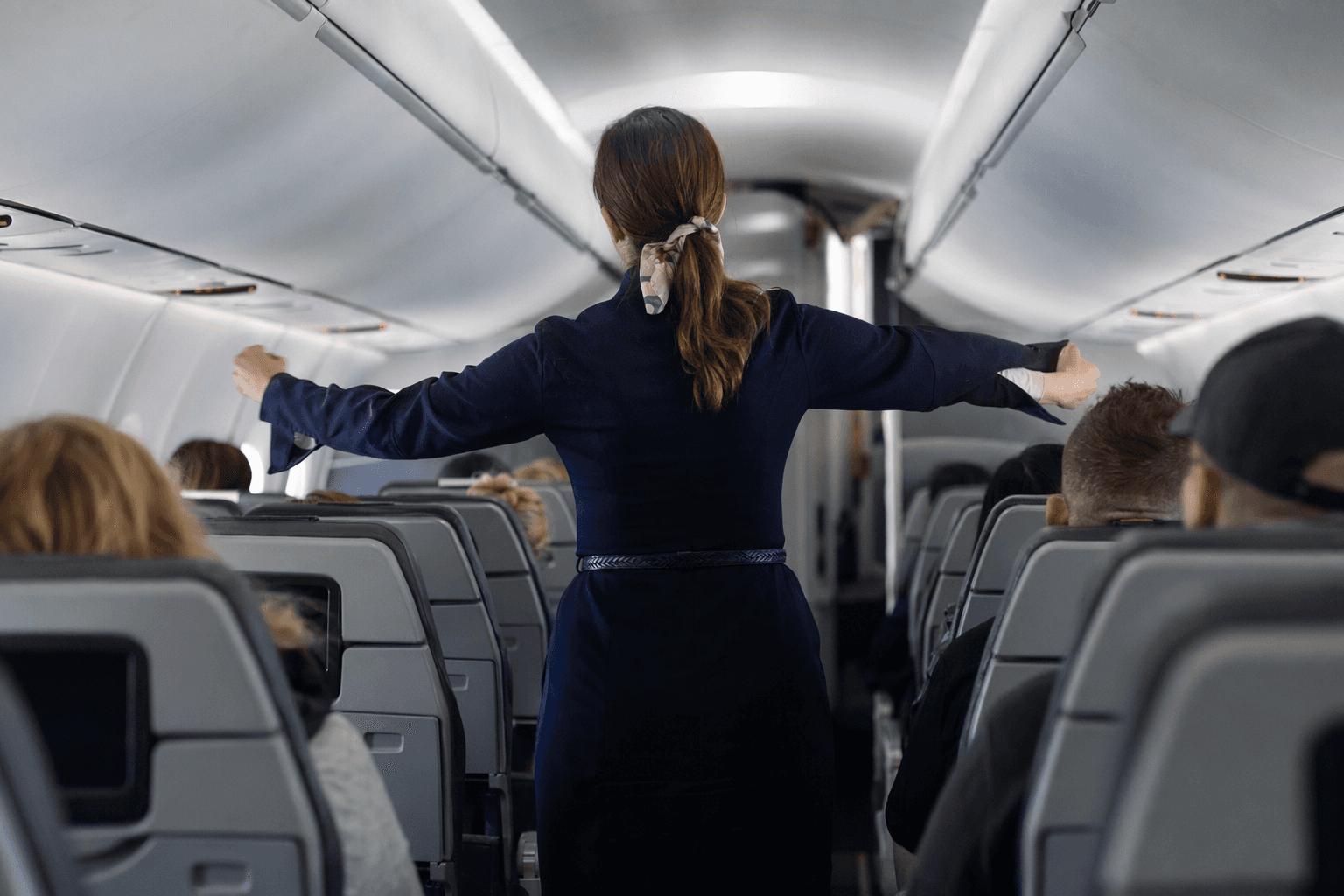
FAA guidance says flight attendants should be uniformly distributed throughout the aircraft to provide the most effective egress in an evacuation. Older FAA bulletin language goes further, saying emergency capability depends on the minimum required crew complement and must account for the possible incapacitation of a crewmember. That issue becomes more pressing on dual-aisle, long-haul widebody aircraft, where a single person may be expected to cover two exits at once.
American’s new Boeing 787-9P has eight exit doors, and the FAA certified the configuration with minimum staffing of seven flight attendants. The agency said American successfully completed evacuation safety demonstrations with seven attendants on June 25, 2025. American, however, said it still typically assigns eight to 10 flight attendants on those flights, depending on distance.

The Association of Flight Attendants-CWA, which says it represents 55,000 flight attendants at 20 airlines, has backed efforts to protect staffing and safety. For Duckworth and Baldwin, the question now is whether the FAA will treat evacuation staffing as a formal safety standard, or as an accounting exercise that leaves travelers exposed when a cabin fills with smoke, panic or both.
Know something we missed? Have a correction or additional information?
Submit a Tip