Dutch School Phone Ban Shows Mixed Results Two Years After Launch
Three-quarters of Dutch secondary schools report better student concentration since phones were banned in January 2024, but only 28% saw improved grades — and a new peer-reviewed study finds the evidence mixed.

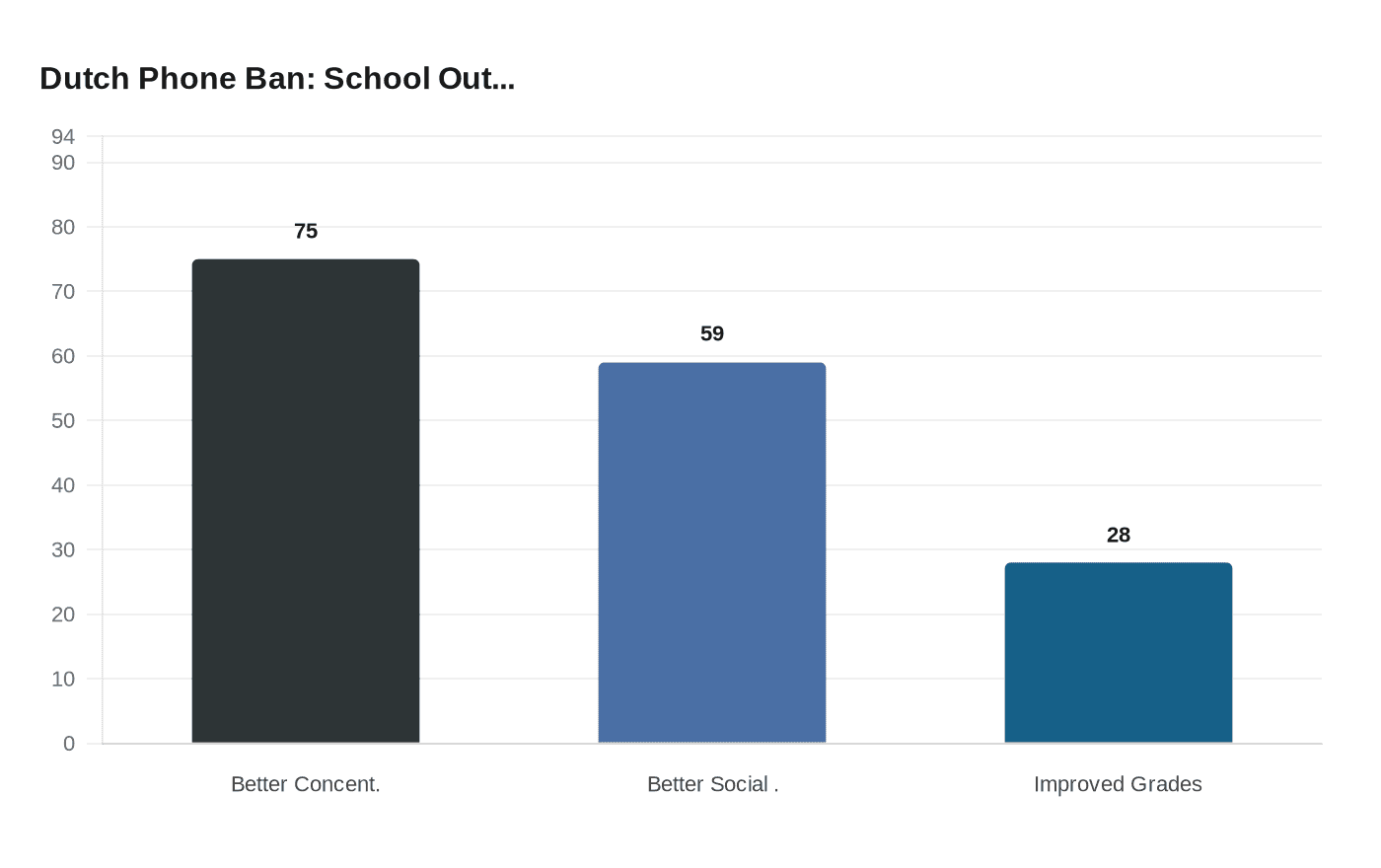
Three-quarters of Dutch secondary schools reported improved student concentration after phones were removed from classrooms, but just 28 percent said grades actually got better — a gap that captures the uneven picture emerging two years into the Netherlands' landmark classroom phone policy.
National guidelines, introduced in January 2024, recommend banning smartphones from classrooms, and almost all schools have complied. Close to two-thirds of secondary schools ask pupils to leave their phones at home or put them in lockers, while phones are collected at the start of a lesson at one in five. Researchers surveyed 317 secondary school leaders and 313 primary schools, and conducted 12 focus groups with teachers, teaching assistants, students and parents.
Secondary schools reported that children found it easier to concentrate (75 percent), the social environment was better (59 percent), and some said results had improved (28 percent). The concentration and social gains have drawn considerable attention, but the relatively modest academic improvement figure is a reminder that removing a device from a pocket does not automatically lift test scores.
Mariëlle Paul, who was serving as State Secretary for Primary and Secondary Education when the study was released, welcomed the findings. "Less distraction, more attention to the lesson, and more social students — no more mobile phones in the classroom is having wonderful positive effects," she told Reuters. Paul also pointed to a systemic benefit that raw numbers cannot fully capture: before the national guideline, any individual teacher who tried to enforce a phone ban faced an argument. Bans on smartphones in Dutch schools improved the learning environment despite initial protests, according to the government-commissioned study. The unified national rule gave less experienced teachers something to stand behind.
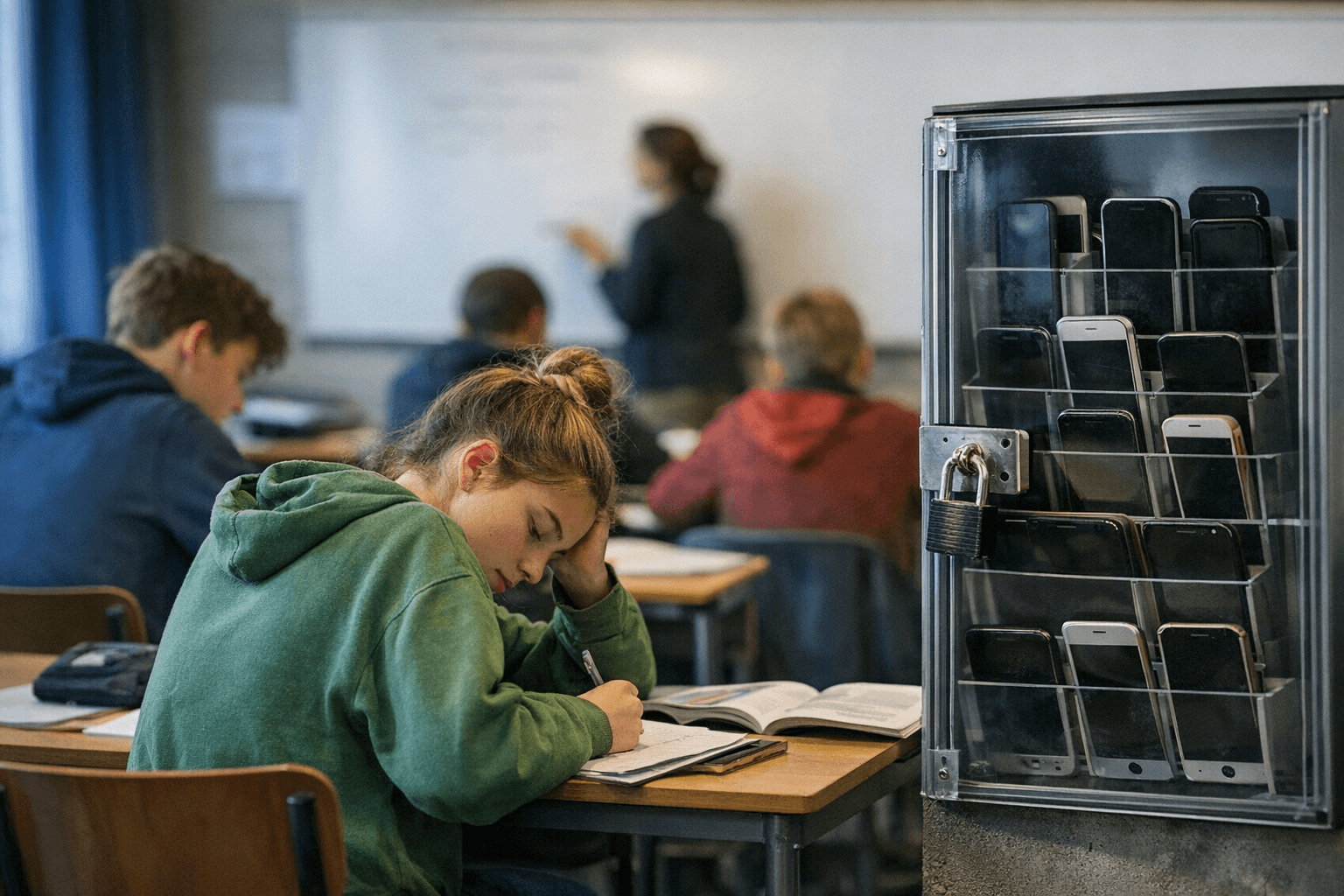
On the ground, researchers and school officials say the shift in social behavior has been the most visible change. Dr. Alexander Krepel of the Kohnstamm Instituut described the break-time effect bluntly: "It's not possible to secretly snap a photo and share it on WhatsApp anymore. Now, kids are actually talking to each other during breaks. Sure, sometimes they argue — but that's part of real connection." Freya Sixma of the VO-raad school council acknowledged that the transition was not frictionless. "There was a lot of protest at first," she said. "But now, everyone's actually pretty happy."
The picture is more complicated in younger years. The ban on mobile phones in the classroom was first introduced in January 2024 for secondary education, and was extended to include primary education as of the 2024-2025 school year. Yet the government-commissioned study found the impact in primary schools was minimal, largely because most children do not begin bringing phones to school until the final years of primary school. Special needs schools, however, reported gains in classroom discipline. The policy allows for certain exceptions, including phones for medical needs or for students with disabilities, under teacher supervision — most commonly hearing aids connected to a mobile device.
The compliance numbers are striking given that the policy rests on national guidelines rather than a hard statutory ban. Smartphone bans are gaining popularity in education, with approximately 40 percent of countries currently implementing such policies. The Dutch ban inspired other nations to follow suit, notably France, Hungary and Finland.
Independent academic scrutiny, however, offers a more cautious read. One study found that students' screen time after school increases to compensate for restrictions during school hours, with no differences for problematic usage. Empirical findings for well-being outcomes are also scarce and mixed: two studies found no significant effects of smartphone bans on students' well-being, while another reported reduced mental health care needs for girls only.
Meanwhile, the Dutch government's ambitions are moving beyond the school gate. The caretaker government advised parents to ban social media for children under 15 and limit screen time overall, while one MP has proposed a total ban on smartphones in schools — a step beyond the current classroom-only guideline. The ministry of Education, Culture and Science continues to monitor the effects of the national agreement. That ongoing scrutiny will matter: there is currently no empirical evidence that stricter policies are more effective in achieving their intended benefits than the framework already in place.
This article was produced by Prism’s automated news system from verified source data, official records, and press releases, then run through automated quality and moderation checks before publishing. The system is built and supervised by the people who set the standards it runs under. Read our full AI policy.
Did this article answer your question?


