Dygma Maps 2026 Keycap Trends: Metal, Wood, Ceramic, Jello, Polycarbonate
Dygma’s dev blog names five surprise keycap trends — full metal, real wood, ceramic, jello, and transparent polycarbonate — and argues material plus manufacturing shape feel, sound, cost, and longevity.

Dygma maps five materials it says will matter for keycaps this year: “full metal, real wood, ceramic, jello, transparent and blank PBT.” That list comes straight from a March 5, 2026 development blog from Dygma (maker of split and ergonomic mechanical keyboards), and the company’s central point is blunt: “The material and manufacturing technique directly affect appearance, feel, sound, cost, and durability.” If you care about how your board looks and sounds as much as how it types, these are the materials Dygma thinks hobbyists should watch.
Metal Dygma singles out “full metal” as a trending option, which immediately changes the conversation from keycap color and profile to mass, machining, and longevity. Metal keycaps are hardly new in concept — the blog even notes that “keycaps can technically be made of rubber, metal, ceramic, or even wood” — but by calling full metal out as a 2026 trend Dygma is flagging builders who want a dense, high-mass typing feel. The company frames material choice as a tradeoff: denser materials alter sound and cost and require different manufacturing steps. The post doesn’t supply alloys, finishes, or stem compatibility, so if you’re considering metal, expect follow-up questions about grade, machining tolerances, and price before pulling the trigger.
Wood “Real wood” appears on Dygma’s list, and the appeal is obvious: a warm, organic aesthetic that plastic rarely achieves. Dygma emphasizes that material affects feel and sound, and wood’s grain and density change both; a maple keycap will behave differently from walnut or teak. The blog frames wood alongside other nonstandard materials to push builders to think beyond uniform plastic sets, but it stops short of specs — no mention of sealing, stiffness, or longevity treatments is provided. That means real-wood keycap projects are still niche: beautiful on a desk, but you’ll want concrete details about finish and wear resistance before committing.
Ceramic Ceramic keycaps get their own place on the list, and Dygma’s inclusion signals interest in hard, brittle materials that can present a very different acoustic signature. Because the company states that manufacturing technique changes “legend sharpness, RGB shine-through, and overall feel,” ceramic is intriguing for anyone chasing a crisp, dry clack with striking surface finishes. The development blog frames ceramic as a material hobbyists should consider without giving micro-details — there’s no ceramic composition, glaze type, or production-volume guidance — so ceramic remains an experimental option unless vendors share specifics on toughness and manufacturing methods.
Jello Yes — Dygma lists “jello” among trending materials, and that’s where the post leans experimental and provocative. The blog’s list explicitly names “jello,” though it doesn’t expand into the chemistry, production process, or longevity of such a soft or gel-like keycap. What the company does provide is the broader context that “Each manufacturing technique directly impacts durability, legend sharpness, RGB shine-through, and overall feel,” which implies that novel materials like jello will demand novel manufacturing approaches. If you’re curious, treat jello as a proof-of-concept trend for personalization and novelty rather than a mainstream replacement for PBT — the post leaves the mechanics and lifespan questions unanswered, so expect experimentation and small runs rather than mass-market availability.
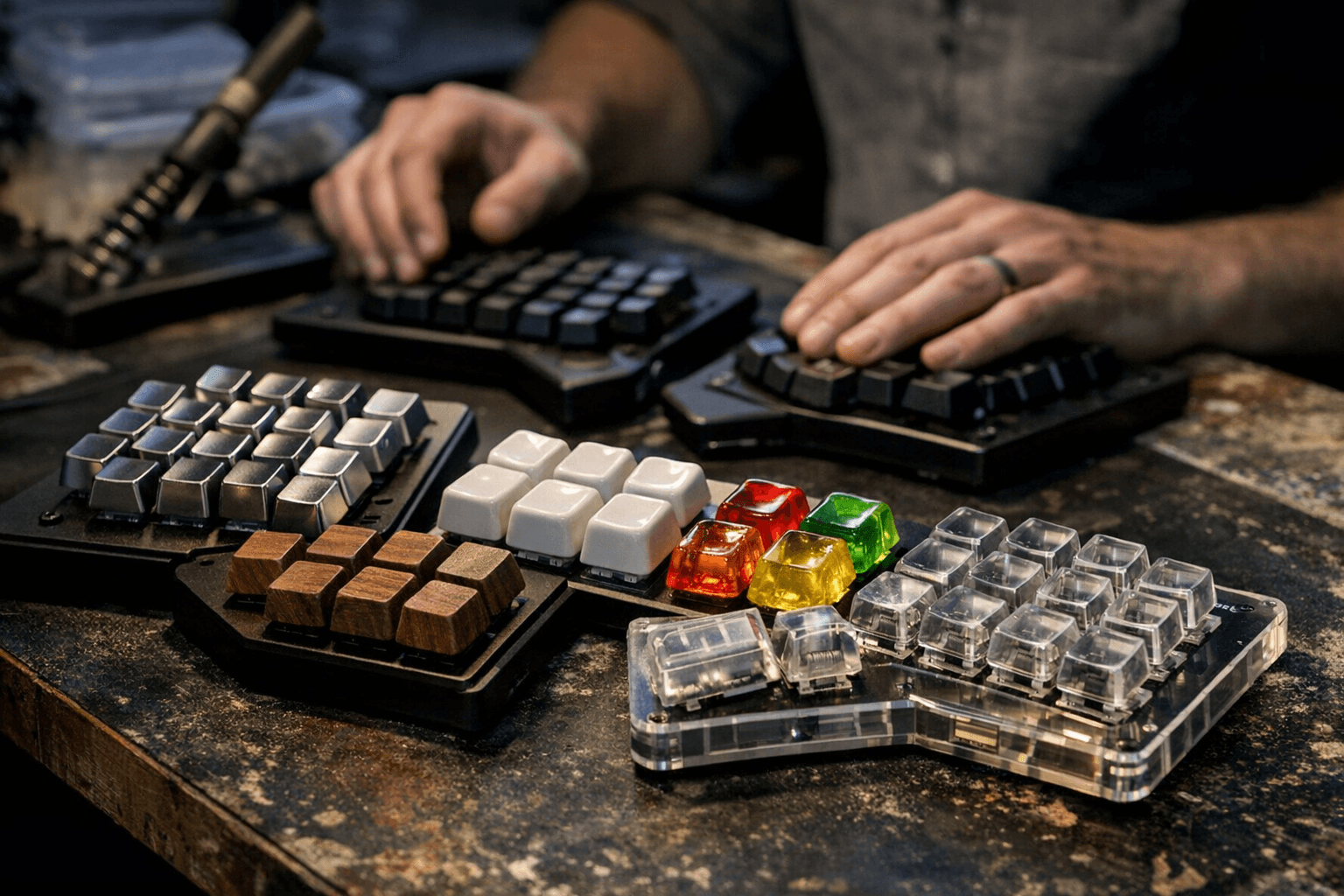
Transparent polycarbonate Dygma’s “transparent” callout (the report lists transparent polycarbonate in its headline framing) ties directly into lighting and aesthetics. That matters because, as the blog reminds readers, “ABS keycaps are smooth, easy to mold, easy to paint, and naturally translucent, making them perfect for keyboards with RGB lighting.” Transparent polycarbonate takes translucency further: it’s a material choice that prioritizes light transmission and glossy, jewel-like finishes over the matte durability PBT fans prefer. Dygma’s inclusion points to increased use of transparent caps where RGB is a focal point, and it sits comfortably alongside their mention of “dygma raise 2 dye sub keycaps” — a product string the company repeats in the post. The blog does not, however, state material grades, manufacturing partners, or pricing for transparent polycarbonate items, so builders should expect to wait for product pages that specify thickness, stem compatibility, and finish.
Manufacturing and legend techniques (woven across the trends) Throughout the post Dygma underscores that material choice doesn’t float free of production realities: “Each manufacturing technique directly impacts durability, legend sharpness, RGB shine-through, and overall feel.” The blog calls out pad printing by name: “Pad printing is one of the most traditional and affordable keycap manufacturing methods. A silicone pad transfers ink from an engraved metal plate to the surface of the keycap.” It adds that “This technique is cheap, fast, and flexible. You can use a simple plastic injection mold (often opaque ABS) and add any desired legend on top. Pad printing also allows for light legends on dark keycaps.” That matters because some of the trend materials — especially those that are translucent or non-plastic — will not take standard pad printing the same way ABS does. Dygma’s repetition of “pad printing keycaps” in the blog suggests it still sees pad printing as a production workhorse, but it’s clear that dye-sub, double-shot, CNC machining, glazing, or entirely new processes will be required for metal, ceramic, wood, and jello variants. The post also references “dygma raise 2 dye sub keycaps,” indicating the company continues to use or at least promote dye-sublimation on certain product lines.
What Dygma doesn’t answer (and why it matters) The blog is a map, not a spec sheet. It makes the case that “If you want a keyboard that feels premium, lasts years, and sounds right for your setup, it’s essential to understand the differences between each type,” but it leaves several practical questions open: specific alloys or ceramic compositions, finishes, stem compatibility, longevity data, pricing, and production sources are all absent from the supplied excerpts. The “Why the Logi Options Debacle Could Never Happen to Us” headline and the claim “When app-based configuration fails, your entire setup can break” are used to reassure readers about Dygma’s onboard configuration approach, with the truncated line “Here’s why our keyboard store configuration is onboard, and why a software issue like the Logi Options debacle could never affect... [...]” highlighting company positioning on reliability. That’s useful context for buyers who value stable firmware and hardware-level customization, but it’s not a substitute for material specs.
Bottom line Dygma’s development blog, published March 5, 2026, pushes the hobby’s conversation beyond ABS/PBT by naming full metal, real wood, ceramic, jello, and transparent polycarbonate as the keycap trends to watch. The post’s strongest, repeatable takeaway is simple and practical: “The material and manufacturing technique directly affect appearance, feel, sound, cost, and durability.” Expect these materials to show up first in niche runs and concept kits where makers can control production methods; the hard work that follows will be publishing concrete specs — alloys, ceramic glazes, sealing for wood, and manufacturing workflows — so the community can evaluate tradeoffs. Dygma invites feedback in the post — “Let us know what you think, and don’t forget to subscribe to our newsletter to stay updated on future releases and keyboard design insights” — and until those follow-ups arrive, this blog is the clearest signal yet that 2026 will be about variety and manufacturing choices as much as legend style and profile.
Know something we missed? Have a correction or additional information?
Submit a Tip