Earplugs emerge as must-have concert gear for protecting young ears
A front-row Misterwives set left Kristin Shires with ringing ears, underscoring how one loud night can add up to permanent damage.

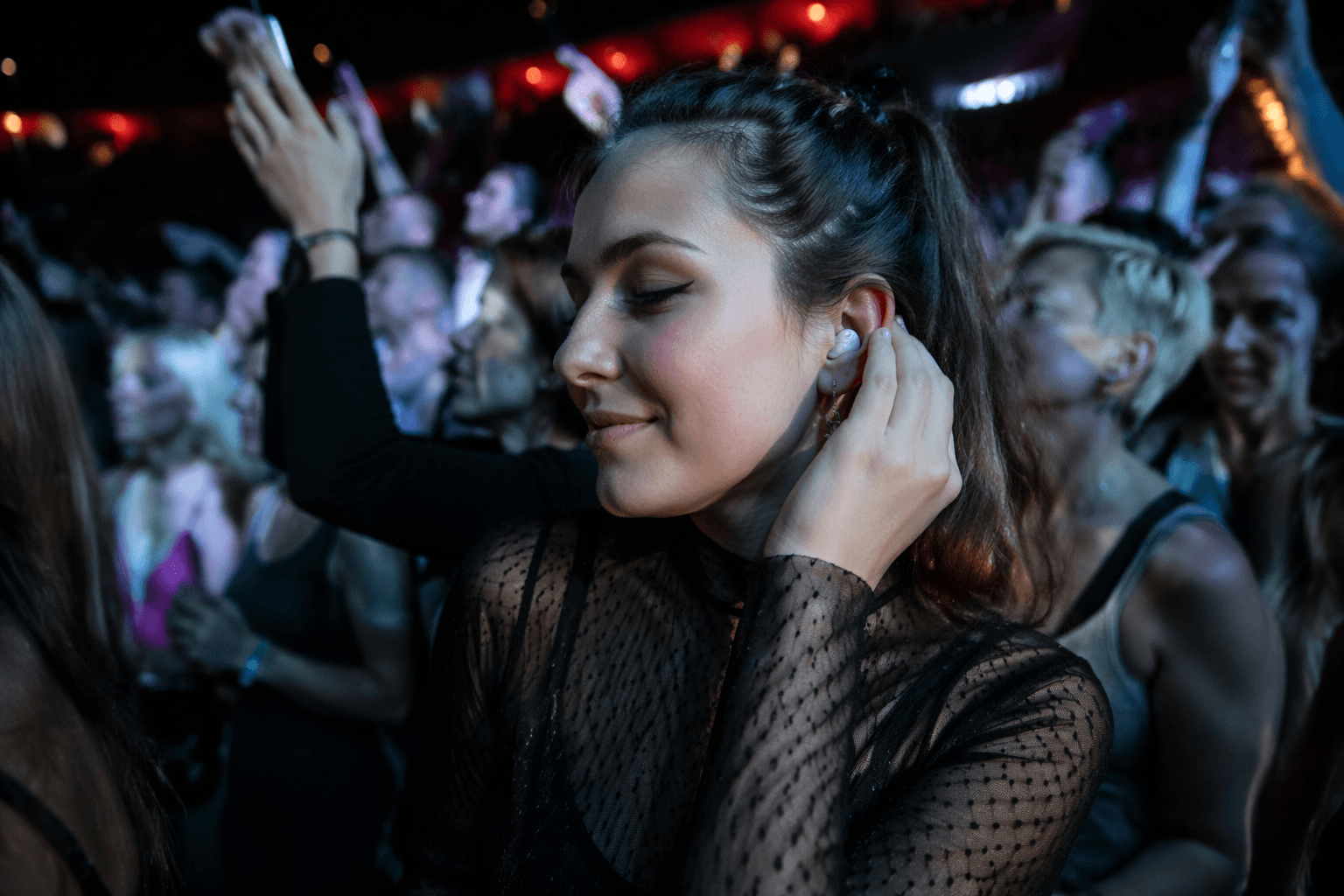
A front-row concert can feel harmless in the moment and still leave ears ringing by the end of the night. Kristin Shires, a Houston social media coordinator, came away from a Misterwives show with that warning built in, a reminder that live music can be memorable and still exact a cost.
That risk is not limited to one loud night. Asia Pon, a board-certified diagnostic audiologist at Keck Medicine of USC who specializes in cochlear implant and hearing aid amplification technology, said repeated exposure to loud sound accumulates over time and can lead to permanent damage even when each concert seems manageable as it is happening. The Centers for Disease Control and Prevention says noise-induced hearing loss can be immediate or develop gradually, can be temporary or permanent, and is usually not medically or surgically correctable.
The threshold is lower than many fans realize. The CDC and the National Institute for Deafness and Other Communication Disorders say 85 decibels, roughly the level of city traffic, is enough to start causing harm over time. Concert sound levels are often well above that point. The World Health Organization says more than 1 billion people ages 12 to 35 are at risk of hearing loss from prolonged and excessive exposure to loud music and other recreational sounds, and a 2022 study in BMJ Global Health estimated the number of young people at risk from unsafe listening practices at 0.67 to 1.35 billion.
The damage happens inside the ear, where tiny hair cells convert sound vibrations into signals for the brain. Once those cells are damaged, they may not recover. That is why repeated exposure can later show up as tinnitus, trouble following conversations and a lasting drop in hearing acuity even after the music has stopped.
Earplugs are getting a more visible role in concert fashion, with versions that attach to earrings or add a little sparkle so they fit the outfit instead of fighting it. The practical case is stronger than the style case. The NIDCD says high-fidelity earplugs are especially useful at concerts and movies because they protect hearing while preserving audio quality, which makes them a better fit for fans who want to hear vocals and instruments clearly rather than simply muffle the night.
Public-health guidance points in the same direction. WHO and the International Telecommunication Union advise amplified venues to keep average sound levels at 100 dB LAeq over 15 minutes or less, monitor sound levels, optimize acoustics, provide hearing protection, create quiet zones and train staff and audiences. The message is blunt: if fans want a lifetime of shows, the smartest accessory may be the smallest one.
This article was produced by Prism’s automated news system from verified source data, official records, and press releases, then run through automated quality and moderation checks before publishing. The system is built and supervised by the people who set the standards it runs under. Read our full AI policy.
Know something we missed? Have a correction or additional information?
Submit a Tip