US health team to monitor wastewater, web chatter during World Cup
A Washington-based health team is pairing wastewater tests with online chatter to spot outbreaks as 6.5 million World Cup fans flood North America.

A Washington, D.C.-based health team is betting that sewage and social media can serve as an early warning system when the World Cup brings one of the largest international crowds ever assembled to North America. The new setup is meant to flag infectious disease risks before hospitals are overwhelmed, as 48 teams, 104 matches and more than 6.5 million fans move through 16 host cities in the United States, Canada and Mexico.
Georgetown University and MedStar Health launched the Health Security Operations Center on May 13 and said it began operations June 1. The center, housed in a converted Georgetown lab, was built as a non-governmental public health intelligence fusion center, not an official FIFA-sanctioned program, and will feed real-time data to hospital emergency managers and public-health authorities at the local, state, federal and international levels, along with FIFA. Rebecca Katz, who directs Georgetown’s Center for Global Health Science and Security, said wastewater can reveal genetic strands from microbes without requiring laboratory culture, giving officials a faster look at what may be moving through crowds.
That speed matters because the U.S. is already dealing with severe public-health strain. The Centers for Disease Control and Prevention says the country has recorded 2,030 confirmed measles cases in 2026, with 30 new outbreaks and 93% of cases tied to outbreaks. The agency also says the public risk from the current Ebola outbreak remains low, but on May 18 the CDC and the Department of Homeland Security announced enhanced travel screening and entry restrictions in response to outbreaks in East and Central Africa. CDC is also responding to a 2026 Andes-virus hantavirus outbreak linked to the M/V Hondius cruise ship.
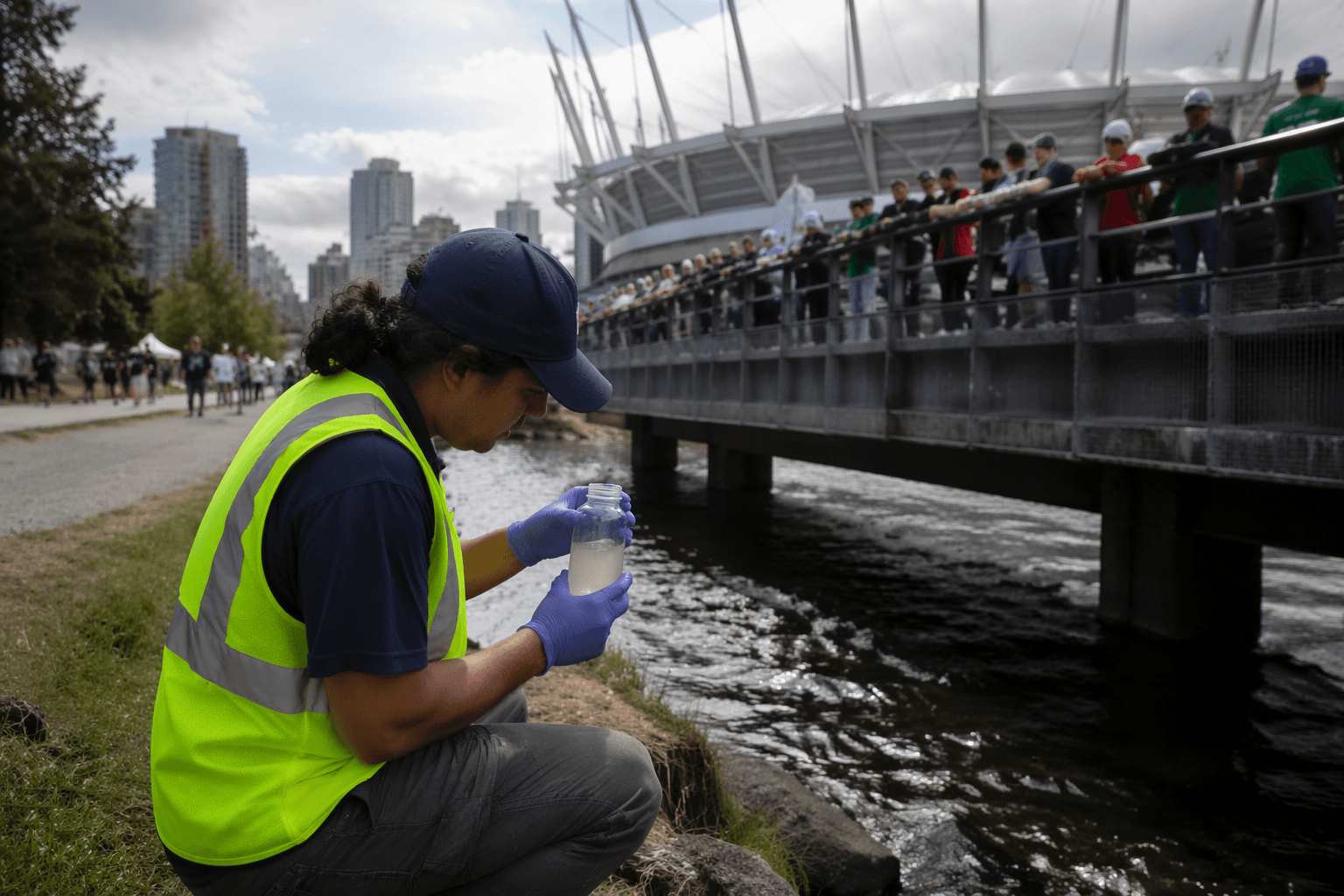
Wastewater surveillance has a track record that makes the World Cup experiment more than a theory. CDC guidance says wastewater monitoring can detect viruses earlier than clinical testing and before people seek care. In one measles outbreak, CDC found wild-type virus in Oregon wastewater 10 weeks before the first confirmed case. A CDC abstract this spring said national wastewater surveillance of wild-type measles produced actionable insights for about 600 U.S. communities during the 2025 measles outbreak.
The gamble now is whether that public-health playbook can scale to a mega-event without creating new problems. Social monitoring can widen the lens, but it also raises privacy questions and the risk of false alarms, especially when millions of posts and data points are being scanned alongside sewage samples. That tension is part of why officials are treating the World Cup as a rehearsal for future mass gatherings, including the 2028 Summer Olympics in Los Angeles, where the opening ceremony is scheduled for July 14 and the Games run through July 30.

For public-health planners, the bigger lesson is clear: sporting events are no longer just security operations. They are becoming live surveillance exercises, and the World Cup may set the model for how the U.S. watches the next global crowd.
This article was produced by Prism’s automated news system from verified source data, official records, and press releases, then run through automated quality and moderation checks before publishing. The system is built and supervised by the people who set the standards it runs under. Read our full AI policy.
Know something we missed? Have a correction or additional information?
Submit a Tip