East Helena Steak Fry Fundraiser Benefits Humane Society Trap-Neuter-Release Program
East Helena steak fry fundraiser on Jan. 12 raised money for the Lewis and Clark Humane Society trap-neuter-release program. The proceeds support local animal welfare and public health efforts in Lewis and Clark County.
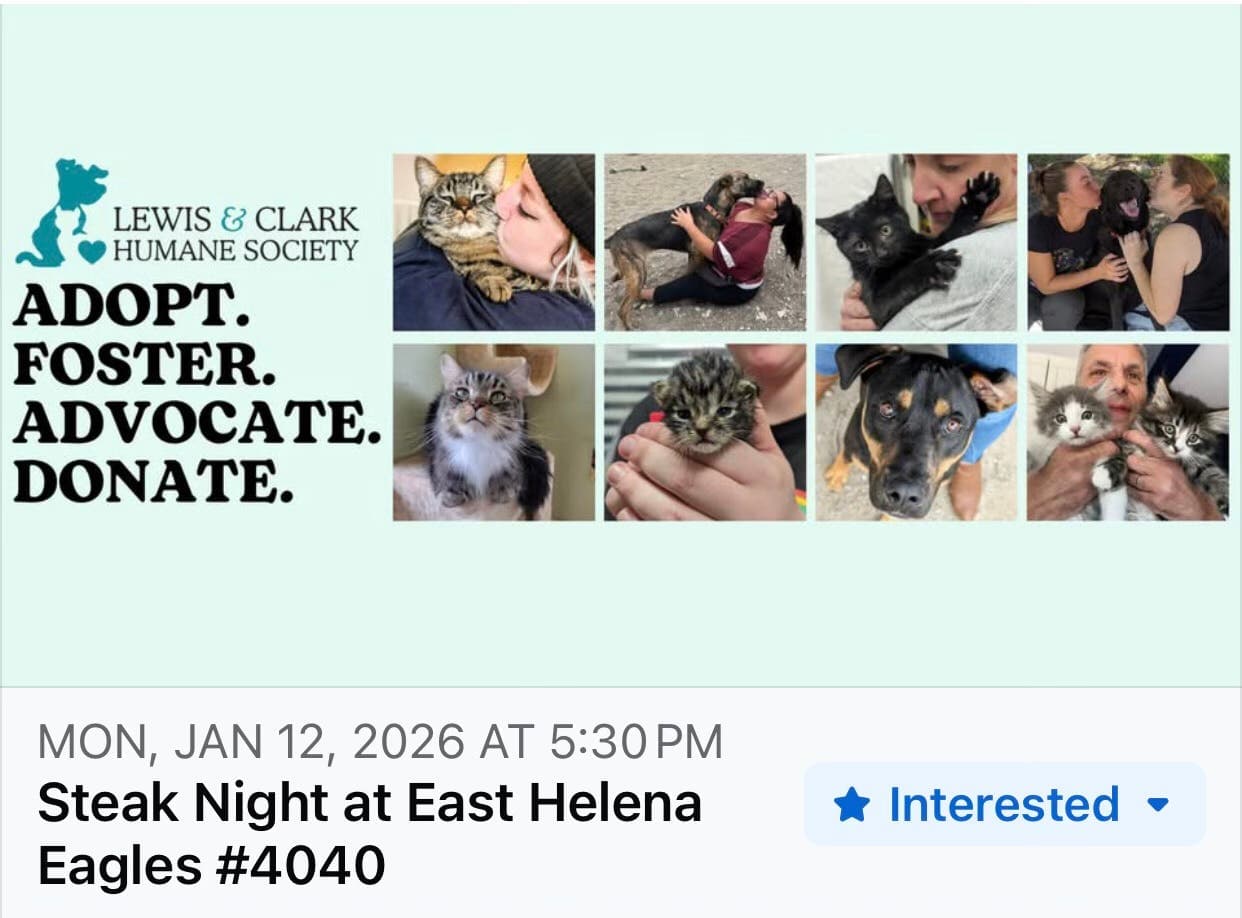
A community steak fry at the Eagles 4040 lodge in East Helena on Jan. 12 brought neighbors together to support the Lewis and Clark Humane Society's trap-neuter-release program. For $20 diners received a 12 oz sirloin, potato, green salad and bread, and the event also featured a silent auction, raffle and opportunities for additional donations. Half of the event's proceeds were directed to the local humane society.
The fundraiser combined a simple meal with practical support for a public health-oriented animal welfare strategy. Trap-neuter-release, or TNR, aims to reduce the number of free-roaming cats through sterilization and often vaccinations, which in turn lowers the likelihood of newborn litters, reduces nuisance behaviors such as yowling and fighting, and can ease pressure on local shelters. For Lewis and Clark County residents, investments in TNR can translate into fewer feral cat colonies in neighborhoods, fewer kittens needing placement in winter months and reduced municipal animal control costs over time.
Beyond immediate animal welfare outcomes, community-driven fundraisers like the steak fry play a role in addressing gaps in access to affordable veterinary services. Rural and small-town residents often face long drives and higher costs for spay and neuter services. When local nonprofits can channel community donations into TNR work, they help level that access gap and provide an equity-focused solution for residents who cannot otherwise afford routine care for outdoor or community cats.
The Eagles 4040 event also served as a neighborhood gathering point that mobilized volunteers and donors. Silent auctions and raffles extend the reach of such efforts by engaging local businesses and supporters, creating one-time boosts in revenue while strengthening social networks around shared civic goals. In rural counties, that combination of fundraising and relationship-building is a key ingredient for sustaining ongoing TNR work.

Public health officials and animal welfare advocates often point to TNR as a cost-effective complement to shelter-based services. While municipalities may manage animal control and shelter operations, community fundraising helps fill funding shortfalls and supports preventive measures that reduce future demand on shelters and clinics. For Lewis and Clark County residents, supporting local TNR efforts can mean fewer homeless litters, lower rates of conflict between people and wildlife, and a more humane, community-centered approach to managing free-roaming cats.
For readers who missed the steak fry, this event signals how neighborhood-scale actions add up. Continued support for local humane society programs, whether through donations, volunteering or attending similar fundraisers, will determine how effectively TNR efforts can reduce shelter intake and protect both animal and public health in the months ahead.
Sources:
Know something we missed? Have a correction or additional information?
Submit a Tip