Youth hunting stories honored at state capitol highlight community ties
Governor Greg Gianforte honored winners of the youth hunting story contest, celebrating youth hunters and local conservation traditions.

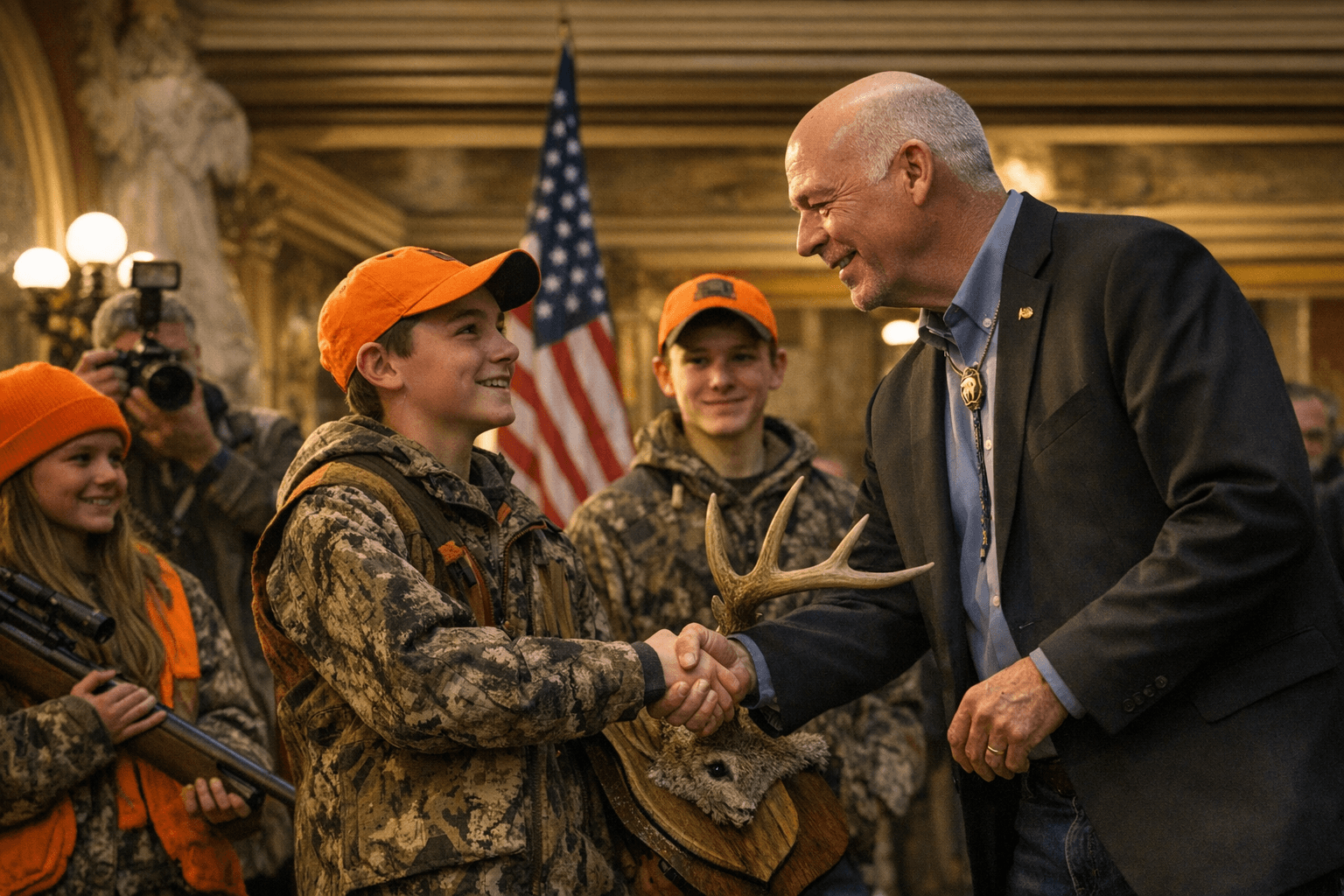
Governor Greg Gianforte honored 10 young storytellers at the state capitol on Jan. 15, recognizing winners of the fourth annual Montana youth hunting story contest. The ceremony, which drew nearly 150 submissions from hunters across the state, featured readings of winning entries and prizes for participants aged 10 to 17.
Among the winners were two Lewis and Clark County students. Eleven-year-old Helena resident Xavier McCormack won for a story about his bird dog Willy and a pheasant hunt. “I'm grateful that I got to do this,” McCormack said. “I'm so grateful. It's just cool, I guess, and I hope I get to do it again sometime, be one of the winners again.” Fourteen-year-old East Helena resident Wyatt McKenzie was honored for an essay about hunting on private land and harvesting an elk. McKenzie reflected on family time and intergenerational storytelling. “Hunting not only is a means to connect with people, but is also a way to participate in heritage with all the other people who have hunted,” McKenzie said. “It’s a great way to keep traditions, and maybe provide some meat for the family as well.”
The contest, started in 2022, invites young hunters to submit a story and photo from their hunt. Organizers say the event aims to celebrate youth engagement in outdoor traditions and to showcase how hunting connects families, landowners, and rural communities. For Lewis and Clark County, the contest highlighted local hunters who balance tradition with stewardship of Montana’s landscapes.
Public health and community implications of the contest extend beyond nostalgia. Participation in hunting and outdoor activities is associated with physical exercise, time outdoors, and social bonding, which contribute to mental health and youth development. Hunting as a food source can also support household food security in rural areas. At the same time, access to hunting opportunities is uneven; reliance on private land access and the costs of gear can pose barriers for low-income and urban youth. The stories recognized in Helena and East Helena underscore both the benefits of hunting for family nutrition and heritage and the need to address equity in access and safety education.
Local leaders, schools, and conservation groups could use the visibility from the contest to expand hunter education, subsidize gear for youth from low-income households, and negotiate more equitable access to public and private lands. Strengthening partnerships between landowners and youth programs may preserve traditions while ensuring safety and inclusivity.
For readers in Lewis and Clark County, the contest is a reminder that outdoor traditions remain a thread in community life and that supporting young people’s access to safe, affordable hunting opportunities can yield health, cultural, and food-security benefits. Continued attention from policymakers and community organizations will determine whether those threads are kept strong and available to all youth.
Sources:
Know something we missed? Have a correction or additional information?
Submit a Tip