Ebola outbreak tops 1,000 cases in Congo, spreads to Uganda
Congo has passed 1,000 confirmed Ebola cases, while officials warn the milder early illness can delay isolation and give the virus more room to spread.
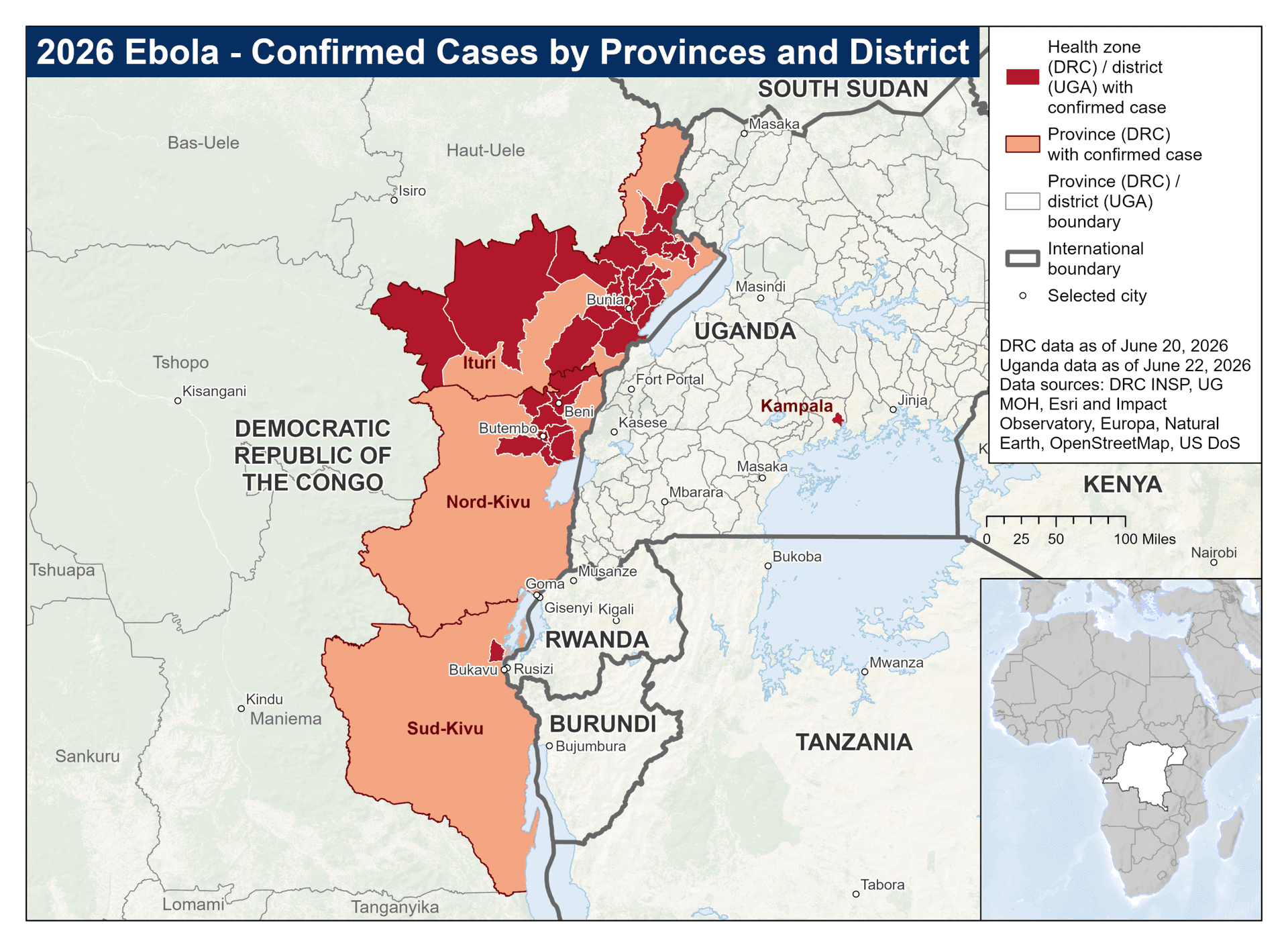
A deadly Ebola outbreak in the Democratic Republic of the Congo has surged past 1,000 confirmed cases and crossed into Uganda, but the strain’s less dramatic early symptoms may be part of what makes it so dangerous. Health officials say the Bundibugyo virus can begin with fever, body pain, weakness and vomiting, signs that may not trigger immediate isolation and can let transmission chains grow before patients reach Ebola treatment centers.
The Centers for Disease Control and Prevention said the DRC had 1,003 confirmed cases and 254 confirmed deaths as of June 20, while Uganda had 20 confirmed cases and 2 confirmed deaths, plus 1 probable case and 1 probable death, as of June 22. The CDC said the outbreak had become the second-largest Ebola outbreak on record and was moving faster than any other Ebola outbreak to date. The World Health Organization declared it a public health emergency of international concern on May 17, after first being alerted on May 5 to a high-mortality illness in Mongbwalu Health Zone in Ituri Province.
WHO said the first known suspected case was a health worker who fell ill on April 24, and the outbreak spread through Mongbwalu, Rwampara and Bunia health zones. The DRC officially declared its 17th Ebola outbreak on May 15, the same day Uganda confirmed an imported case. WHO confirmed the outbreak in both countries in May and said it was caused by Bundibugyo virus disease, a rare Ebola species for which there is no licensed vaccine or specific treatment, although supportive care can save lives.
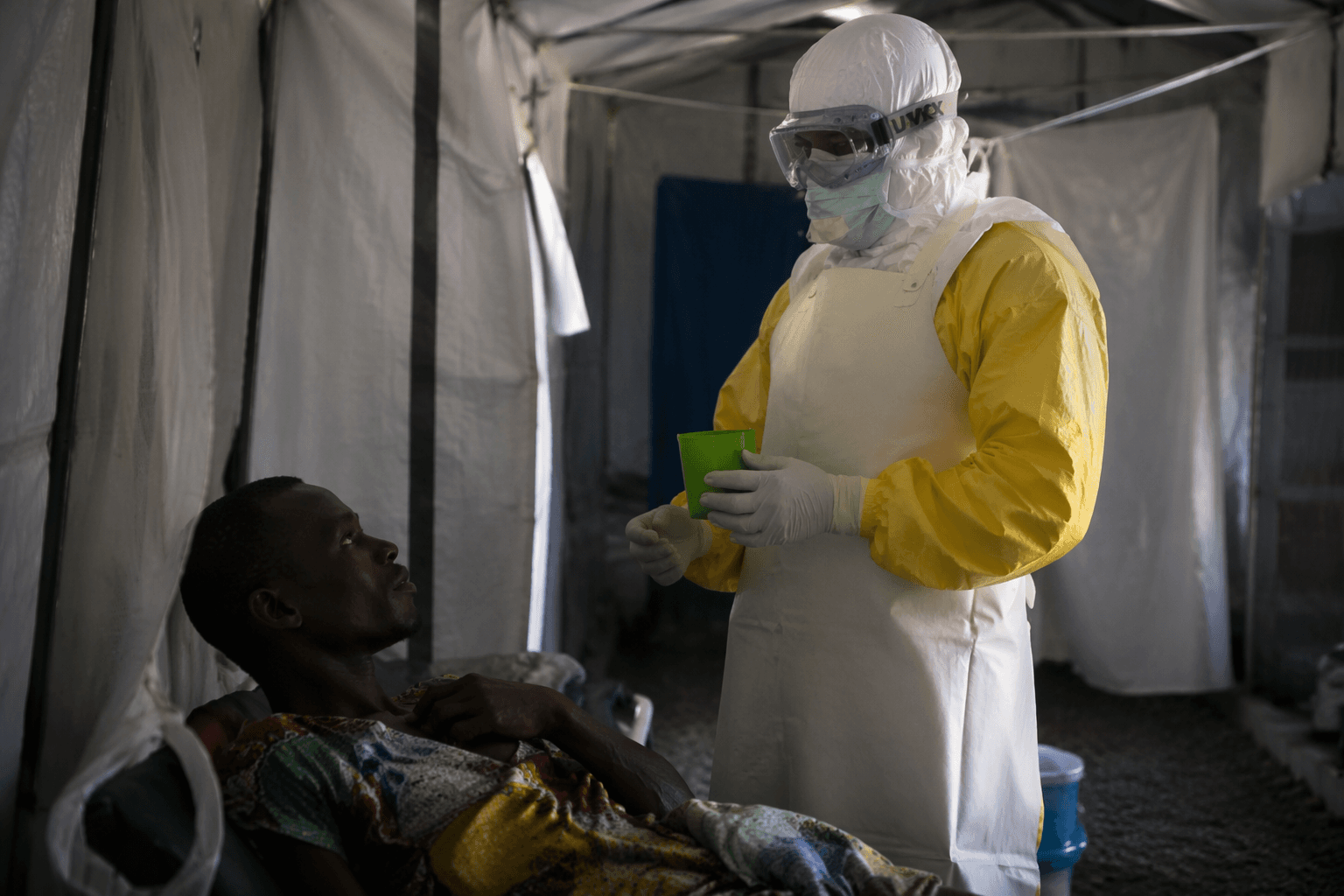
What alarms officials is not only the case count but the context. WHO says the outbreak is unfolding amid humanitarian crisis, insecurity and heavy population and trade movement, conditions that make surveillance and contact tracing much harder. On June 3, WHO Director-General Tedros Adhanom Ghebreyesus said the outbreak had a big head start but that the agency was “catching up,” while warning that testing, surveillance, vaccine development and community trust all remained major challenges. WHO said contact-tracing follow-up was about 45 percent and needed to rise above 90 percent to stay ahead of the virus.
Bundibugyo virus was first identified in Uganda in 2007, and previous outbreaks in Uganda in 2007 and the DRC in 2012 had death rates of 32 percent and 55 percent. CDC said past Bundibugyo outbreaks have had mortality rates of roughly 25 percent to 50%, and WHO put past case fatality rates at 30 percent to 50 percent. The CDC said the risk to the U.S. public remains low and no U.S. cases had been confirmed as of June 22, but it has issued travel health notices and put enhanced screening and entry restrictions in place for affected travelers.
This article was produced by Prism’s automated news system from verified source data, official records, and press releases, then run through automated quality and moderation checks before publishing. The system is built and supervised by the people who set the standards it runs under. Read our full AI policy.
Know something we missed? Have a correction or additional information?
Submit a Tip