Echinus geyser erupts after six-year dormancy, USGS says monitors active
Echinus, Yellowstone’s largest acidic geyser, began erupting in February after six years quiet; NOAA and park monitors report no immediate danger but are tracking the pattern.
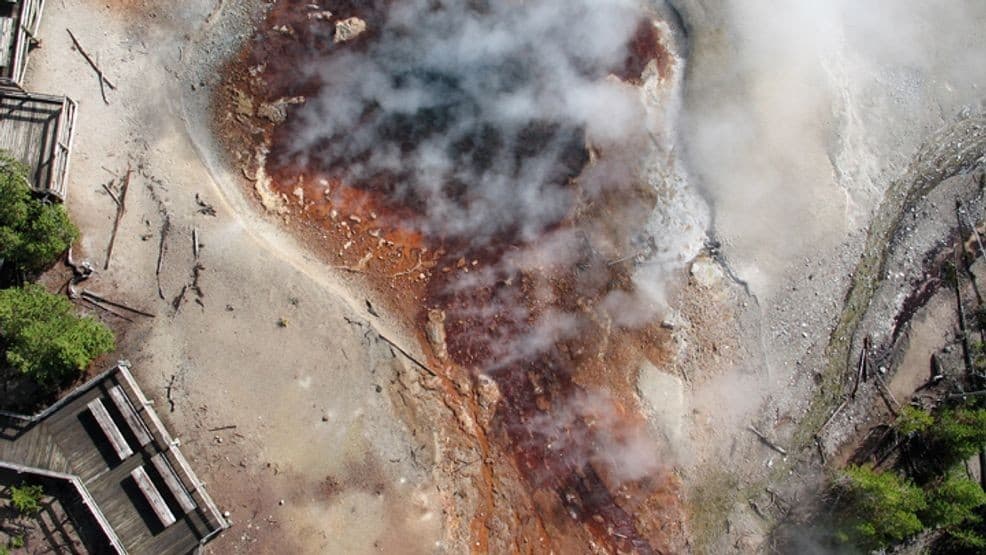
Echinus Geyser in the Back Basin of Norris Geyser Basin erupted on Feb. 7 for the first time since December 2020, producing a string of acidic bursts through mid-February that sent water roughly 20 to 30 feet into the air, federal and park monitors said. The geyser recorded additional eruptions on Feb. 9, 12 and 15 before activity intensified on Feb. 16, when eruptions began repeating every 2 to 5 hours and lasted about 2 to 3 minutes. Park and U.S. Geological Survey monitoring indicates no eruptions have been observed since Feb. 24.
USGS scientists and Yellowstone National Park officials are maintaining continuous monitoring of the feature and public safety features around it. “Geysers are always turning on and off. That's Yellowstone being Yellowstone!” the USGS posted on its public feed. Park records describe Echinus as the world’s largest acidic geyser, with a pool roughly 66 feet across, water measured in the field at a pH near 3.3 to 3.6, and temperatures that have been logged as high as 176.5 degrees Fahrenheit. The pool sits about 660 feet from Steamboat Geyser and is ringed by vivid red mineral deposits and spiny, silica-coated cones that gave the feature its sea-urchin name when surveyed in the late 19th century by mineralogist Albert Charles Peale.
The recent February pulse mirrors a brief active phase the geyser displayed in 2017, when frequent eruptions occurred over several weeks. Historical records kept by park scientists show far greater variability in Echinus’s behavior: by the 1970s it erupted on roughly 40- to 80-minute cycles, some eruptions in the 1980s and 1990s lasted up to 90 minutes, and past columns have been measured as high as about 75 feet. The National Park Service has called the feature a “perennial crowd-pleaser,” a characterization park managers say reflects its long history as a public attraction when active.
Officials emphasize that the February activity presented no immediate threat to visitors or infrastructure and that the boardwalk and tiered viewing platforms that surround the pool remain the primary means for safe observation. Yellowstone Volcano Observatory and park staff continue to publish near-real-time temperature graphs and other monitoring data online so researchers and the public can follow fluctuations in the geyser’s thermal output.
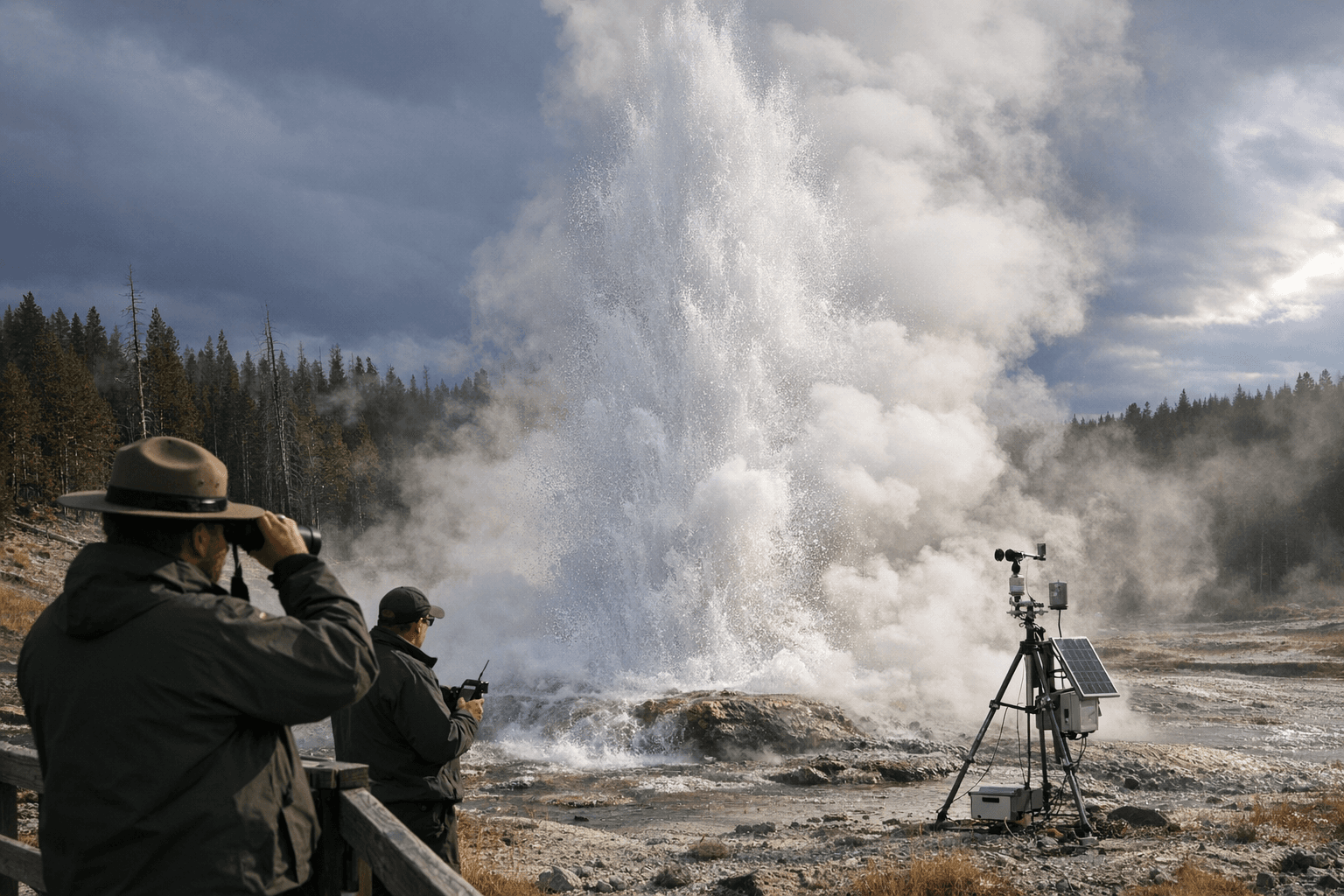
For park managers, the episode underlines perennial challenges in balancing access and safety at dynamic hydrothermal sites. Short-lived reactivations are common and difficult to predict; scientists say the current pulse could fade before the summer tourist season, but they will maintain heightened monitoring. The outflow channel temperature recorder installed in 2010 has documented intermittent eruptions in past years and remains a key tool for early detection of renewed activity.
The eruption raises operational questions for the summer season: whether to pre-position additional rangers at the Norris boardwalk, how to communicate evolving risk to visitors, and how to manage media and photo access for a feature that combines high public interest with volatile natural behavior. Park officials say they will continue to update the public as USGS and Yellowstone Volcano Observatory data make the geyser’s behavior clearer.
Know something we missed? Have a correction or additional information?
Submit a Tip

