Eco-friendly, free-standing PEDOT-based nonwovens enable flexible, wearable touch sensors
Slejko, Manish and Miroglio show electrospun PEDOT:PSS/PEO nonwovens, thermally treated into PEDOT-TT, gain conductivity and pass freshwater and seawater ecotoxicity tests while powering a rehab glove.
Slejko, E.A., Manish, V., Miroglio, R., et al. published a multidisciplinary open‑access study on 07 March 2026 reporting free‑standing electrospun nanofiber mats made from PEDOT:PSS blended with PEO, intended for flexible wearable sensors. The team used electrospinning to produce conductive nonwovens and applied a thermal post‑process that the paper names PEDOT‑TT; “Thermal treatment was shown to markedly improve their conductivity and mechanical performance while preserving environmental compatibility.”
The materials and fabrication details in the public excerpt identify PEDOT:PSS as the base conductive polymer and PEO as the blending polymer, with electrospinning listed as the fabrication route that yields free‑standing nonwoven mats. Characterization reported in the article covers electrical, electrochemical and mechanical evaluations, and the authors state that these “comprehensive electrical, mechanical, and ecotoxicological evaluations confirmed their suitability for advanced applications.” The excerpt does not include numeric conductivity or mechanical values, nor the electrospinning parameters or PEDOT:PSS to PEO ratios.
A notable element of the work is its environmental testing: the authors explicitly evaluated aquatic ecotoxicity in both freshwater and seawater and report “no significant toxicity observed in freshwater or marine organisms.” The paper frames that testing as a deliberate sustainability step, positioning these nonwovens as “eco‑friendly” and “environmentally compatible nanofibers.” The publicly available page also carries standard journal metadata language, including a CrossMark prompt to “Check for updates. Verify currency and authenticity via CrossMark,” and a note that a shareable link was not available in the excerpted view.

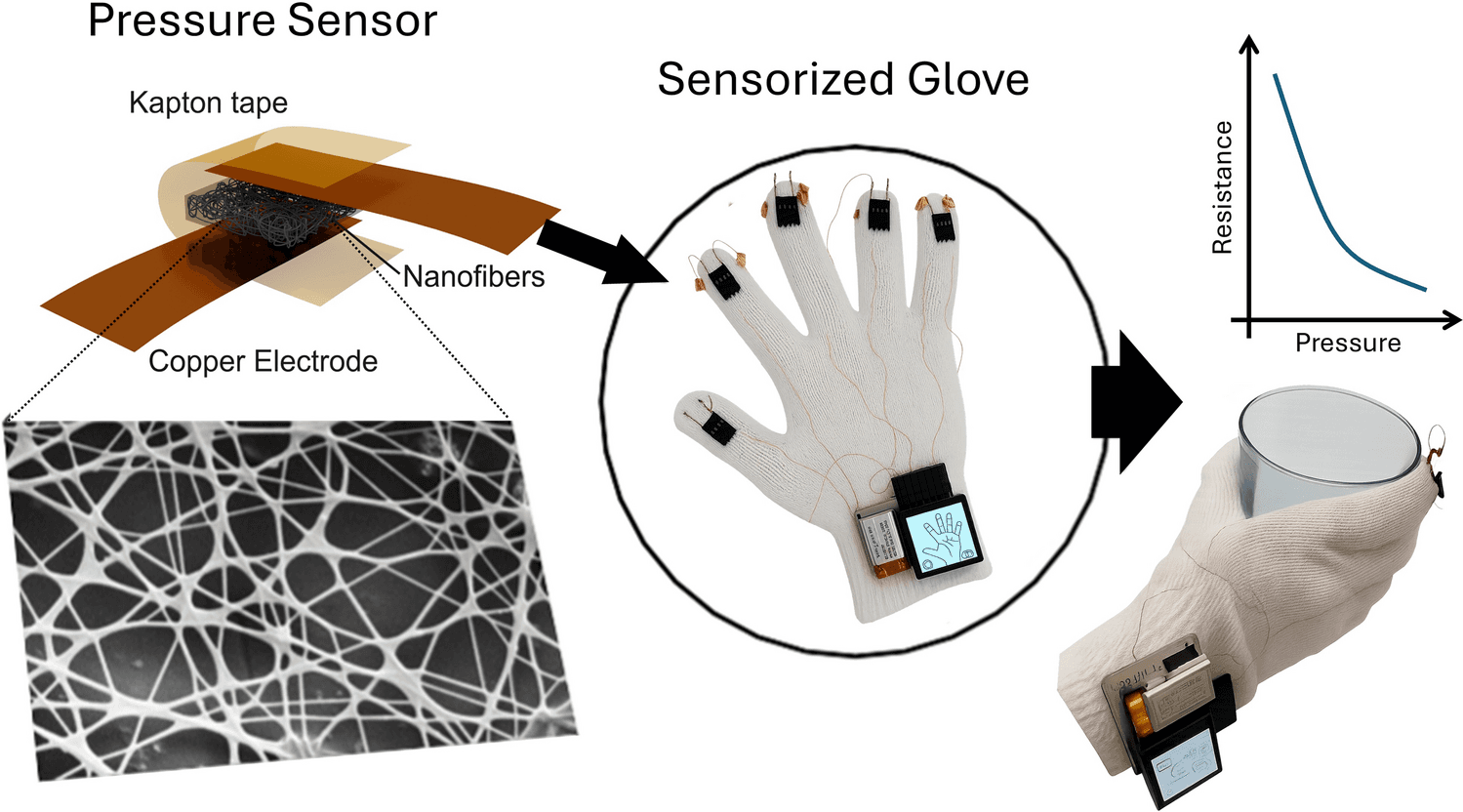
To demonstrate an applied use case, the team built a practical prototype: a rehabilitation glove outfitted with PEDOT‑based pressure sensors. The authors describe this as a “basic sensorized glove prototype” that nevertheless “delivered reliable and precise measurements,” showing translational potential from lab material to wearable device. The paper concludes that “These results underscore the promise of sustainable conductive polymers for next‑generation wearable devices.”
Important gaps remain in the excerpt provided: the journal page shows blank DOI and bibliographic fields in the supplied snippet, and the methods section with electrospinning parameters, thermal treatment protocol, quantitative conductivity and mechanical data, the ecotoxicology test species and exposure conditions, and the glove’s sensor specifications are not present. The Springer page also indicates a limitations section exists, but its text was not included in the excerpt. For designers and product teams weighing integration of conductive nonwovens, the study offers a clear proof of concept tied to environmental testing and a wearable demo, but the missing numerical and procedural details will be essential to assess scalability, performance benchmarking and regulatory safety.
Know something we missed? Have a correction or additional information?
Submit a Tip