Economic Mood Is Split, Republicans and Wealthier Americans Feel Better
Consumer sentiment fell for a fourth straight month to one of its lowest levels on record, yet pockets of optimism persist among Republicans, higher income households, stock owners and younger adults. The divergence matters because it signals uneven spending power, political polarization in economic views, and complications for monetary and fiscal policy.
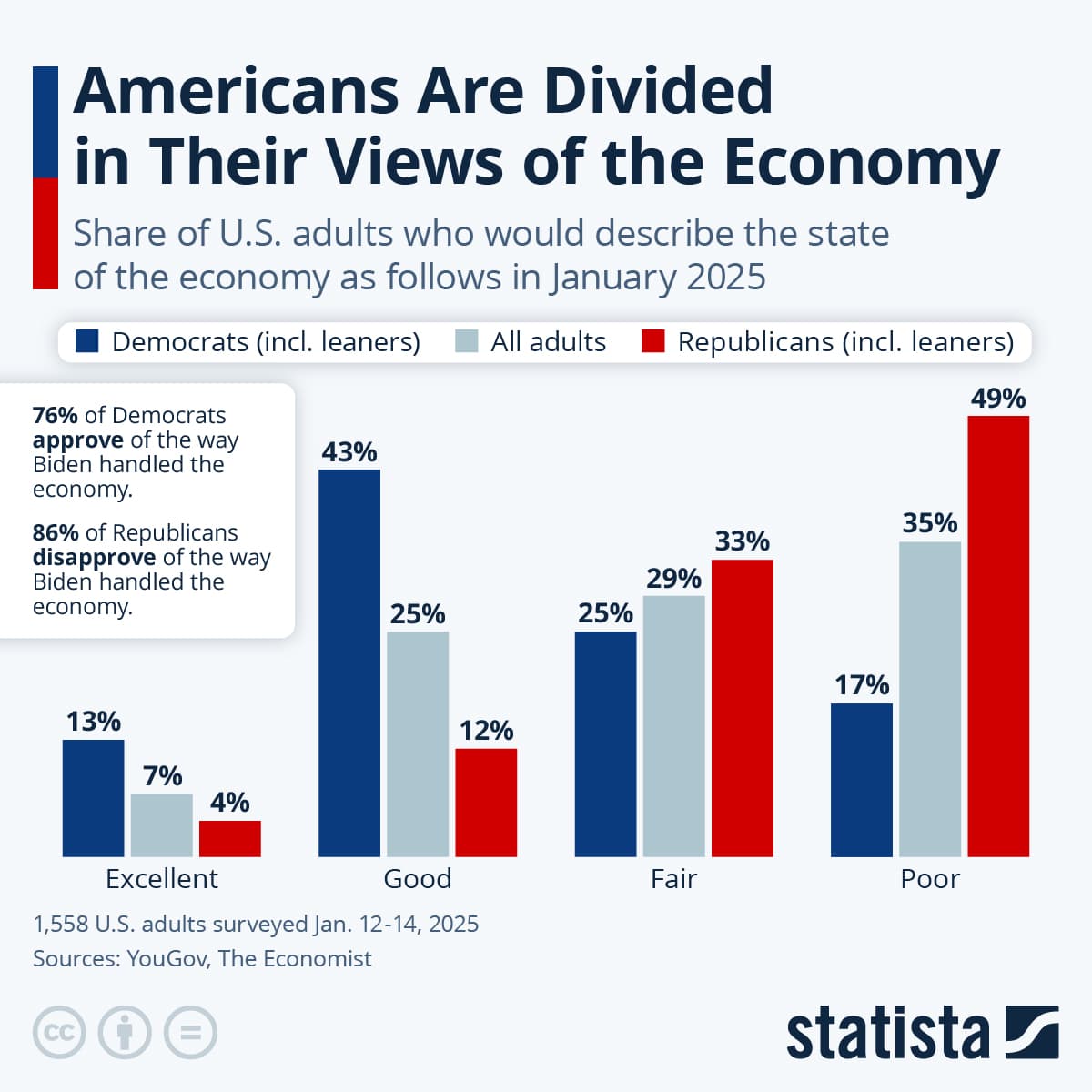
Surveys released around November 27 show a broadly souring view of the economy, but the aggregate numbers obscure sharp divisions across political, income and age groups. The University of Michigan index of consumer sentiment declined for a fourth consecutive month to one of its lowest readings on record. A separate measure from the Conference Board registered a sharp drop in consumer confidence in November. At the same time the job market was showing signs of weakening and the stock market had edged down from last month s record highs. Respondents cited persistent high prices and slowing income growth as central grievances.
Yet the pain is not evenly distributed. Political affiliation remains a powerful predictor of how Americans evaluate the economy. Republicans reported substantially higher sentiment than Democrats and independents, a pattern that has repeatedly emerged when the White House is held by the opposing party. That partisan split can shape consumer behavior, since households who feel confident are more likely to spend on durable goods and services.
Income is another key divider. Households with higher incomes are reporting relatively better financial assessments. Wealthier households spend a smaller share of their budgets on necessities, giving them a cushion against rising prices and supporting continued discretionary outlays. In contrast, middle income families have seen sentiment fall more steeply in recent months, a trend that risks translating into weaker consumer spending in sectors that rely on broad based demand.
Stock ownership also explains part of the divergence. The stock market rally earlier this year lifted financial assets for many investors, and those with significant equity holdings reported improved sentiment. For markets and policymakers this creates feedback effects. Continued equity strength can sustain confidence among asset owners and support financial markets, while a sustained slide could amplify negative sentiment and lead to sharper cutbacks in spending by those groups.

Younger adults stood out as a notably optimistic cohort. Conference Board data showed consumer sentiment among Americans under 35 at its highest level in two years. That upbeat view among younger households may reflect different consumption patterns, labor market attachment, or expectations about future income growth. If sustained, stronger youth sentiment could bolster spending on services and experiences even as older cohorts retrench.
The divergence in sentiment carries immediate market and policy implications. For the Federal Reserve and fiscal policymakers, uneven confidence complicates the assessment of demand conditions. A broad based collapse in sentiment would strengthen arguments for stimulative measures, but if weakness is concentrated among middle income and older households while asset owners and younger Americans remain buoyant, policy makers face trade offs between addressing inequality and avoiding overheating asset markets. For businesses, the pattern suggests a bifurcated recovery with growth concentrated in higher end and youth oriented sectors while middle market goods could see softer demand.
Longer term, persistent gaps in economic perceptions underscore structural issues in the U.S. economy. Political polarization, rising wealth inequality, and changing age demographics are shaping how Americans experience inflation, wages and financial markets. How those forces evolve will determine whether current splits in sentiment are temporary swings or the start of more enduring consumption divergence.
This article was produced by Prism’s automated news system from verified source data, official records, and press releases, then run through automated quality and moderation checks before publishing. The system is built and supervised by the people who set the standards it runs under. Read our full AI policy.
Did this article answer your question?

