Economists expect Bank of Canada to hold rates through 2026
All 34 economists in a June poll saw the Bank of Canada holding at 2.25%, as recession fears now rival inflation anxiety across developed economies.
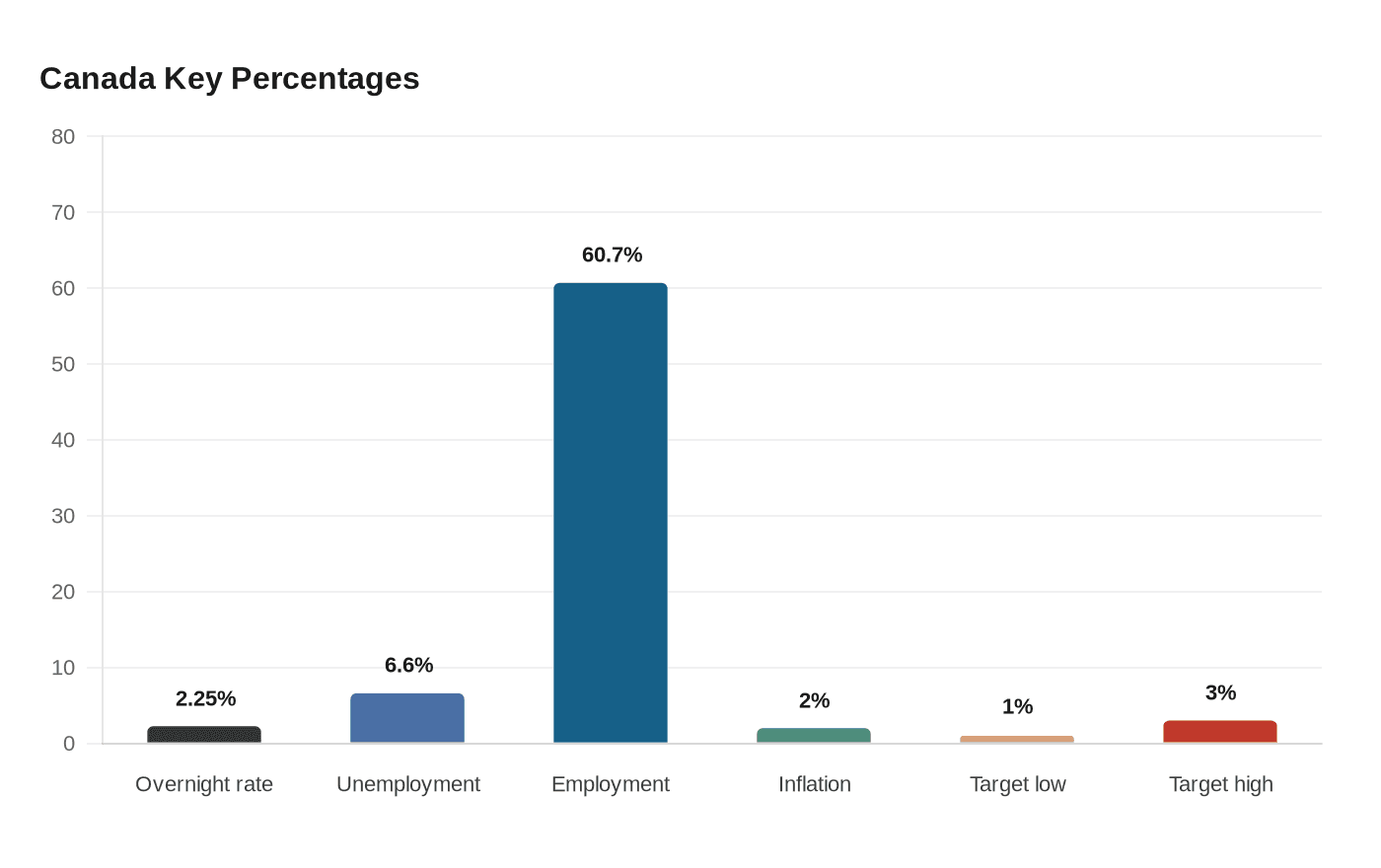
Canada’s central bank is facing a familiar but newly tilted dilemma: the risk of slowing growth now looks more urgent to economists than the risk of inflation flaring back up. In a June 2 to June 5 poll, all 34 economists expected the Bank of Canada to leave its key overnight rate at 2.25% at its June 10 meeting, and more than four-fifths said it would stay there through the rest of 2026.
That consensus captures a broader shift in how monetary policy is being judged in advanced economies. After years of anxiety over rates staying too high for too long, the bigger worry in Canada is no longer only price pressure. It is whether a fragile economy can absorb the restraint that is already in place. The Bank of Canada cut rates by 275 basis points between June 2024 and October 2025, and the current pause marks a clear break from that easing cycle.
Officials have reason to be cautious. Senior Deputy Governor Carolyn Rogers said on June 1 that people should be careful not to place too much weight on two straight quarters of GDP decline as proof of recession, especially after Statistics Canada’s April advance estimate pointed to a likely rebound. The latest labor data also complicated the picture for policymakers who want to cut quickly: Canada added 88,000 jobs in May, unemployment fell to 6.6%, full-time employment rose by 154,000 and the employment rate climbed to 60.7%.
Still, inflation is not demanding an emergency response. The Bank of Canada’s Monetary Policy Report said inflation was around 2% and was expected to remain near the middle of the 1% to 3% target range. That helps explain why economists see the central bank as willing to wait for more evidence before changing course again, even with heightened price risks tied to higher energy costs.
The split is in the market, where traders are still pricing in one rate hike by the end of 2026. That gap between economists and investors suggests the next few months will be watched closely for any change in growth, wages or inflation that could force the bank’s hand. For U.S. readers, Canada is offering a clean case study in the central-bank tradeoff now confronting developed economies: once the economy starts to wobble, keeping rates high can begin to look riskier than cutting too soon.
This article was produced by Prism’s automated news system from verified source data, official records, and press releases, then run through automated quality and moderation checks before publishing. The system is built and supervised by the people who set the standards it runs under. Read our full AI policy.
Know something we missed? Have a correction or additional information?
Submit a Tip