Oil inventories near critical lows as Iran conflict threatens price spike
Global oil buffers were thinning fast, with U.S. gasoline at $4.26 a gallon and traders bracing for a sudden spike if Middle East flows stay blocked.

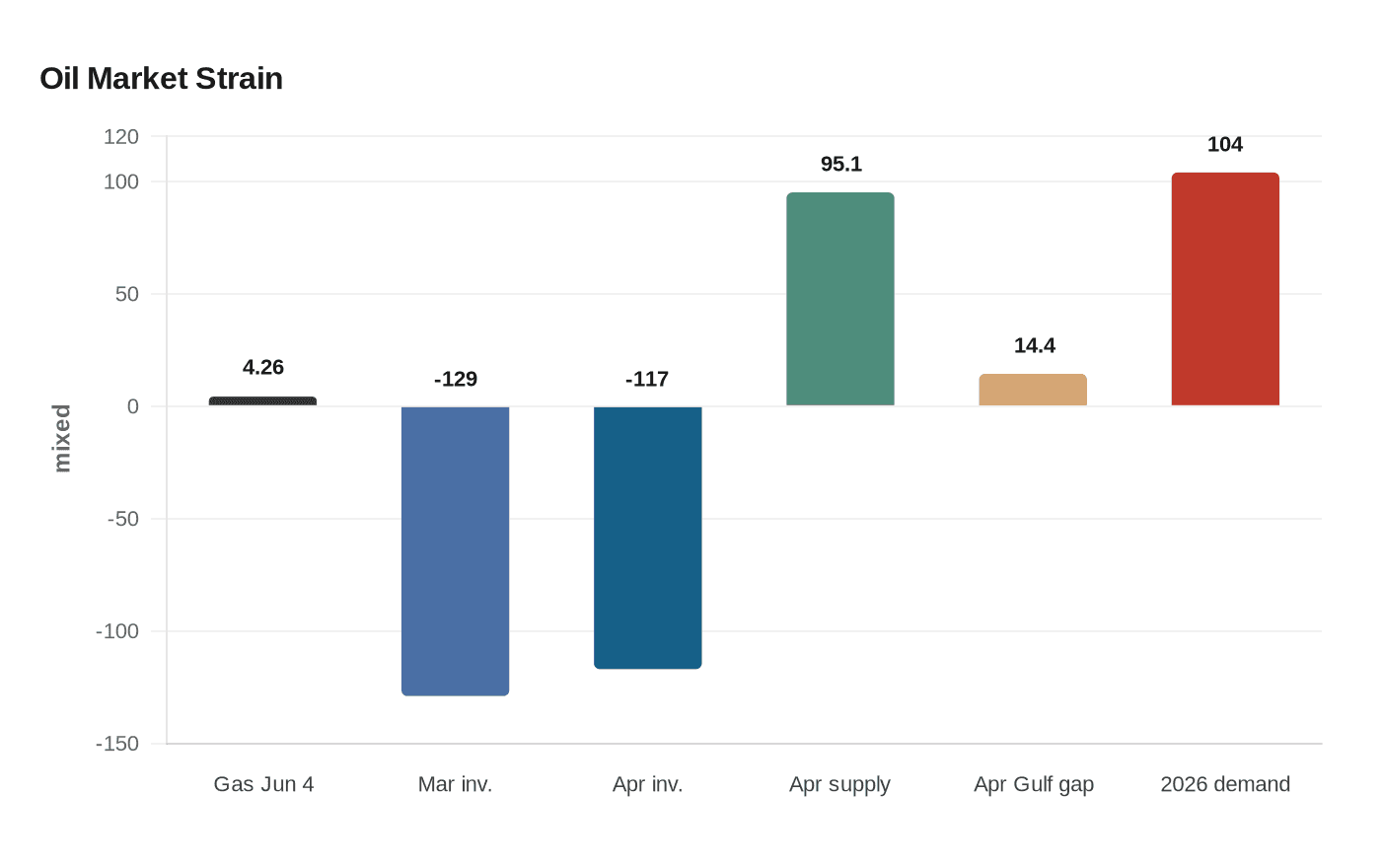
Drivers were already paying for the squeeze. With the Strait of Hormuz still effectively closed, U.S. average gasoline prices reached $4.26 a gallon on June 4, up $1.28 from before the war began, as shrinking crude inventories left markets less able to absorb any fresh shock. The danger now is not just a higher pump price. It is a broader inflation jolt that could reach bond yields, slow growth and force central bankers back into a fight they had been trying to leave behind.
Neil Chapman, Exxon Mobil’s senior vice president, told a Bernstein conference in New York on May 28 that inventories were approaching unheard-of levels. He warned that once stockpiles fell further, prices could jump quickly, with Brent crude potentially surging to $150 to $160 a barrel if the market lost what little cushion remained. The concern is that oil has stayed below $100 so far only because inventories and reserve releases have softened the blow from the Iran-related closure. That cushion is getting thinner by the day.
The International Energy Agency said the shutdown of tanker traffic through Hormuz had already cost the market more than 1 billion barrels, which it described as the largest oil supply disruption in history. Its May oil market report showed global observed oil inventories fell by 129 million barrels in March and another 117 million barrels in April. Output from Gulf countries affected by the closure was 14.4 million barrels a day below pre-war levels in April, while global oil supply dropped by 1.8 million barrels a day that month to 95.1 million barrels a day. The agency also forecast that world oil demand would contract by 420,000 barrels a day year over year in 2026, to 104 million barrels a day, a sign that high prices themselves could start destroying demand.
Toril Bosoni, who heads the IEA’s oil markets division, said that even if an agreement to reopen the strait were reached immediately, a best-case return to normal flow could still take six to eight months. That lag matters because summer fuel demand is approaching its seasonal peak in the Northern Hemisphere. If stock draws continue, inventories could fall to critically low levels before any reopening is complete.
The strain was visible in the United States as well. Crude inventories, including the Strategic Petroleum Reserve, fell to 791 million barrels in the week to May 29, their lowest level since February 2024. Cushing, Oklahoma, the storage hub that helps set the tone for U.S. crude prices, was nearing operational minimums as refiners and exporters drew down domestic stocks to offset the Middle East shortfall. Industry executives had privately warned the Trump administration that the situation could trigger a price spike in the next several weeks, even as the White House and Energy Department denied specific discussions. If Hormuz stays shut much longer, the next move in oil could come suddenly, and the economic fallout would follow just as fast.
This article was produced by Prism’s automated news system from verified source data, official records, and press releases, then run through automated quality and moderation checks before publishing. The system is built and supervised by the people who set the standards it runs under. Read our full AI policy.
Know something we missed? Have a correction or additional information?
Submit a Tip