Nasdaq plunges 4% as hot jobs report sparks selloff
A hotter-than-expected jobs report sent the Nasdaq down 4.18%, and traders began pricing in a possible Fed hike by year-end.
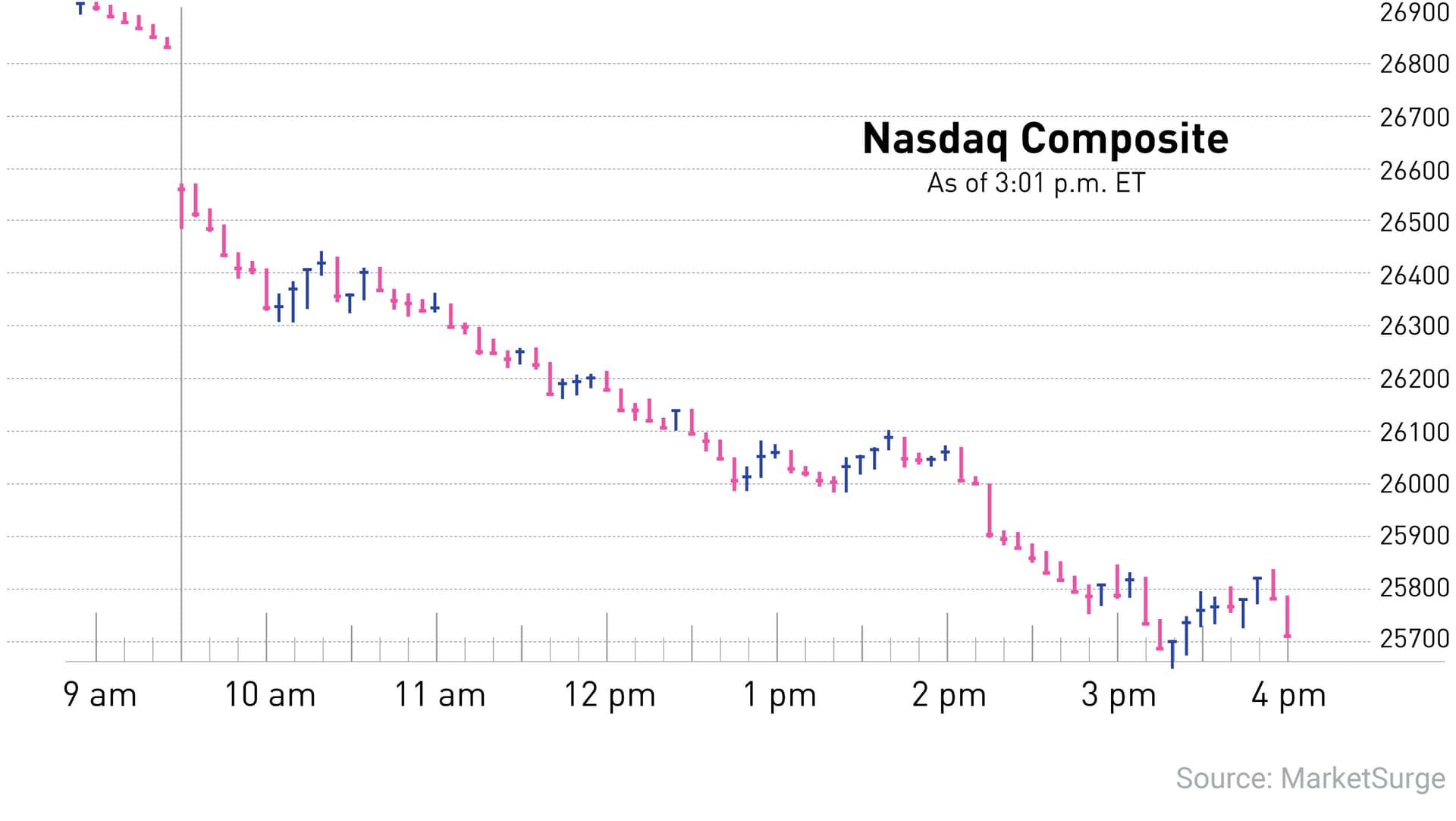
A hotter-than-expected May jobs report jolted Wall Street into a sharp repricing of the AI boom, sending the Nasdaq Composite down 4.18% to 25,709.43 and wiping out a week of confidence in chip-heavy technology stocks. The selloff hit Friday, June 5, after Treasury yields climbed and traders cut back expectations for near-term Federal Reserve rate cuts, with some even raising the odds of a hike by the end of 2026.
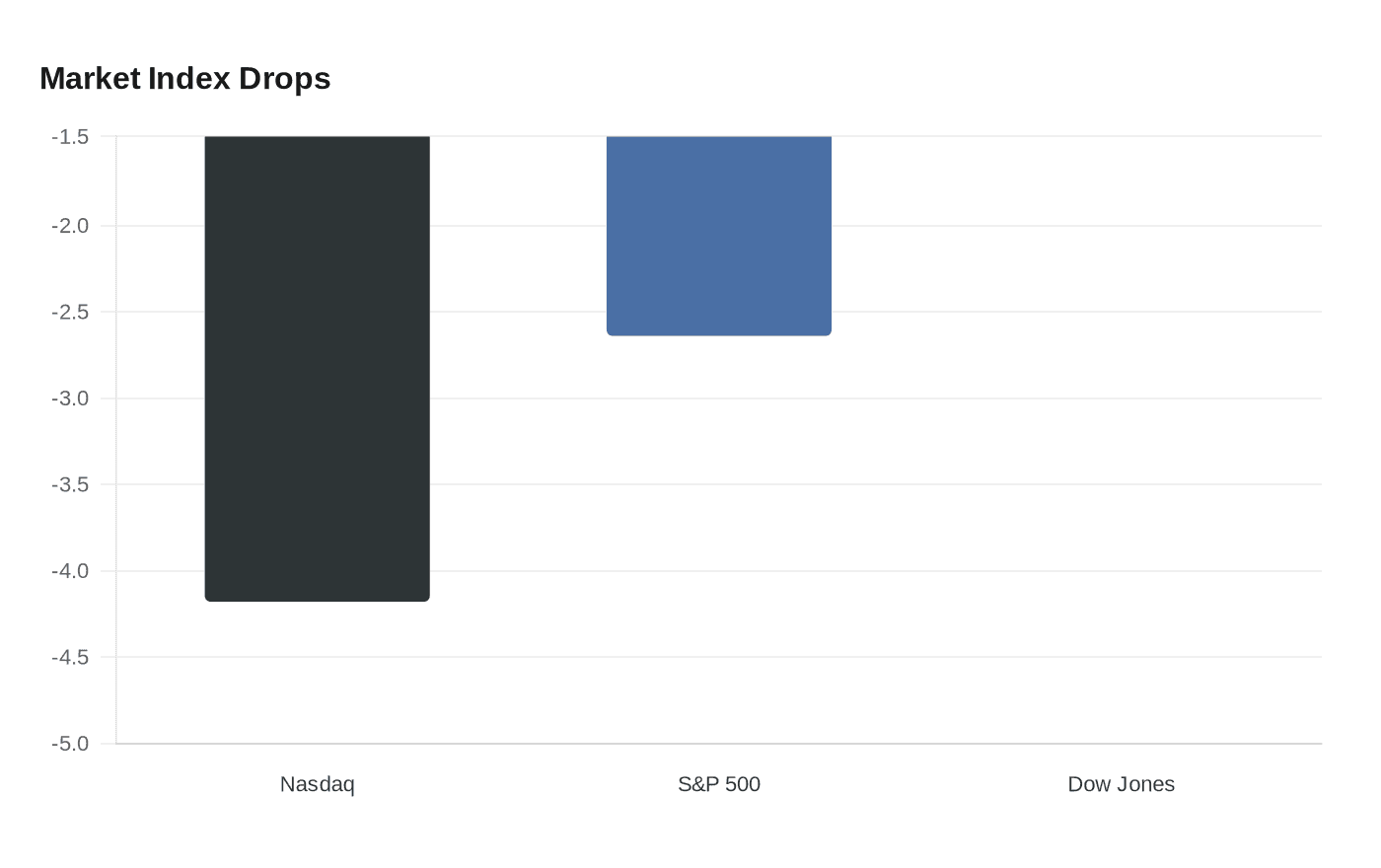
The Nasdaq’s drop was its worst since April 2025. The S&P 500 fell 2.64% to 7,383.74, its worst day since October and its first losing week in 10. The Dow Jones Industrial Average slipped 695.15 points, or 1.35%, to 50,866.78, a stark reversal after the blue-chip index closed at a record the day before. The move spread beyond stocks: investors also sold bonds, bitcoin and gold as the stronger labor market data pushed rates higher.
The hardest hit corner of the market was semiconductors, the sector that has powered much of the AI rally for the past year. The PHLX Semiconductor Sector index fell as much as 8.92% intraday, and market commentary said it had been near all-time highs only days earlier. Broadcom’s weak guidance earlier in the week had already rattled confidence, and Friday’s selling turned that nervousness into a broad de-risking across chip names.
Even after the pullback, the AI trade has not been erased. Nvidia remained up about 10% for the year, and Broadcom more than 11%, underscoring how much of 2026’s stock gains have rested on a handful of large chip names. That concentration matters for retirement savers because many 401(k)s and index funds have heavy exposure to the same megacap technology stocks that powered the rally on the way up.
The market’s message was less about one jobs report than about rates and valuations. Stronger payroll data means the economy may not need as much monetary support, which raises discount-rate pressure on high-multiple tech stocks whose profits are expected further in the future. By midday Friday, traders were pricing in about a 70% chance of a rate hike by the end of 2026, a dramatic swing from the assumption that cuts were still the more likely path.
That is what made Friday so important: it was a stress test of the AI trade. Investors were no longer just rotating out of a few overheated chip names. They were asking whether the broader market has become too dependent on continued perfection from the same technology stocks that carried it higher.
This article was produced by Prism’s automated news system from verified source data, official records, and press releases, then run through automated quality and moderation checks before publishing. The system is built and supervised by the people who set the standards it runs under. Read our full AI policy.
Know something we missed? Have a correction or additional information?
Submit a Tip