English football trials new goalkeeper time limit to curb time-wasting
Goalkeepers now face an eight-second clock and a visible five-second countdown, with an indirect free kick for any overrun.
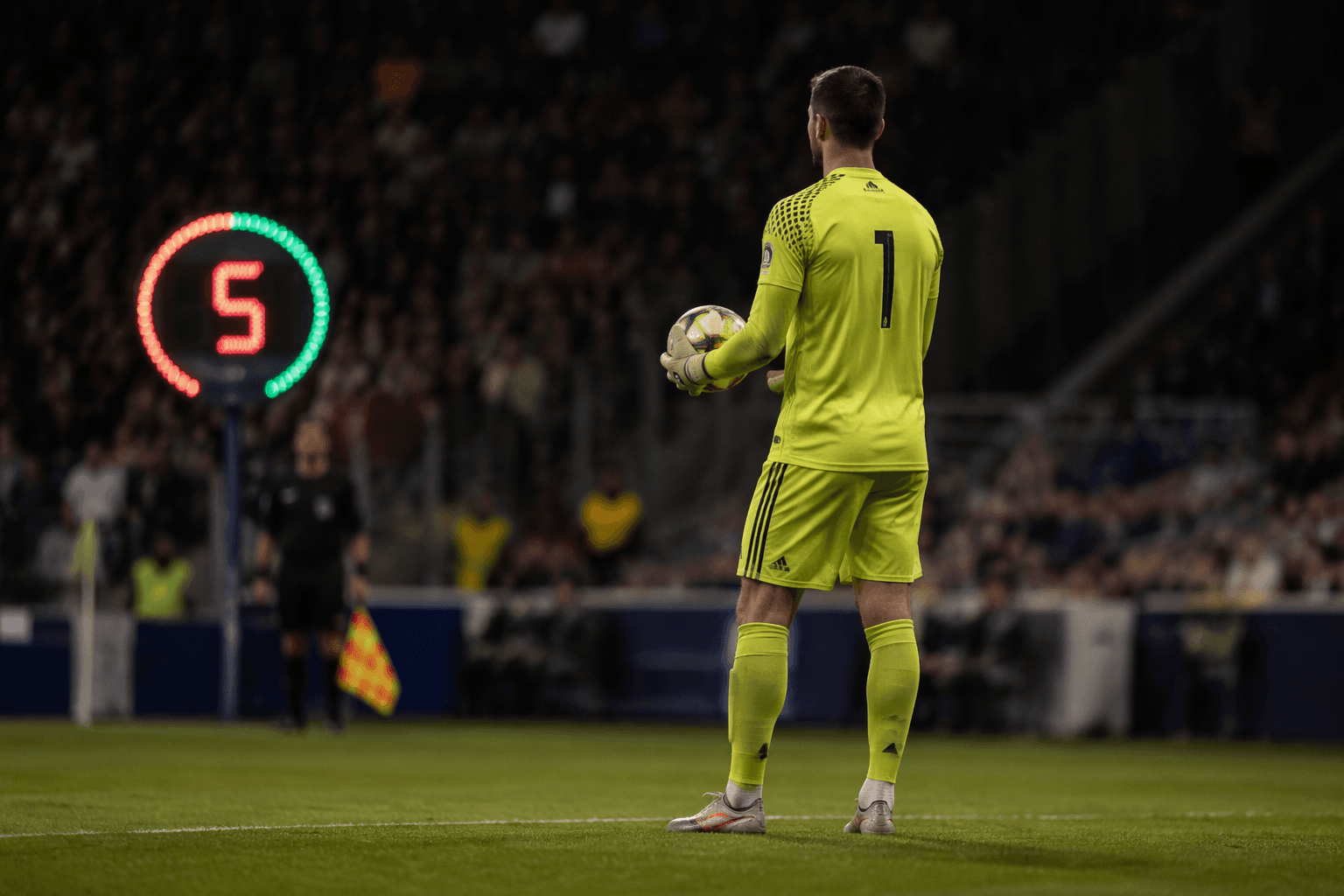
English football is trialling an eight-second limit on goalkeeper possession this season, with the opposition awarded an indirect free kick if a keeper holds on too long. The move is designed to shut down the “tactical timeout” that has let teams slow matches, call for treatment and buy coaches time to pass on instructions.
The change grew out of the long-standing six-second rule in Law 12, which The IFAB said was rarely enforced because indirect free kicks inside the penalty area are awkward and slow to administer. That gap in enforcement helped encourage goalkeepers to sit on the ball for extended spells, stretching match tempo and feeding the sense that time-wasting had become part of the game’s darker arts.
In March 2025, The IFAB approved a change for the 2025/26 Laws of the Game that raised the limit to eight seconds and required referees to use a visual count for the final five seconds. If a goalkeeper still has the ball after eight seconds, the restart is an indirect free kick to the opposition. The governing body said earlier trials to stop keepers holding the ball for too long had a major positive impact, which pushed lawmakers to harden the law rather than leave it to individual interpretation.
The Premier League’s 2025/26 guidance handbook already includes a dedicated “Goalkeeper 8 Seconds” section, underscoring that the rule is being operationalised at competition level. The Premier League has also said several rules introduced at the FIFA Club World Cup and the European Under-21 Championship will be used this season, tying English football’s trial to a wider push for quicker restarts and cleaner match flow.
Pressure to act intensified after Chelsea goalkeeper Robert Sanchez sat down on the Wembley turf and signalled for treatment during the FA Cup semi-final against Leeds United, prompting referee Jarred Gillett to stop play. The episode became a flashpoint because it looked less like an ordinary injury pause than a deliberate reset point in the middle of a high-stakes match.
The same concern has already reached the game’s rule-makers beyond England. One proposal under discussion would force a team to temporarily remove an outfield player if its goalkeeper goes down injured, removing the incentive to use an injury stoppage as a tactical timeout. Leeds United manager Daniel Farke sharpened that debate after accusing Manchester City goalkeeper Gianluigi Donnarumma of feigning injury so Pep Guardiola could pass on instructions. FIFA has since moved to ban goalkeeper tactical time-outs at the 2026 World Cup, a sign that the crackdown is moving from a nuisance issue to a credibility test for the sport’s officials.
This article was produced by Prism’s automated news system from verified source data, official records, and press releases, then run through automated quality and moderation checks before publishing. The system is built and supervised by the people who set the standards it runs under. Read our full AI policy.
Did this article answer your question?