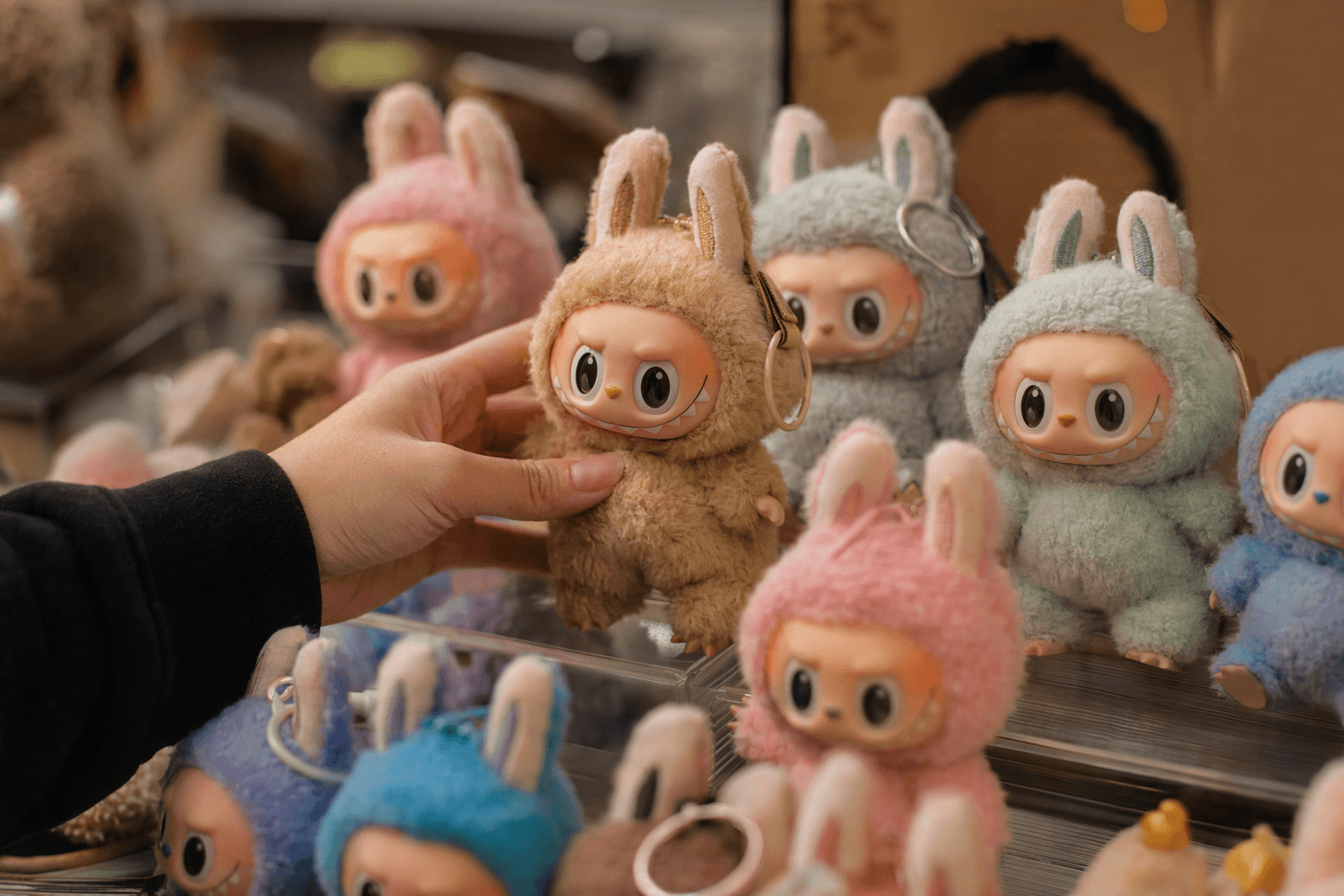
Essential care practices to preserve Labubu figures and plushes
Clear, practical guidance on cleaning, repair and storage for Labubu collectibles. Protects value and appearance without risking inks, flocking or joints.
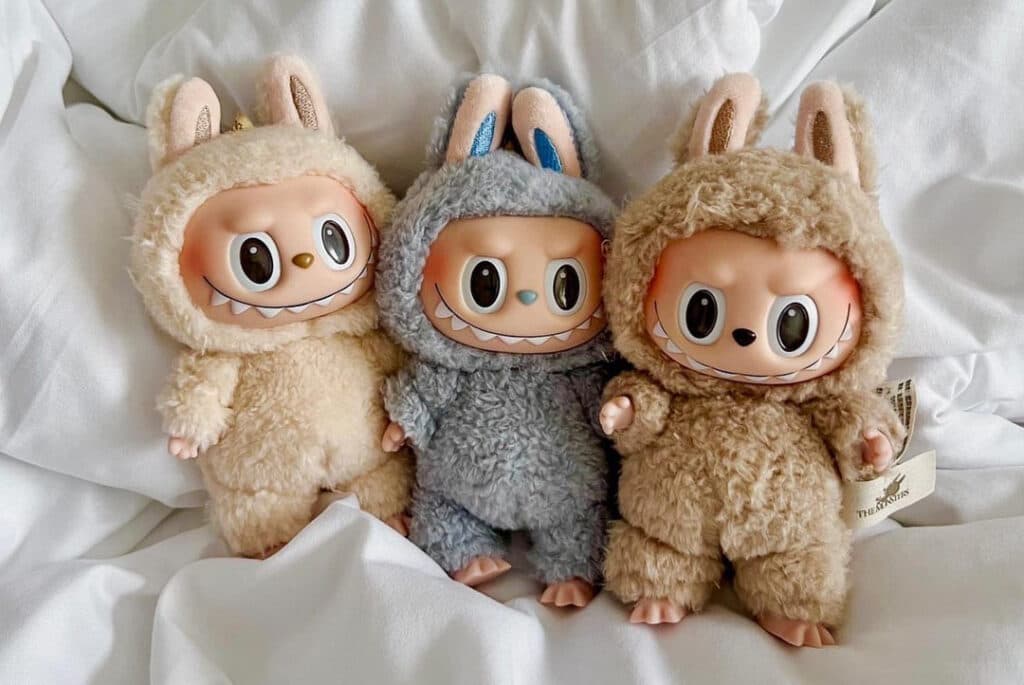
Collectors who want to keep Labubu figures and plushes in near‑mint condition can do a lot with gentle cleaning, material‑specific repairs and smart storage. This article lays out the materials you will commonly face, what each means for care, safe cleaning steps, and storage and display practices that preserve value and appearance without weakening inks, finishes or joints.
Start by identifying materials. Soft plush keychains and plush Labubu usually use polyester or acrylic pile with plastic or embroidered eyes and tolerate only gentle surface cleaning; avoid soaking and never tumble dry. Many figures combine flocked coating over a PVC or ABS base; flocking is velvety and fragile, vulnerable to hand oils, friction and solvents. Painted PVC and vinyl pieces are factory cured and fairly durable but vulnerable to scratches and to acetone or alcohol based cleaners that can dissolve paint or soften plastic. Hard resin and handpainted prototypes are the most sensitive to abrasion and UV exposure and often require conservative handling.
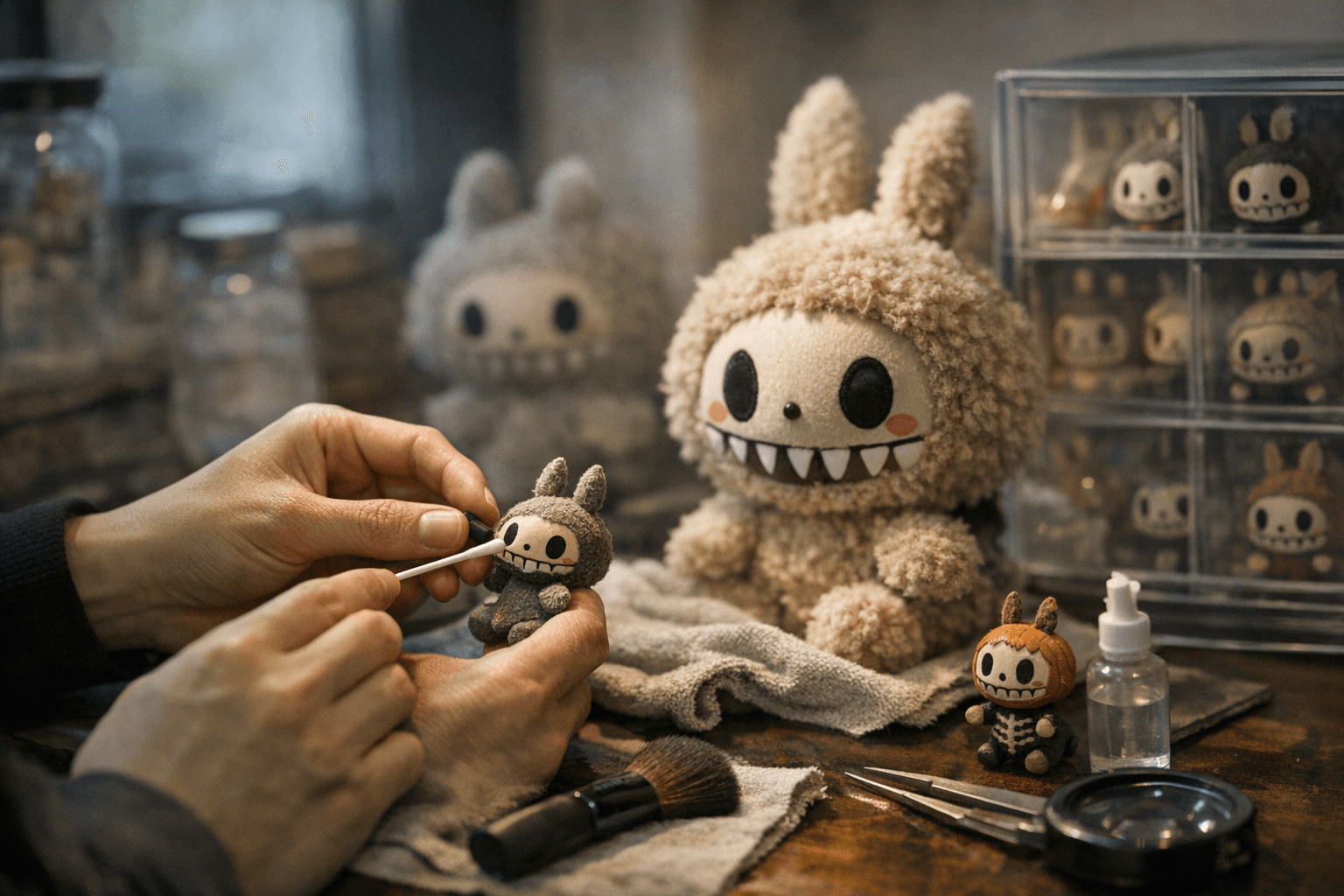
Cleaning begins with dusting. Use a soft camel hair or microfiber brush for general dust. For flocked surfaces, a very soft artist round brush in sizes #2 to #4 is best; brush gently along the fiber direction to avoid crushing the nap. For plush surface dirt, spot clean with a damp cloth and a mild detergent solution made from a drop of pH‑neutral soap in a cup of water. Blot rather than rub, air dry flat and reshape while damp. For vinyl or plastic grime, wipe with a microfiber cloth dampened with water and use a tiny amount of diluted dish soap for stubborn spots; rinse with a damp cloth and dry immediately.
Address sticky residues with a putty eraser for small bits. For persistent residue on hard plastic, a dab of isopropyl alcohol on a cotton swab can work, but always test in an inconspicuous area first. Reattach fabric parts with a small amount of PVA white glue. For plastic parts, cyanoacrylate bonds quickly but can fog glossy surfaces, so use sparingly. For high value prototypes or major paint work, consult a conservator or professional restorer rather than attempting heavy repainting.
Handling and display choices reduce wear. Carry figures by the base or torso instead of appendages, and wear cotton or nitrile gloves when handling rare or signed pieces. Use acrylic or glass display cases with UV filtered glazing and avoid sealing cases completely; a small gap or periodic airing prevents trapped humidity. Ideal storage conditions are 18–22°C (64–72°F) and 40–55 percent relative humidity. Avoid direct sunlight, attics, basements and heating vents.
Pack and ship with archival care. Wrap delicate items in acid free tissue, use breathable polyethylene bags for short term protection and avoid airtight long term storage if you cannot control humidity. Use foam inserts to prevent movement and avoid polystyrene peanuts contacting painted or flocked surfaces. Preserve provenance by keeping original boxes, receipts and certification cards and photograph serial numbers or holograms, storing copies in both cloud and local backups.
Keep a basic kit on hand: microfiber cloths, soft artist brushes, cotton swabs, nitrile gloves, pH neutral soap, archival tissue, polyethylene bags, adjustable humidity packs such as Boveda, small PVA glue, a putty eraser and soft foam for packing. With gentle, material‑aware care and attention to humidity and provenance, you can keep Labubu looking cuddly, not crusty, and protect value for years to come.
Know something we missed? Have a correction or additional information?
Submit a Tip