Essential Care Tips for Cleaning, Storing, Preserving Pearl Jewelry
Keep pearls luminous by wiping them after every wear, avoiding harsh machines and chemicals, and following a simple inspection and restringing schedule to preserve nacre and settings.
1. Why pearls need special care
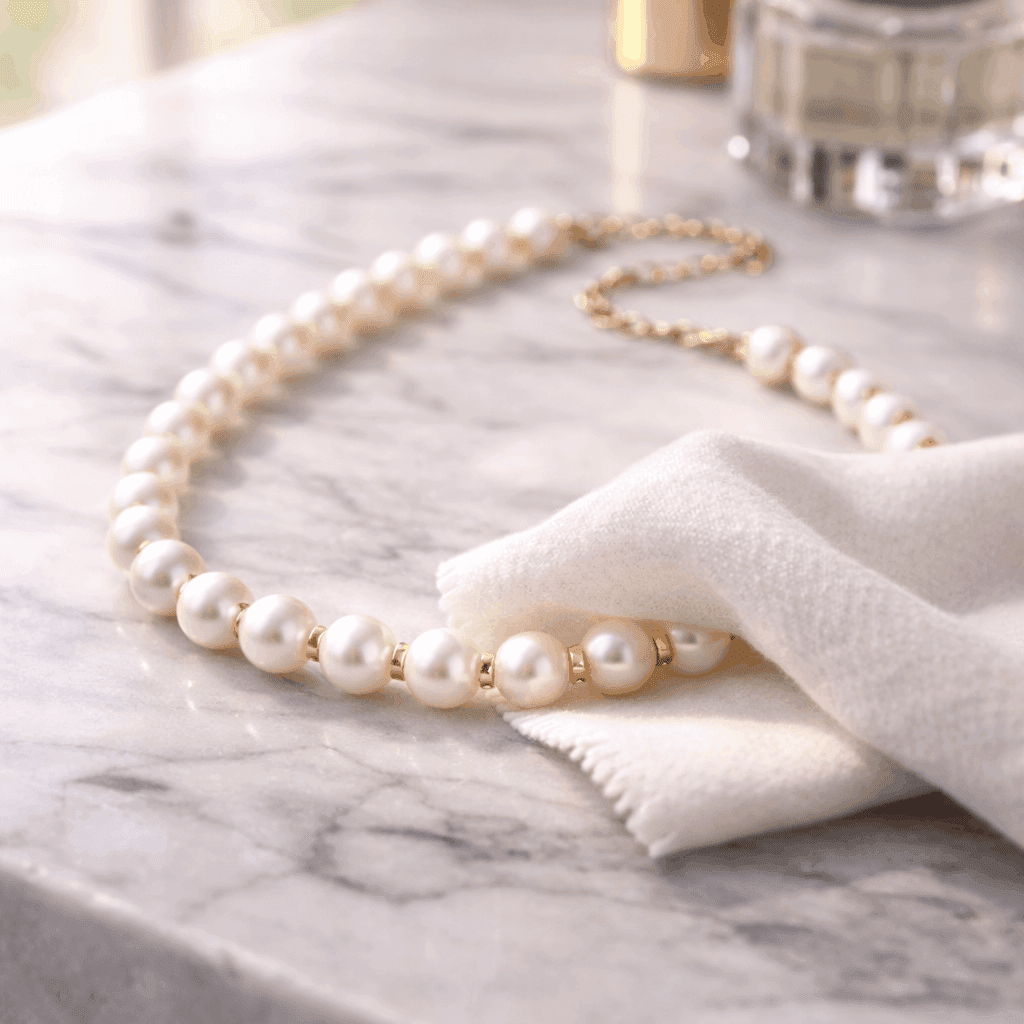
Pearls are organic gemstones made of a nucleus wrapped in fragile layers of nacre; Qevon notes they sit at a Mohs hardness of only 2.5–4.5, which makes their surface unusually vulnerable to scratches and chemical attack. Qevon also states, “Pearls are made of a nucleus surrounded by a very thin layer of lustrous nacre and held together by colchicine, a natural adhesive that dries out after prolonged exposure to heat. A thicker nacre results in a more durable but also more expensive pearl.” Mikimotoamerica adds that pearls are “vulnerable to acid, alkaline and extremes of humidity,” so their organic biology—not mineral hardness—defines how you clean, store, and preserve them.
2. Daily after‑wear routine
Wipe pearls with a soft, lint‑free cloth after each wear to remove body oils, perspiration, makeup and residue; this is the single most effective habit to prolong nacre luster. The original guidance says simply: “Wipe pearls with a soft, lint‑free cloth after each wear to remove body oils and residue;” Pearlsonly echoes this as daily maintenance, and Mikimotoamerica advises doing this “before returning your pearls to the jewelry box.” Make this a thirty‑second ritual—fast, dry polishing of each bead—so oils never sit long enough to break down the surface.
3. Put them on last, take them off first
Make jewelry the final step in your dressing routine and the first thing you remove when changing: Timelesspearl and Mikimotoamerica instruct you to “put on your jewelry as a final touch, after applying make-up and styling hair,” and to remove pearls before cleaning or changing clothes. Avoid letting perfume, hairspray, lotion or cosmetics reach the pearl surface—Mikimotoamerica warns, “To preserve your pearls' radiance, avoid letting them come into contact with cosmetics, hair spray, or perfume.” This habit cuts most chemical exposure before it happens.
4. Gentle spot cleaning for buildup
When visible buildup appears, clean pearls gently with a mild soap and a soft, slightly damp cloth; Timelesspearl recommends a “gentle, deeper clean with mild soap and a damp cloth.” For pieces with metal posts or bands, Pearlsonly permits cleaning the metal with a damp cloth while cautioning: “Just avoid submerging the whole piece in water if pearls are glued in. The glue weakens with too much moisture.” After any soapy wipe, remove residue with a clean damp cloth and dry thoroughly with a soft cotton or lint‑free cloth to avoid trapped moisture.
5. The very limited soak method (use only when appropriate)
Julie Miller of Littlegirlspearls offers an explicit, conservative wet‑clean method for non‑strung or securely mounted pearls: make a quart of warm, filtered water with a small amount of very gentle dish soap or mild shampoo, immerse pearls for a maximum of 15 seconds, rinse in filtered room‑temperature water, and pat dry with a soft cotton cloth—she warns, “Immerse your pearls for a maximum of 15 seconds. Trust me; longer is not better. Think about how your toes get pruney after too long in the tub…pearls do not want to get pruney.” Reconciliation with strand care: Qevon and other specialists caution that silk‑strung necklaces should not be submerged; therefore use this soak only on individual stones or pieces that are not tied on silk or glued.
- Never use ultrasonic cleaners or jewelry cleaning machines—the vibrations are too harsh (Pearlsonly; Mikimotoamerica: “An ultrasonic cleaner should never be used with pearl jewelry as it can damage the pearls.”).
- Never steam clean—“Steam cleaning is way too hot and can crack them” (Pearlsonly).
- Avoid ammonia, bleach, vinegar and baking soda—Pearlsonly states these agents “destroy nacre,” are “acidic and damage pearl surfaces,” or are “too abrasive.”
- Never scrub pearls with toothbrushes or ordinary brushes—Pearlsonly warns “Never scrub pearls with toothbrushes or any brushes—even soft ones scratch them.” (Note: a very soft makeup brush is presented by one blogger as a last‑resort tool; treat that as exceptional and use extreme caution.)
6. What never to do (a short, non‑negotiable list)
Pearlsonly is blunt: “When caring for pearl jewelry, knowing what NOT to do prevents most damage. One wrong product ruins expensive pieces instantly.”
7. Storage and travel
Store pearls separately, in a soft pouch or a lined compartment, with clasps fastened to prevent tangles and contact with hard stones; Pearlsonly recommends keeping a pearl bracelet “in its own soft pouch or lined compartment,” while Mikimotoamerica says to “fasten clasps and pins, then lay each item out separately in a compartmentalised jewelry box.” Avoid long‑term sealed storage: Mikimotoamerica cautions that “Leaving pearl jewelry in a security box for long periods may cause pearls to dehydrate, so enjoy them frequently.” For travel, Littlegirlspearls suggests extra padding—bundle pearls into a soft pouch inside another soft layer (she even suggests a clean sock) so they remain “as snug as a bug in a rug.”
8. Inspection, restringing and professional servicing schedule
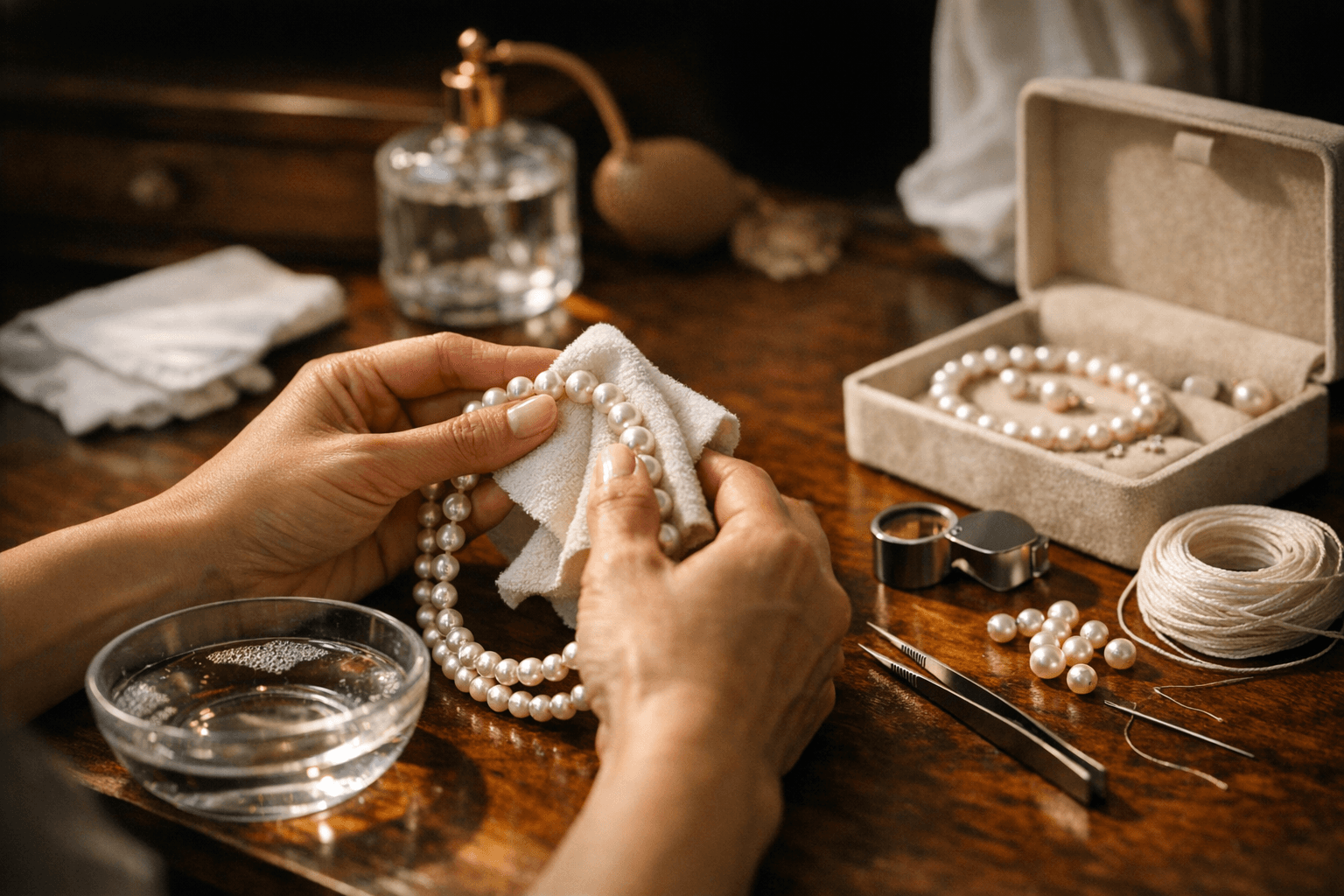
Inspect clasps, knots and settings monthly or at each seasonal change; Timelesspearl advises “Once a month, or at the start of each season, take a closer look. Inspect clasps and settings. Check for dull buildup.” For necklaces, evaluate the silk every few years for fraying, stretching or gaps and restring as required—Timelesspearl and Mikimotoamerica both recommend periodic restringing, and Mikimotoamerica warns that a stretched thread “may break suddenly.” For a full professional check and deep clean, Qevon recommends bringing pearl jewelry to a jeweler once a year; Pearlsonly suggests rare pearls worn monthly or less receive a deeper clean “maybe 2–3 times yearly.”
9. Special cases: glued pearls, pearl rings, earrings and metal parts
Recognize construction differences. Pearlsonly cautions that glued settings deteriorate with moisture—“the glue weakens with too much moisture”—so do not submerge glued pieces and clean metal posts and bands only with a damp cloth. Mikimotoamerica explicitly restricts pearl rings to dress wear: “In the case of pearl rings, please be aware that these are only to be worn for dress and are not intended for everyday wear,” because daily wear compromises nacre and settings. For earrings and rings where metal is exposed, you can gently clean the metal separately but always dry fully before storing.
10. Tools and supplies to keep on hand
Keep a small kit so care is simple and consistent: a soft lint‑free or microfiber cloth for daily wiping, a soft cotton cloth for drying, a very mild dish soap or mild shampoo for occasional deeper cleaning, and filtered chlorine‑free water if you ever use the short soak method. Also have soft pouches or a compartmentalized box, a protective jewelry pouch for travel, and the contact information for a trusted jeweler for annual checks and restringing. Littlegirlspearls permits a “VERY soft clean makeup brush” only as a last resort on particularly dirty pearls—treat that as an exception, not a routine tool.
11. The preservation ethos — enjoy them, but protect the surface
Pearls reward wear but not abuse—Mikimotoamerica sums it up: “There is a saying that ‘pearls want to be worn,’ and it is true.” Julie Miller reminds us to be tender: “First and foremost – pearls are just like us. They love to be loved... Wearing them keeps them shiny, lustrous and beautiful.” Balance enjoyment with restraint: follow the daily wipe, avoid the banned tools and chemicals, store separately, and maintain a modest professional service cadence. If you keep those simple disciplines, your pearls can retain their original color and luster for decades—if they begin to look dull, seek a specialist rather than aggressive at‑home remedies.
- Daily: wipe each pearl with a soft lint‑free cloth; fasten clasps and stow in a soft pouch.
- Monthly: inspect clasps, settings and string for wear; clean lightly if needed.
- Annual: professional check and deep clean; restring as recommended or when thread shows looseness.
- Never: ultrasonic, steam, ammonia, bleach, vinegar, baking soda, or heavy scrubbing.
Quick essentials checklist
Conclude with confidence: pearls are delicate lives in your jewelry box—treat them with simple, consistent care and they will repay you with decades of soft glow and story.
Know something we missed? Have a correction or additional information?
Submit a Tip