Essential feeding, housing and socialization steps for baby parrots
Practical, species-aware steps to feed, house and socialize baby parrots, plus the experts and editorial tips to keep your care plan accurate and evergreen.
Who this guide is for: new or prospective parrot guardians, experienced owners adding a chick or fledgling to a household, foster volunteers and rescue staff preparing to care for hand-reared or parent-reared baby parrots. What the guide covers: This evergreen primer covers the essentials for early
This piece is written as an evergreen primer: it aims for timeless principles and clear actions while pointing you to the species-specific experts and sources you’ll need. As an editorial rule I follow here: "Edit out time-based references. Avoid using dates, specific years, or phrases like 'this year' or 'recently,' which can quickly date your content." That same guidance shapes the structure, practical steps first, updateable specifics in separate resource blocks so you (or your rescue) can refresh numbers and charts later.
1. Feeding: choose the method, observe the crop, and consult specialists
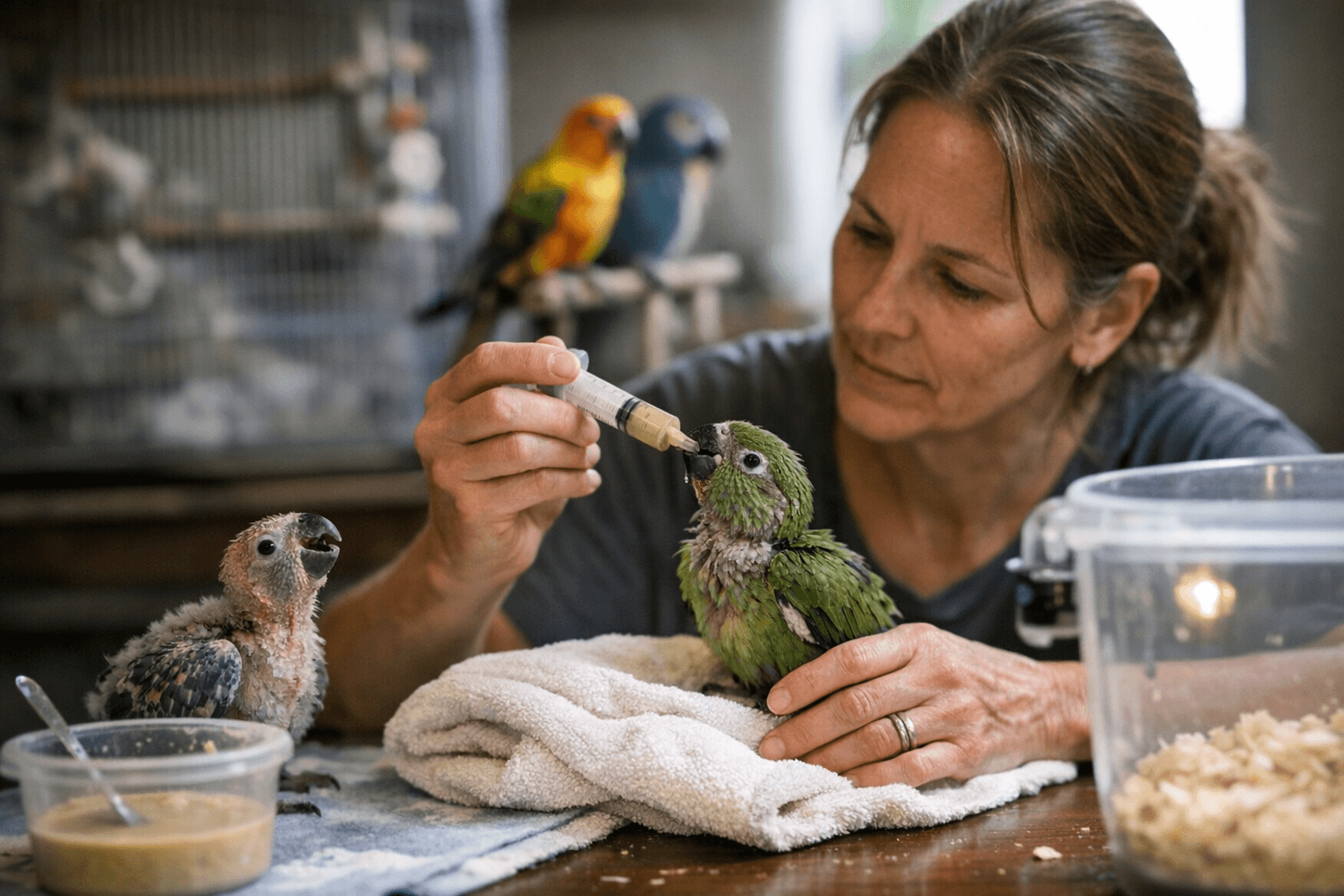
Feeding a chick or fledgling requires choosing the right method, hand-feeding formula or supporting parent-reared feeding, and monitoring intake closely. Hand-reared birds need a species-appropriate formula mixed and warmed to a safe, consistent temperature, given at a frequency that changes daily as the bird grows; parent-reared chicks need careful observation to ensure parents are feeding properly and that no chick is being outcompeted. Watch the crop for proper emptying and for signs of distress such as persistent firmness, delayed emptying, or foul smells; those are clear reasons to contact an avian veterinarian. When in doubt, reach out to the people named in the reporting playbook: avian veterinarians (DVMs with an avian focus), experienced parrot breeders, and local rescue or foster volunteers, these are the experts you should consult to convert principles into species-specific feeding schedules and mixing ratios.
2. Housing: safe brooding, staged transition, and sanitation
A baby parrot’s housing moves through clear stages: sheltered brooding, a protected fledgling area, and then a more permanent cage or aviary suited to adult size and behavior. During brooding, stable warmth and clean, dry bedding are the priorities; as the bird matures, you’ll introduce perches, safe toys, and a larger enclosure that prevents escape while allowing exercise. Sanitation is crucial at every stage, change bedding regularly and disinfect items to reduce pathogen risk, and monitor for signs of respiratory distress or parasites. Editorially, place any numeric charts you use (for brooder temperature ranges, humidity targets, or enclosure dimensions) in a separate box so they can be updated without rewriting the whole guide, this follows the recommendation to "Plan for minimal maintenance. Evergreen content still needs to be occasionally updated. Schedule regular check-ins, like annually or biannually."
3. Socialization: handling, conspecifics, and enrichment to build confidence
Socialization is not optional; it shapes temperament and the bird’s long-term ability to interact with people and other birds. Whether the chick is hand-reared or parent-reared, start with gentle, consistent handling appropriate to the bird’s developmental stage, then layer in exposure to household sounds, supervised interactions with other birds (if available and safe), and age-appropriate enrichment. Use toys and foraging challenges that are sized for fledglings and swap items regularly to prevent boredom and encourage exploration. Prevent problematic imprinting by ensuring the bird experiences a range of caregivers and, when appropriate, time with conspecifics under the guidance of rescue staff or breeders so social behaviors develop normally.
- Keep records: log feeding volumes, body weight (if you can safely weigh the chick), and behaviors, this makes vet consultations productive.
- Watch hydration and stools: dry skin or sticky crop and abnormal feces are signals to seek veterinary attention.
- Rotate enrichment and perching surfaces gradually so fledglings develop foot health and problem-solving skills.
- If the chick is parent-reared, monitor for bullying or underfeeding; intervene with supplemental feedings or foster care when necessary.
Practical tips for daily care (bullet list)
How to use experts and community resources This guide’s audience includes "foster volunteers and rescue staff preparing to care for hand-reared or parent-reared baby parrots", lean on those roles inside your community. Contact avian vets for clinical concerns, experienced breeders for species-specific husbandry, and rescue organizations for protocols on fostering, weaning, and rehoming. Institutions you already trust will supply the concrete feeding formulas, dilution ratios, age-by-age schedules, brooder temperature charts, and species-specific cage sizes that are intentionally omitted here until you verify them with those experts.
A note about being evergreen and easy to update "Repurpose content. Maximize the value of your evergreen content by turning it into different formats, like videos, infographics, podcasts, or social media posts." Design your own care sheets the same way: keep the core principles in this narrative and put changeable numbers (grams, ml, temperatures) in clearly labeled tables or downloadable PDFs you can refresh. The recommendation to separate updateable statistics makes this practical for rescues and long-time caregivers who need a stable, authoritative primer alongside living checklists.
A short sidebar: why “evergreen” appears twice in our sources The word "evergreen" shows up in two very different ways in the material behind this guide. In editorial terms, we mean an "evergreen primer", a long-term reference built for minimal updating. Separately, a literal plant-care piece from Unlimited Lawn Care™ reminds us that caring for living things is seasonal and detailed: "Every year, southern homeowners treasure their evergreen trees and shrubs for the year-round greenery and privacy they provide..." That plant-care passage is a useful metaphor about vigilance and preventive care, but it is unrelated to bird husbandry; treat it as an illustration of how persistent care preserves value, not as a source of avian-specific techniques.
Closing, with a firm responsibility Caring for a baby parrot is a small daily discipline that compounds into a life of trust. Begin with the feeding, housing and socialization principles above, and immediately connect them to the specialists and community resources named here, avian veterinarians, experienced breeders, rescue staff and foster volunteers, to translate principles into the species-specific charts and formulas your bird needs. Keep the core of your plan simple, put the numbers in an updateable box, and you’ll turn early fragility into lifelong resilience.
Know something we missed? Have a correction or additional information?
Submit a Tip