Essential Fresh Pasta Dough Guide - Ratios, Techniques, and Storage
This practical primer lays out the most common fresh pasta dough families, clear ratios, and step-by-step techniques home cooks can apply immediately. Knowing which dough to use, how to adjust hydration, and how to handle, cook, and store fresh pasta makes the difference between a sticky mess and a reliably al dente plate.
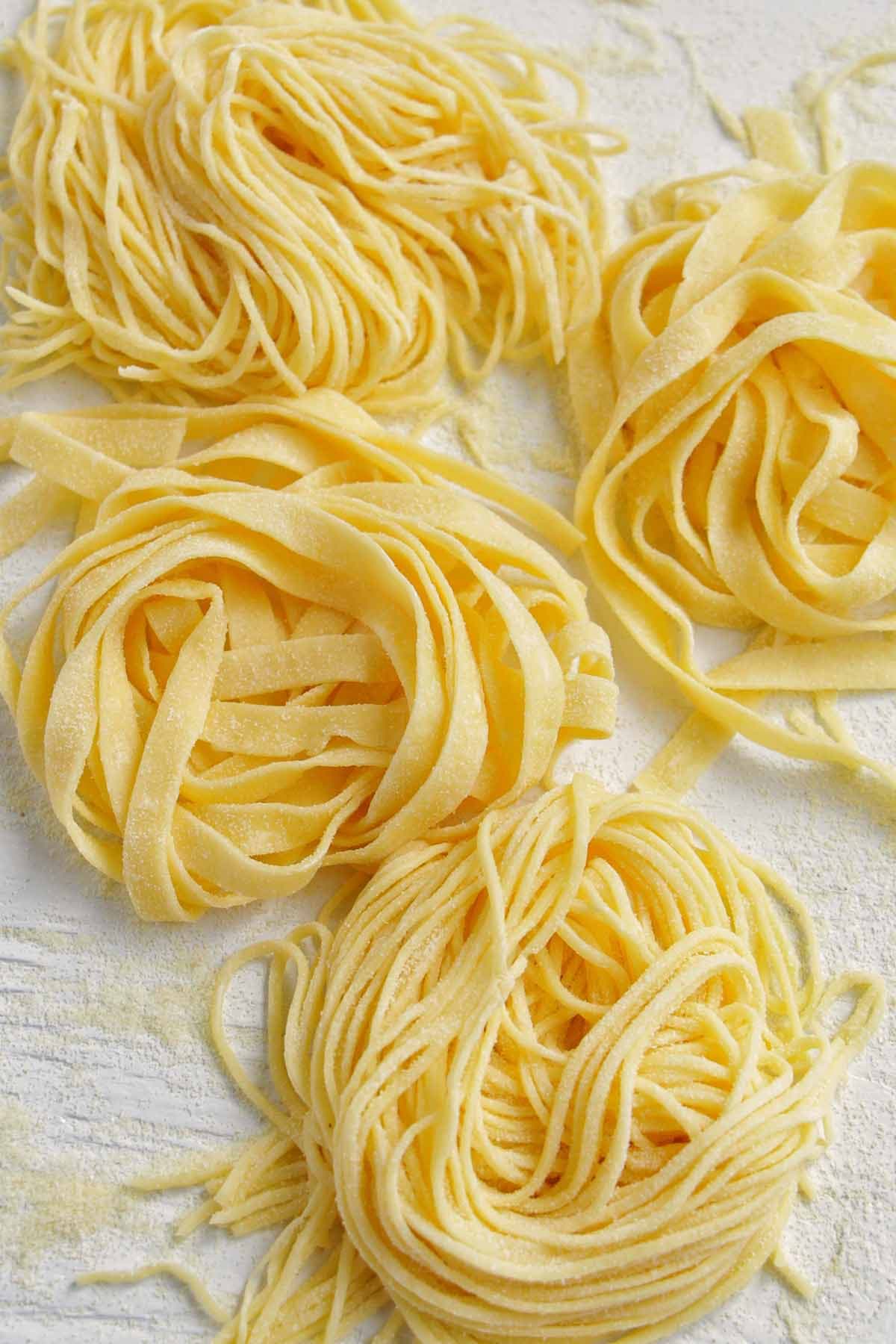
Fresh pasta hinges on choosing the right dough for the shape and purpose, and on mastering a few dependable ratios and simple techniques. For filled and classic northern styles such as tagliatelle, ravioli, and pappardelle, use an egg dough made from 00 or all-purpose flour, sometimes blended with semolina. A practical working ratio is 100 g flour to 1 large egg; by weight that equates to roughly one egg per 50–60 g of flour. That formula yields about one portion per 100 g of flour. Egg weight controls richness and tenderness: more egg produces a richer, softer dough; too little egg makes a crumbly dough and too much makes it sticky.
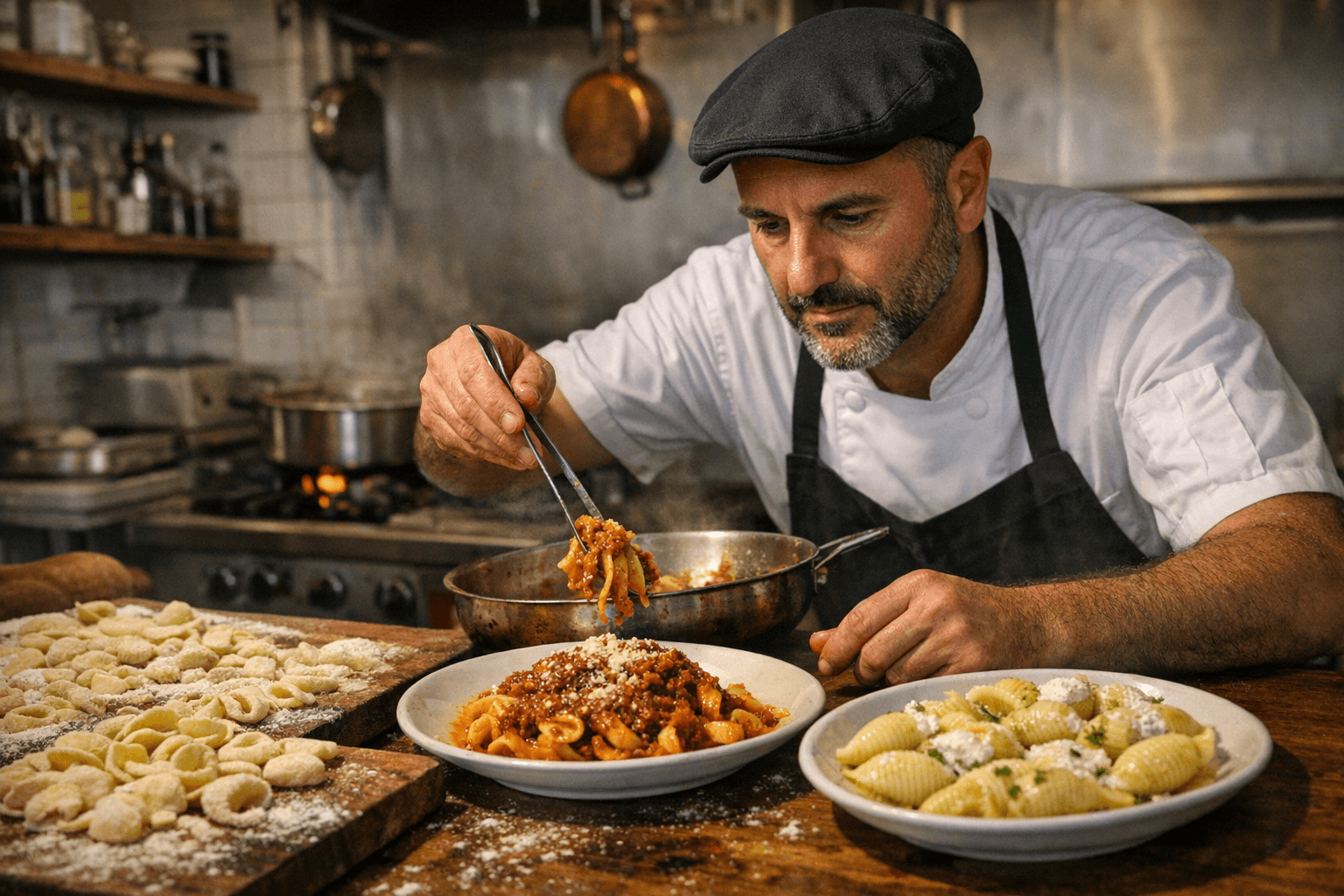
For shapes that benefit from a firmer bite or for regions that traditionally avoid eggs, use a semolina-and-water dough based on coarser durum semolina. Start with about 100 g semolina to 40–50 g water, targeting a hydration around 40–50 percent. Add water gradually until the dough comes together and feels elastic without stickiness. Semolina doughs suit trofie, orecchiette, and extruded shapes that need structure.
Eggless soft doughs, often used for quick or vegan versions, typically include a small percentage of oil (0–5 percent) or employ a low-hydration water-based formula. These produce a neutral-flavored, pliable dough suitable for many everyday pastas.
Technique matters as much as ratios. Mix thoroughly and knead 8–12 minutes by hand or 4–6 minutes by machine until the dough is smooth and elastic. Wrap and rest the dough 30–60 minutes; chill egg dough longer if it has high hydration. Roll progressively thinner: aim for 0.6–1.0 mm for tagliatelle and pasta sheets, and 0.8–1.2 mm for stuffed pasta so the filling is supported without tearing.
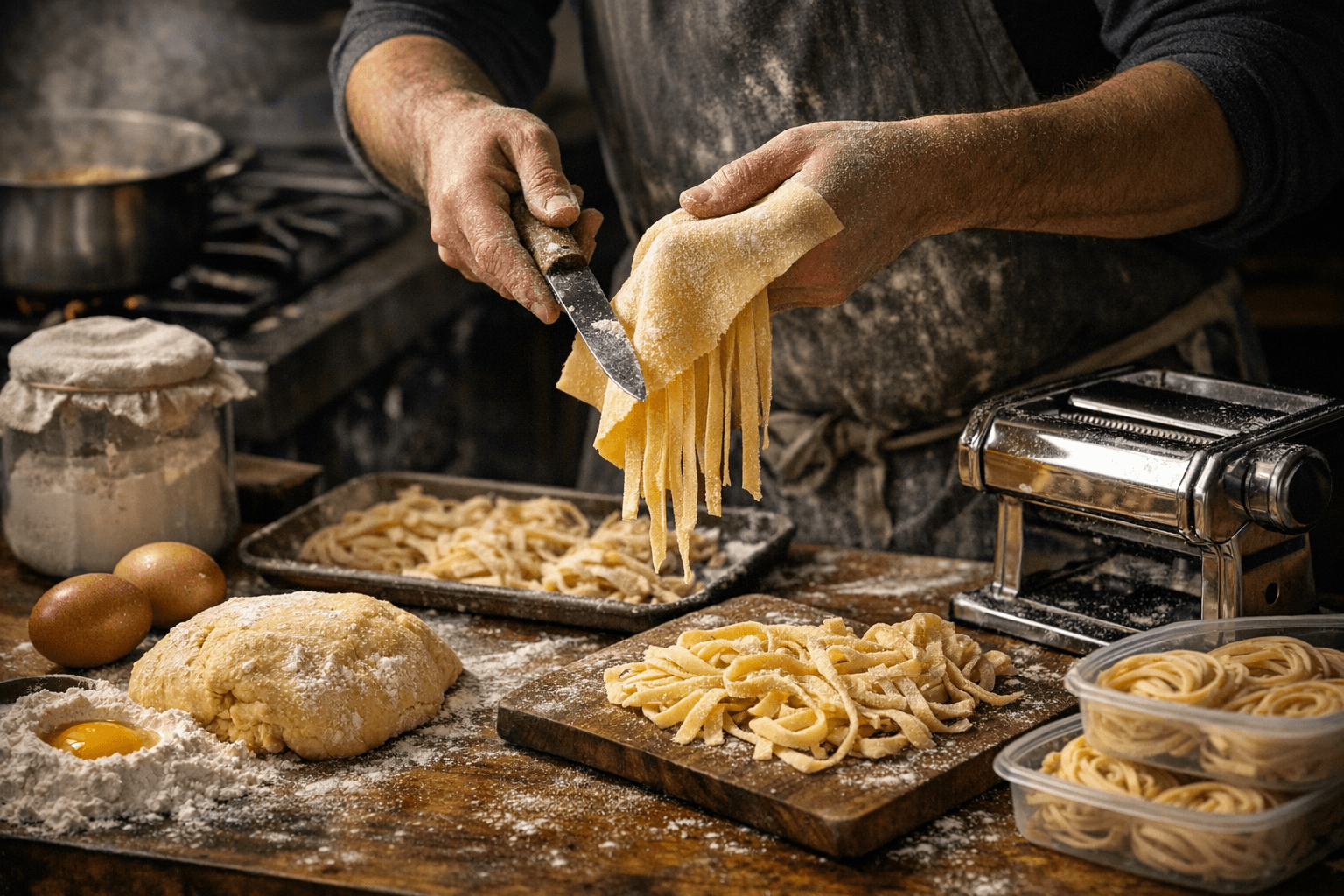
Keep fillings relatively dry: drain and strain ricotta and cooked vegetables well, and use binders such as cheese or egg yolk sparingly. Seal edges with cold water or an egg wash and let filled pasta rest briefly before boiling. Fresh egg pasta typically cooks in 1–3 minutes depending on thickness; semolina fresh pasta will often need 2–4 minutes. Always taste for al dente and reserve starchy pasta water to marry sauce and noodle.
For short-term storage, dry fresh pasta for 15–60 minutes on racks and refrigerate up to 24–36 hours. For longer storage, freeze shapes on trays, then transfer to bags; frozen fresh pasta keeps well for 1–3 months. When finishing dishes with cheese-based emulsions, use lower heat to avoid overcooking proteins and toss pasta off the heat with reserved pasta water to marry sauce and noodle.
Measure eggs and flour by weight, take notes, and adjust hydration and technique to your equipment and local flours. Small experiments will quickly reveal the sweet spot for your kitchen and make fresh pasta a reliable, rewarding routine.
Know something we missed? Have a correction or additional information?
Submit a Tip