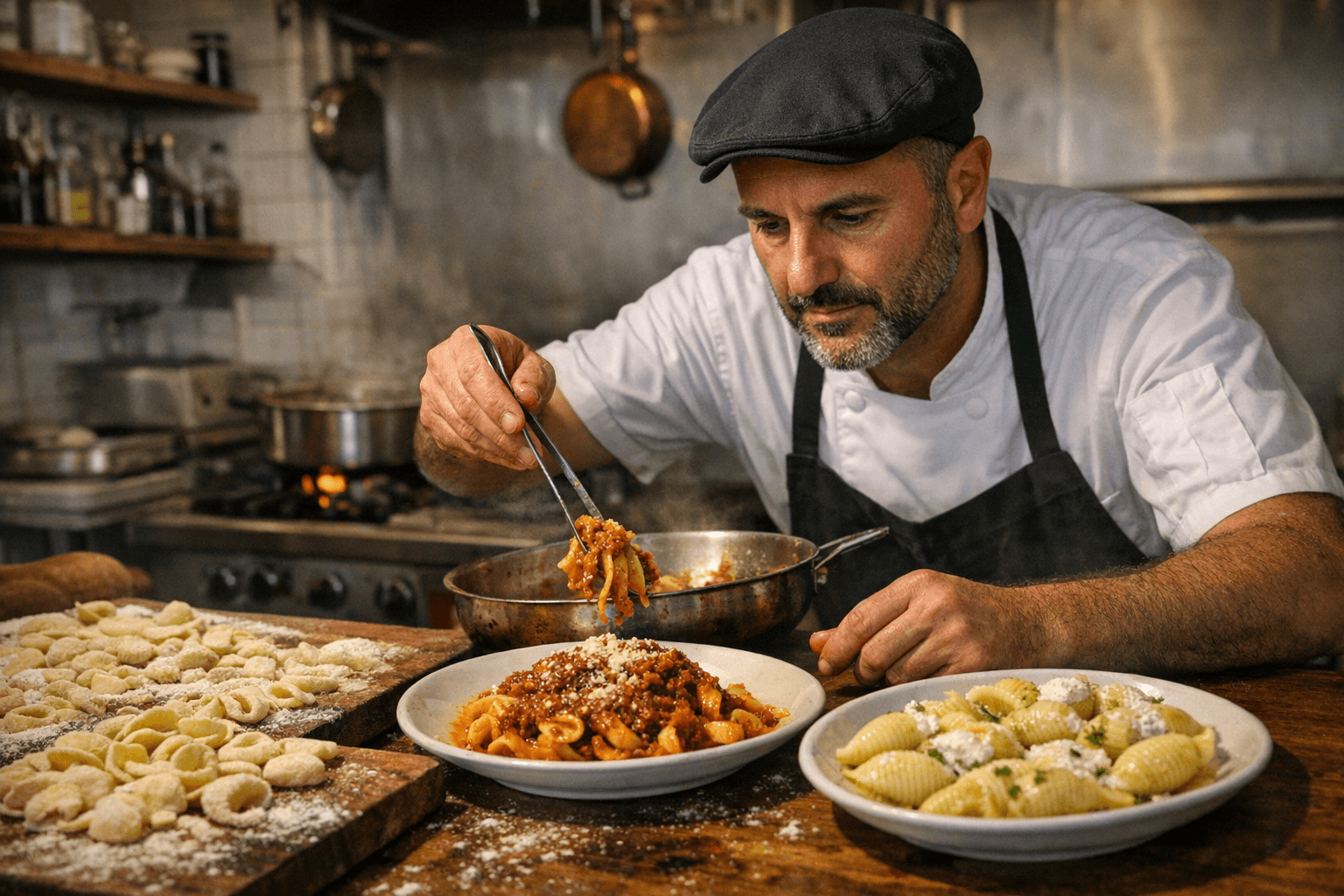
Essential fresh pasta primer: flour, ratios, rolling, storage
Learn core techniques for fresh pasta: flour choices, ratios, shaping, and safe storage.
Fresh pasta starts with smart decisions at the work surface: choosing the right flour, measuring ingredients, and giving the dough time to relax. Those steps control texture, keep sheets elastic for shaping, and reduce waste in the home kitchen.
Two flour families do most of the heavy lifting. Fine 00 flour creates silky, easy-to-roll dough that yields tender sheets ideal for filled pasta and delicate ribbons. Coarser semolina gives more bite and grip, especially for shapes like pappardelle or for dusting strands before drying. Weigh ingredients rather than eyeballing them to maintain consistency; steady ratios and careful weighing are the difference between a reproducible batch and a one-off.
Kneading and resting are about building and then taming gluten. Knead until the dough is smooth and elastic, then rest it long enough to relax, this makes rolling easier and helps prevent tearing. If the dough feels sticky, dust the surface with semolina or rice flour to prevent sticking without toughening the final pasta. If the dough is overworked and tough, give it a longer rest wrapped in plastic so the gluten can relax; if it is too wet, gradually incorporate more flour while kneading until the texture balances.
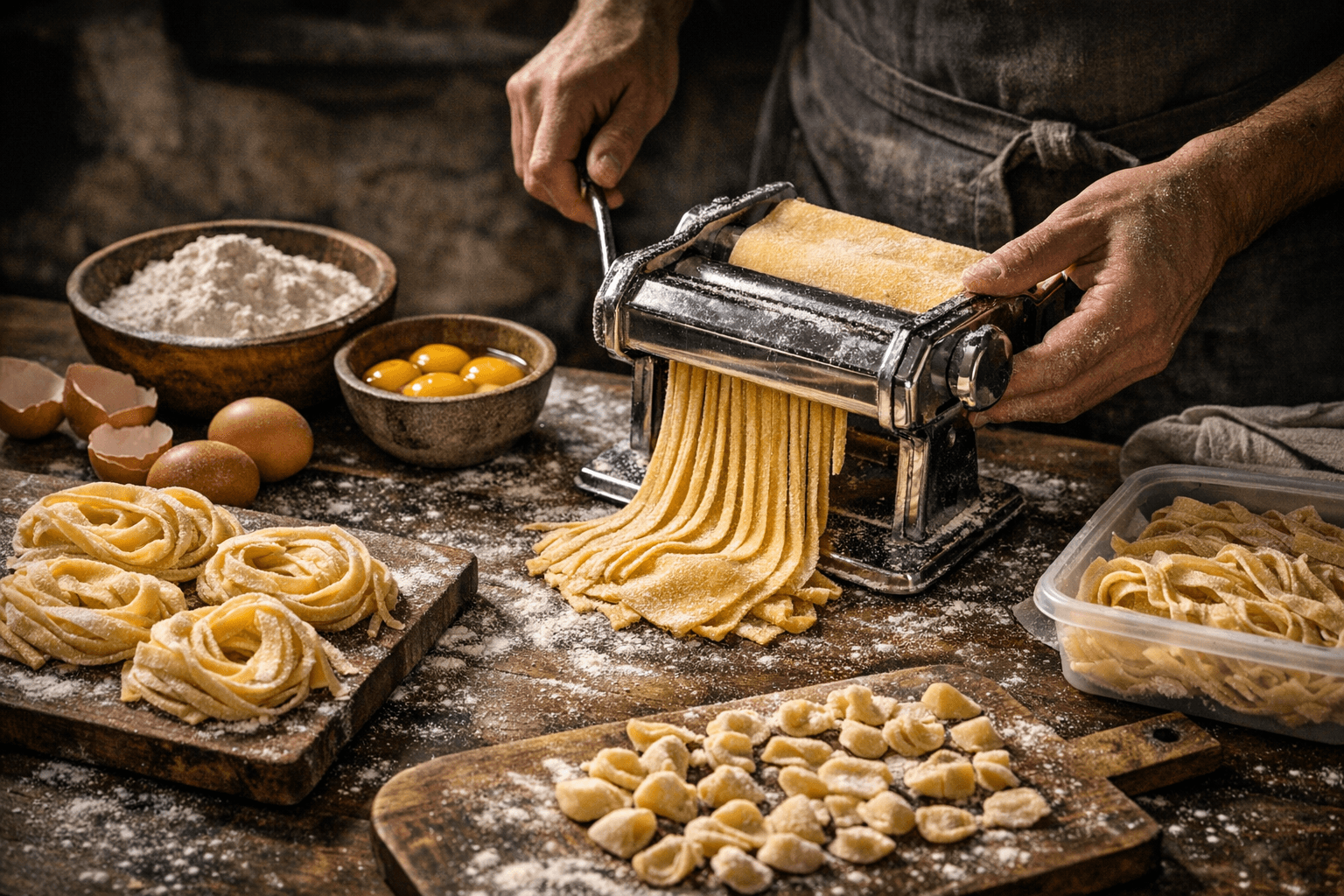
Rolling and drying vary by setup. With a pasta machine you can pass dough through progressively thinner settings, letting sheets sit briefly between passes to prevent snapping. Without a machine, a sturdy rolling pin works; roll from center outward, rotating the sheet and keeping even thickness. Dust sheets or strands with semolina to stop sticking during handling and drying. For filled pasta, cut even sheets and keep edges dry so seals hold.
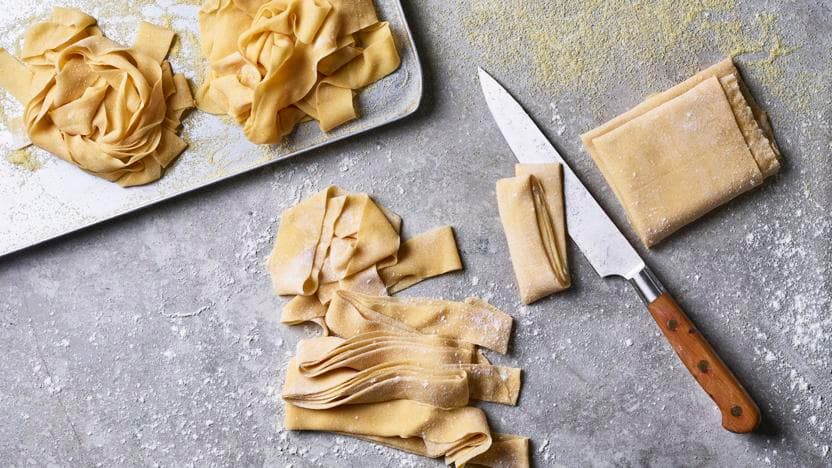
Shaping focus makes practical workdays easier. Tagliatelle and pappardelle are straightforward: sheet, fold or dust, and slice to width. Sheets for ravioli or tortellini should be even and not overly floured so filling adheres. Cook fresh pasta briefly, a few minutes depending on thickness, and test for al dente; fresh dough requires much less time than dried.
Storage is a safety and quality decision. Egg-based fresh pasta keeps for a short time in the refrigerator; use within that window to avoid texture or safety issues. For longer storage, blanch filled shapes briefly in boiling water to set surfaces, cool them, then freeze in a single layer before transferring to a container. This preserves shape and reduces breakage when you cook from frozen.
This primer brings practical, repeatable steps to the bench: weigh your flour, respect rest times, pick the right flour for the shape, and use semolina or rice flour to prevent sticking. Practice these techniques session by session and you’ll move from fiddly batches to reliable, restaurant-quality fresh pasta at home.
Know something we missed? Have a correction or additional information?
Submit a Tip