Essential Pasta Tools Home Cooks Need for Reliable Results
This equipment guide lays out the essential tools that make homemade pasta easier, more consistent, and more enjoyable. Clear recommendations for rollers, extruders, shaping tools, and kitchen basics help readers plan a practical, budget-conscious setup whether buying a first machine or upgrading existing gear.

Homemade pasta rewards patience and good technique, but the right tools shorten the learning curve and improve consistency. Start with a few multi-purpose basics rather than a clutter of single-use gadgets: a reliable manual pasta roller, a sturdy mixing bowl, a heavy-duty colander, a drying rack, and a good Dutch oven will cover most needs from dough to plate.
For sheeted pastas like tagliatelle, fettuccine, and lasagna, choose a manual roller from a proven maker such as Marcato or Imperia. Rollers produce even sheets and accept attachments for cutting and thickness control, making them a versatile foundation for many shapes. If you prefer shaped pastas such as penne, rigatoni, or certain small regional forms, consider an extruder or countertop machine; models from Philips and the Imperia Pastapresto category use interchangeable discs to push dough into consistent, repeatable shapes.
Shaping and finishing tools translate sheets of dough or extruded pieces into familiar forms. Gnocchi boards and cavatelli makers add texture and control for small, hand-formed shapes. Ravioli cutters and wheels speed up stuffed pasta production and give clean edges. These items are valuable, but they work best when you already have dependable sheet-rolling or extrusion capability, reinforcing the case for a few core purchases first.
Beyond machines and boards, choose durable supporting tools. A heavy, well-balanced rolling pin helps with hand-rolled dough and doubles for pastry work. Large, sturdy mixing bowls give room for flour-and-egg work and for dough resting. A drying rack preserves shapes and prevents sticking when you need to pause between making and cooking. For cooking, a heavy Dutch oven brings even heat and water capacity needed for batches, while a heavy-duty colander drains pasta without damage.
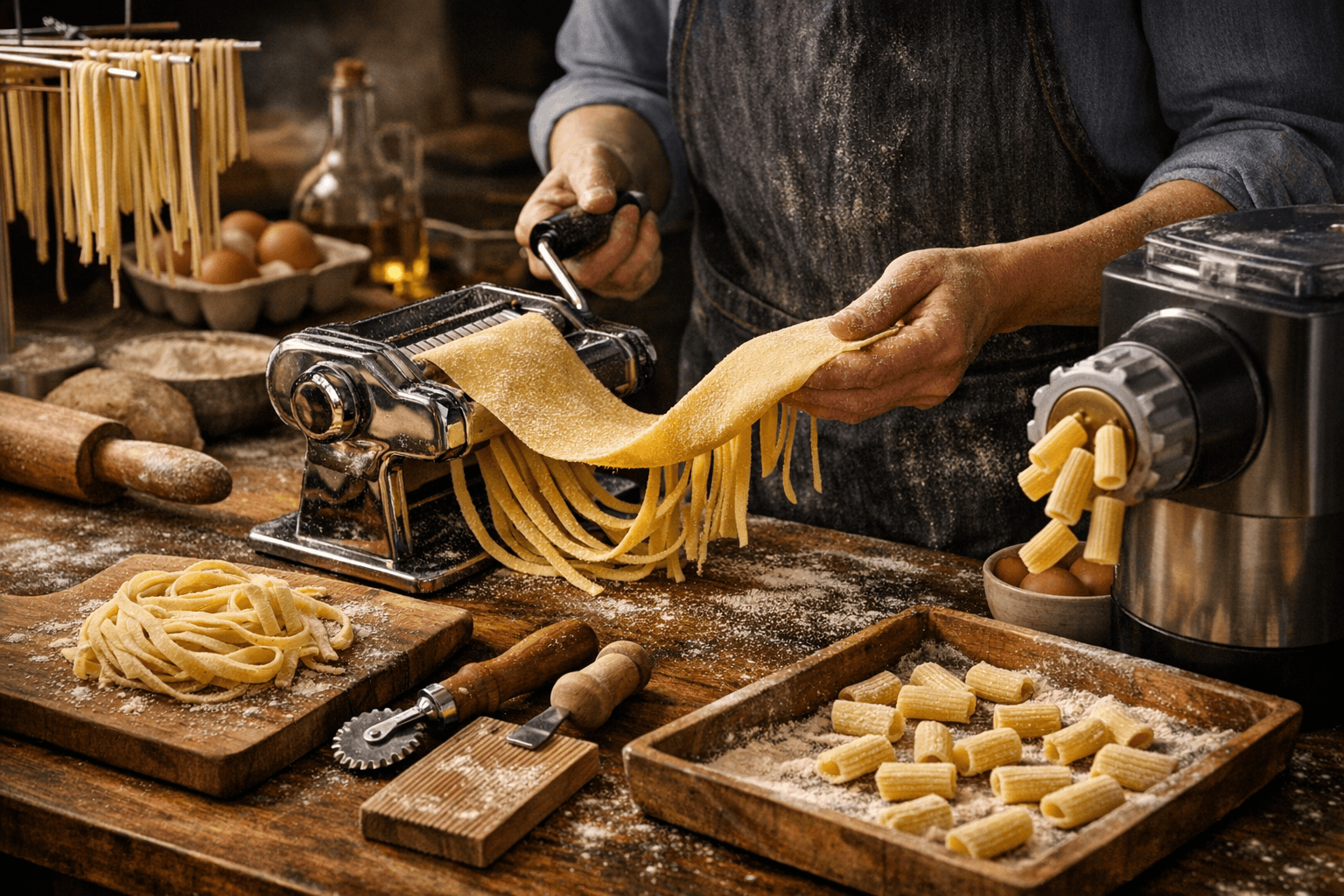
Match tools to technique: rollers and attachments are the go-to for sheeted pasta, extruder discs deliver shaped pastas, and boards and wheels finish hand-shaped pieces. That mapping helps prioritize purchases based on which types of pasta you plan to make most often.
Practical value comes from restraint and planning. If you are buying your first machine, opt for a simple, durable roller that can accept cutters and be hand-cranked or motor-ready. If you already have a roller and want to expand, add an extruder for shaped pastas and one or two finishing tools like a gnocchi board or ravioli wheel. Share equipment, trade tools at community gatherings, or test borrowed items before you buy to avoid single-use clutter.
This approach keeps costs manageable, reduces counter clutter, and helps you turn kitchen experiments into reliably good pasta that feeds a family or a table of friends.
Know something we missed? Have a correction or additional information?
Submit a Tip