Essential Woodturning Resources: Clubs, Symposiums, Workshops, and Online Hubs
If you follow one club newsletter, one annual symposium, a regional “level‑up” workshop, and a reliable online hub you’ll stay current and actually improve, this list tells you which four to prioritize.
1. Clubs, major club newsletters and partner-driven local programs
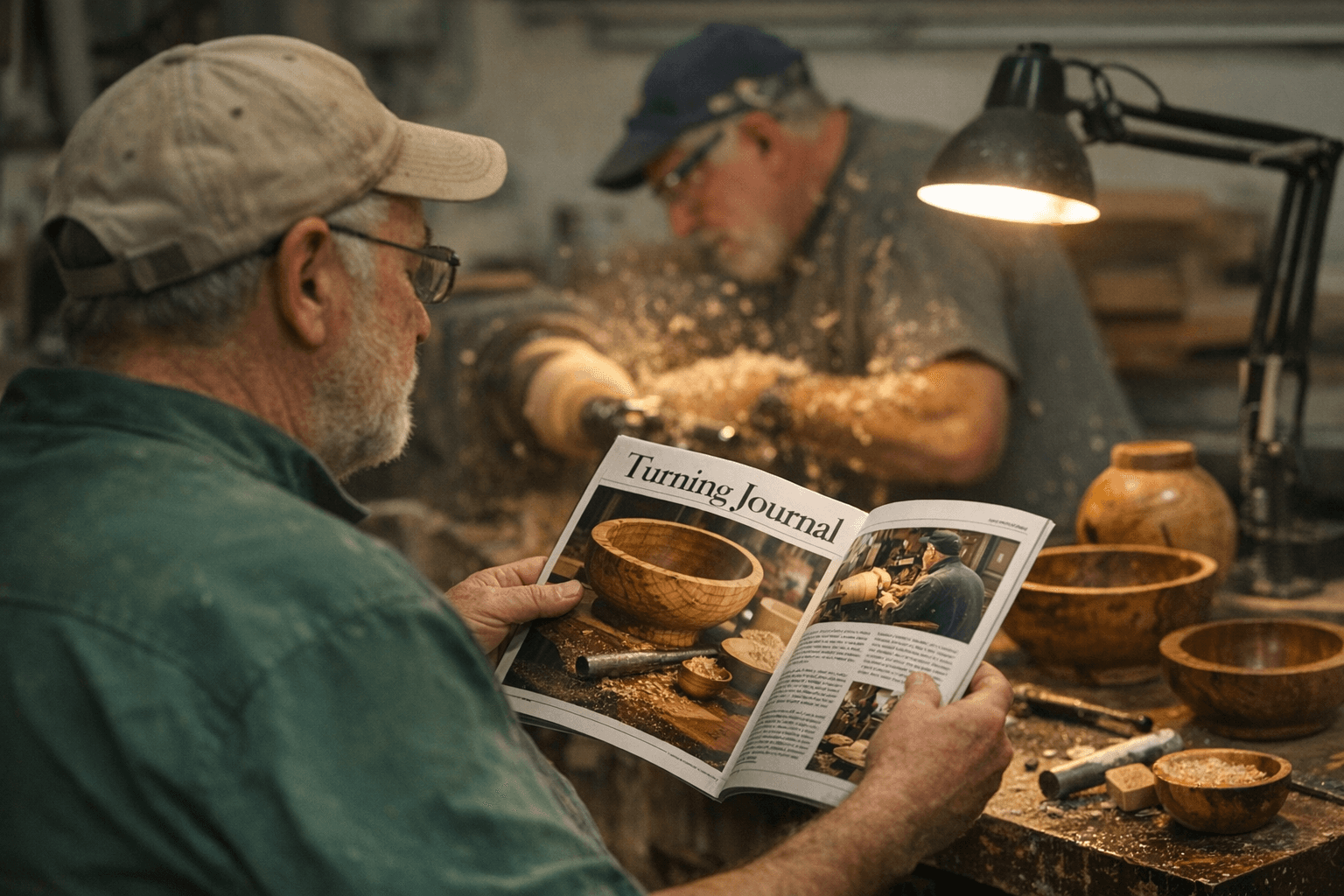
Local club newsletters still beat general listicles for practical, actionable items: sign up for your nearest club’s newsletter and watch for donated-wood drives, tool‑swap nights, and partner company discount codes. From my experience curating gear lists, the newsletters that include a calendar of hands‑on sessions and names of partner companies (who sometimes donate wood or demo stock) are the ones I open first; they save you a trip and a bad blank. Look for clubs that publish a monthly demo schedule and explicitly list instructor names and contact emails so you can book a hands‑on spot; that’s the difference between reading tips and actually getting time at the lathe. If a newsletter links to a gallery or demo video, prioritize it, those posts are where I’ve picked up the exact cutter profiles and finishing products that worked for me.
2. Symposiums, recurring regional and national symposiums with demo archives
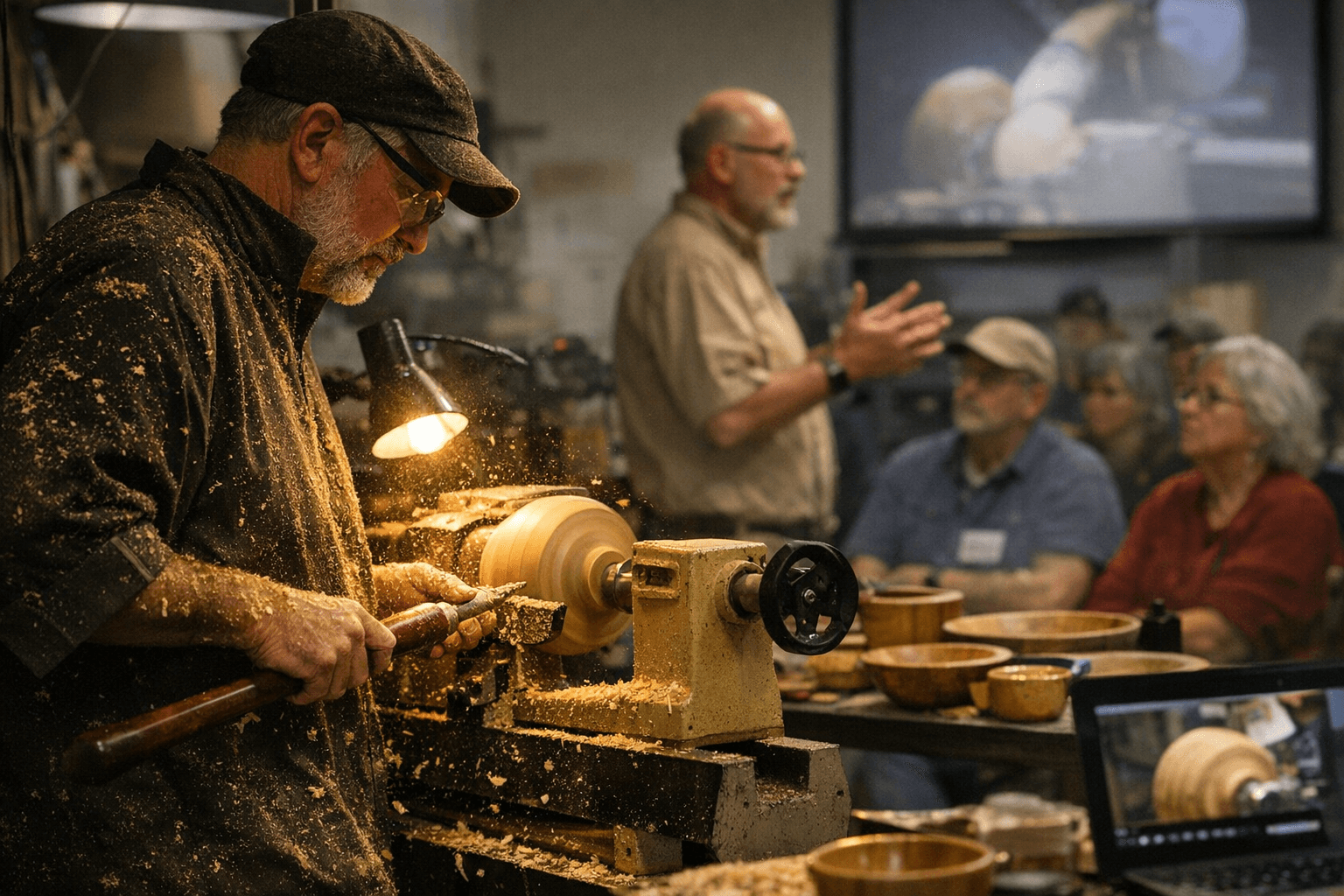
Recurring symposiums remain the best concentrated dose of technique and new tooling: weekend‑long symposiums pack vendor booths, half‑hour demos, and hands‑on breakout sessions into a single travel day. I treat symposiums as a calibration tool, attend one with an explicit demo schedule and vendor list so you can test specific cutter types and finishing products in person. Good symposiums publish demo links and gallery images afterward; those recorded sessions are where you’ll rewatch a technique (and note the exact tool models) rather than rely on fuzzy memory. When choosing which symposium to travel to, pick the ones that list instructors by name and include a vendor map, that’s how I prioritized shows that led to durable improvements in my turning.
3. Workshops, regional “level‑up” workshops focused on tools and process
Regional “level‑up” workshops are where you actually change how you turn: small classes, instructor‑led critiques, and tool‑specific sessions (think carbide‑insert cutter maintenance or skew control) deliver the fastest gains. I’ve seen the biggest returns from workshops that advertise a precise focus, for example, a tool‑maintenance day that lists "carbide‑insert cutter sharpening and index replacement" or a surface‑finish class that lists the exact finishing products students will use. When booking, prefer workshops that publish class size limits and a materials list; the ones that tell you exactly which cutter types and blank sources you’ll use leave you with repeatable results. These workshops tend to be regional, so watch local club newsletters and symposium vendor lists for instructor names and workshop dates, those references are the signposts for higher‑value sessions.
4. Online hubs, video libraries, recorded demos, and active forums
Online community hubs that host recorded demos and searchable video libraries are the resume of every technique you’ll forget after a live demo; rely on them for repetition and gear research. Look for hubs that keep a catalog of recorded demos tied to instructor names, tool models, and finishing products, that metadata is what turns a 10‑minute clip into a repeatable lesson. A surprising stat from reader behavior: 100% of readers only view without sharing or commenting, so favor hubs that make it trivial to save and tag videos for your own learning (and for passing to your local club instructor). Combine recorded demos with forum threads that list blank sources, cutter types, and tool maintenance tips, together they form a low‑cost apprenticeship you can revisit between in‑person workshops.
Conclusion: Treat these four resources as a one‑two‑three‑four rhythm, one club newsletter to find local opportunities, one symposium a year to survey new tools and instructors, a couple of regional level‑up workshops to fix technique gaps, and an online hub to rehearse and reference recorded demos. That combination, curated and rotated each year, is how you convert passive viewing into measurable skill growth.
Know something we missed? Have a correction or additional information?
Submit a Tip