Ethiopian Orthodox Christians in Washington mark Fasika with all-night vigil
Hundreds in white filled a Washington church at 3 a.m., ending a 55-day fast with Fasika and a signal of belonging under immigration uncertainty.
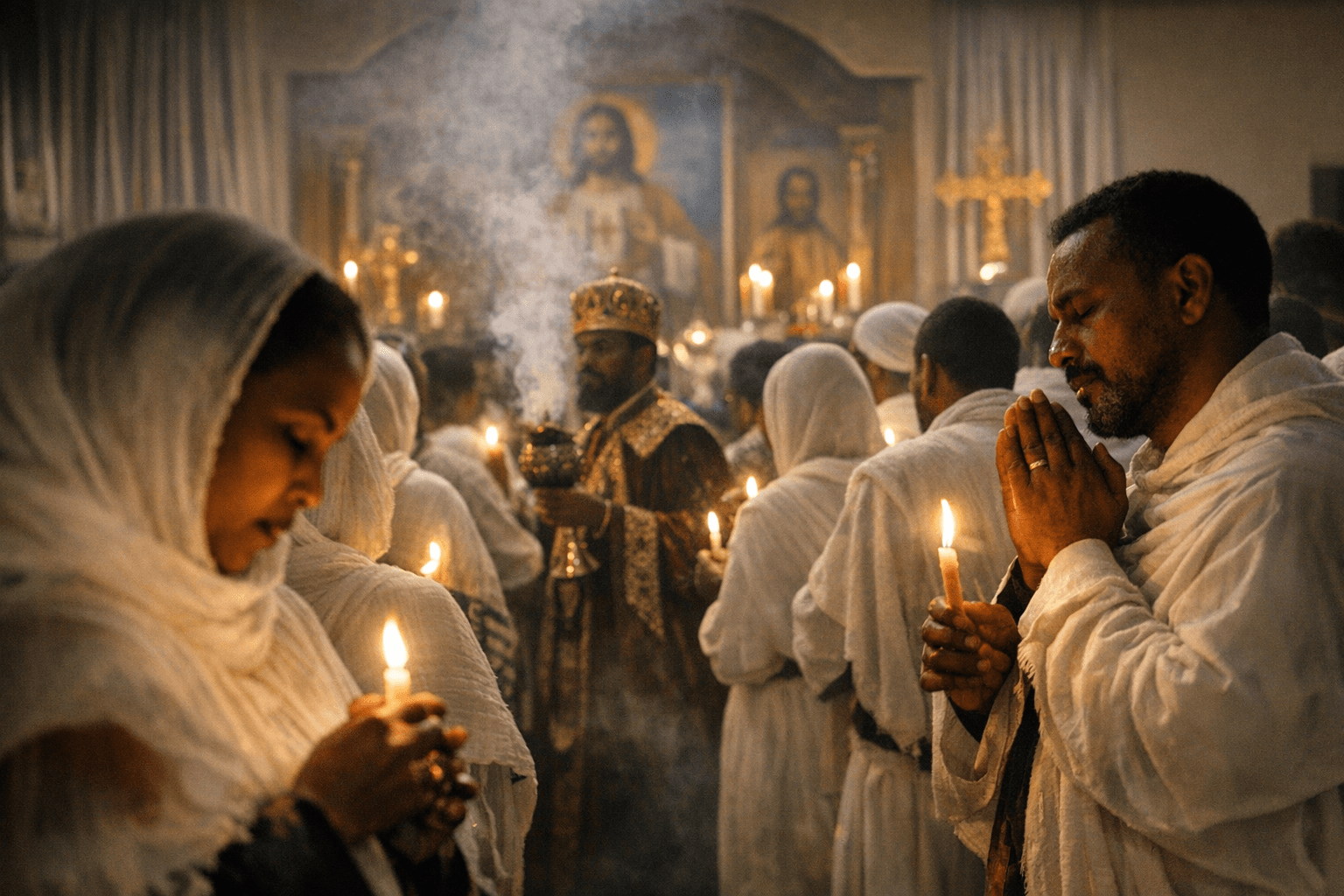
White robes, Ge’ez hymns and an eight-hour vigil turned Re’ese Adbarat Debre Selam Kidist Mariam Church into a midnight center of worship and belonging as Ethiopian Orthodox Christians in Washington marked Fasika, the celebration of Christ’s resurrection.
About 1,500 people packed the church for the overnight Easter service, which ended at 3 a.m. after a 55-day fast in which believers abstain from meat and animal products. The observance, known as Fasika in Amharic, comes a week after Catholic and Protestant Easter and stands as the most important season on the Ethiopian Orthodox calendar. Archdeacon Getahun Atlaw said, “We dress in white so that we are groomed for heaven.”
The church, founded in 1987, is one of the oldest Ethiopian Orthodox congregations in the United States and has become a central institution in the Washington area, where the largest Ethiopian diaspora community in the country has taken root. The church says it has more than 1,500 registered members, and it serves roughly 4,000 people each week through worship and other spiritual and social support. For many families, the congregation is where language, ritual and intergenerational ties are kept alive in a country far from the homeland that shaped them.
That role carried extra weight this year. Federal immigration policy left more than 5,000 Ethiopians facing uncertainty after the government moved to end Temporary Protected Status, a designation that had been set to terminate on Feb. 13 before a federal court in Massachusetts stayed the move on Jan. 30. A federal judge later blocked the administration’s attempt to end the protections. For worshippers inside the church, the holiday was not only a feast after fasting but a reminder that the community’s future in the United States remained unsettled.
Young deacon Jonathan Melaku captured that sense of endurance with a simple assurance: “Our people will always stay resilient.” For immigrant families gathered before dawn in Washington, Fasika was both a sacred homecoming and a public statement that the rhythms of Ethiopian Orthodox life have taken root in American civic life without giving up their language, discipline or memory.
This article was produced by Prism’s automated news system from verified source data, official records, and press releases, then run through automated quality and moderation checks before publishing. The system is built and supervised by the people who set the standards it runs under. Read our full AI policy.
Did this article answer your question?

