Mason Temple Gets $1.2 Million Grant to Preserve King History
Mason Temple will get $1.2 million to upgrade sound, inspect its foundation and preserve the Memphis sanctuary where King gave his final speech.
Mason Temple, where the Rev. Martin Luther King Jr. delivered his final speech, will receive a $1.2 million federal grant to modernize and preserve one of the Civil Rights Movement’s most powerful physical landmarks. Church of God in Christ leaders said the money will help upgrade the sound system and other technology, inspect the foundation and make structural improvements at the Memphis sanctuary.
The investment lands at a site that still carries the weight of April 1968. Mason Temple stands near the former Lorraine Motel, where King was assassinated on April 4, 1968, tying the church to both his last public words and the movement’s deadliest turning point. Presiding Bishop J. Drew Sheard, speaking alongside U.S. Rep. Steve Cohen and Memphis Mayor Paul Young, called the church a place “where faith has always met history, and where the ordinary has always produced the extraordinary.” He also called it “the living witness of a movement that changed the entire world.”
The grant is about more than repair work. It signals that federal preservation dollars are still being used to protect spaces where Black political and spiritual life converged, not just to mark them with plaques. Mason Temple remains the international sanctuary and central headquarters of the Church of God in Christ, the largest African American Pentecostal group in the world. The U.S. National Park Service says the building was constructed between 1940 and 1945 as the administrative and spiritual center of the denomination, and that it can seat 7,500 people on two levels. Memphis Heritage lists it as an Art Moderne building at 930/938 Mason Street, and says it was placed on the National Register of Historic Places on April 10, 1992.
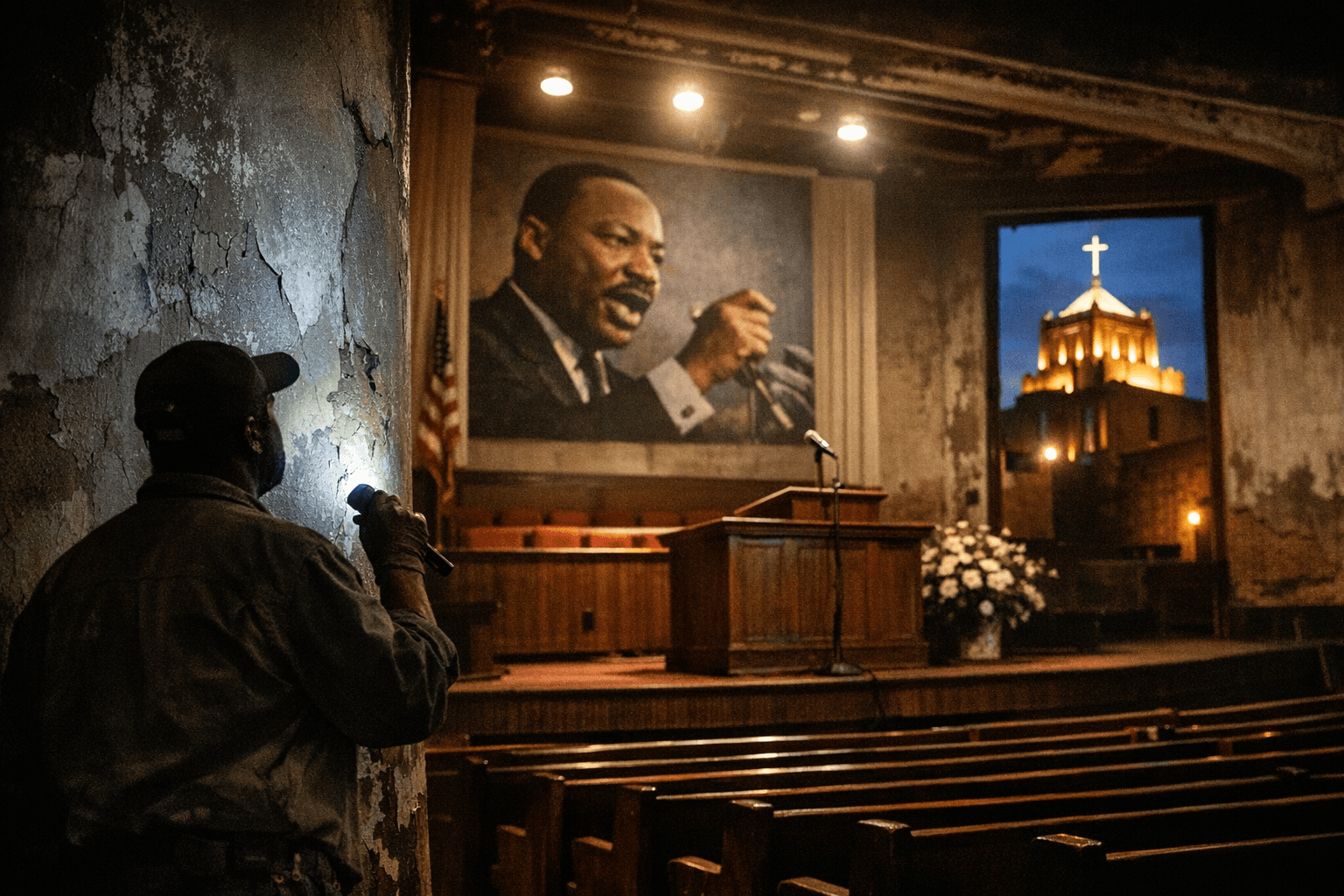
The temple itself was completed in 1945 after the original Tabernacle burned, and the preservation work now underway reflects the same imperative that has shaped the site for decades: keep it active, not frozen. Bishop Melton Timmons, superintendent of national properties for the denomination, said the improvements will help preserve the building and ensure it can serve future generations.
The grant is part of a larger preservation package of nearly $18 million for Memphis projects, including $3.1 million for Clayborn Temple, another landmark tied to the 1968 sanitation workers strike that brought King to Memphis. With Clayborn Temple rebuilding after an arson fire in April 2025, the funding underscores how fragile civil rights-era places remain and how urgently communities are trying to keep them standing.
This article was produced by Prism’s automated news system from verified source data, official records, and press releases, then run through automated quality and moderation checks before publishing. The system is built and supervised by the people who set the standards it runs under. Read our full AI policy.
Did this article answer your question?

