EU age verification app ready, aims to limit children’s social media access
Brussels says its age-check app is technically ready, promising proof of adulthood without exposing identity as it targets child access to social media.
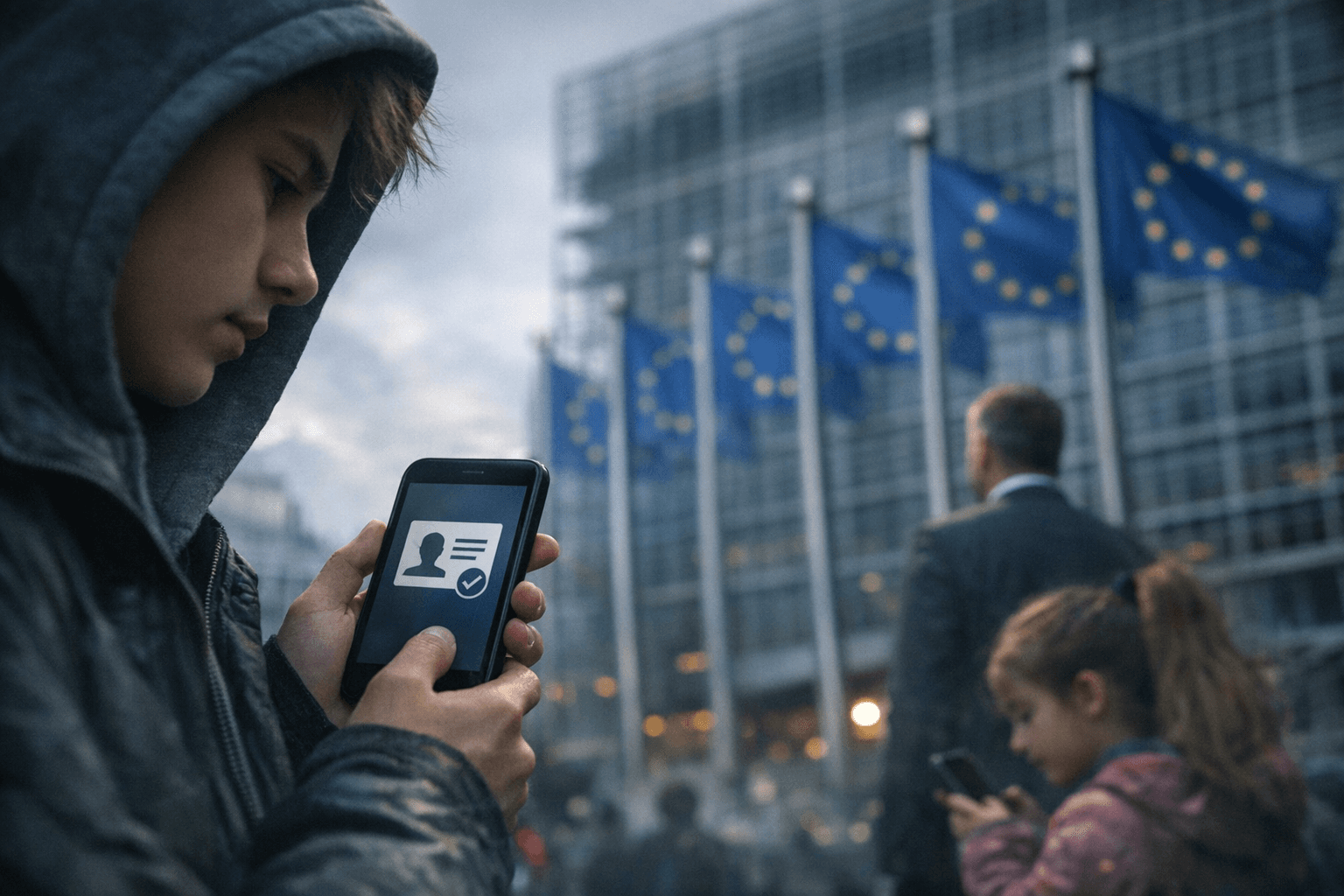
The European Union’s age-verification app is technically ready and soon to be available, putting Brussels closer to a privacy-preserving system that could keep children off social media without forcing users to hand over their full identity. Ursula von der Leyen said the push answers a problem she described in stark terms: one child in six is bullied online, and one child in eight is bullying another child online.
The Commission says the tool is designed so users can prove they are over 18 without revealing their exact age or identity. That is the core policy test. If the app works as intended, it would give platforms a common way to enforce age limits while limiting the amount of personal data they collect. If it fails, it could become another layer of friction that children bypass and adults reject, without meaningfully changing how major platforms operate.
Brussels first presented a prototype age-verification app and separate protections for minors on July 14, 2025, under the Digital Services Act. That package called for platforms to reduce addictive design, tackle cyberbullying, limit harmful recommender systems and make minors’ accounts private by default. The Commission said the app would be tested and customized with member states, online platforms and end users, a sign that officials are trying to make age checks workable at scale rather than merely symbolic.
The political momentum sharpened on November 26, 2025, when the European Parliament backed, by 483 votes to 92 with 86 abstentions, an EU-wide minimum digital age of 16 for social media, video-sharing platforms and AI companions. Under that proposal, children aged 13 to 16 could still access those services with parental consent. Parliament also said 25% of minors display problematic smartphone use and pushed for stricter enforcement of digital rules, including stronger action against platforms that do not comply.
Five countries were first to engage with the technical solution: Denmark, France, Greece, Italy and Spain. The Commission said the blueprint is open source and free of charge, and that member states can fold it into national digital wallets or adapt it into their own apps. Officials also said the same technical system could be extended to other age-limited uses, including alcohol purchases, which makes the project look less like a narrow social media fix and more like the start of a broader European age-assurance infrastructure.
Von der Leyen tied the effort to a wider enforcement drive, saying the Commission’s special panel on children’s safety online had its first meeting a month earlier and would deliver recommendations by summer. Henna Virkkunen said the bloc will create a coordination mechanism so age verification can be used across national schemes. The upside is clearer child protection; the risk is a digital ID precedent that could spread well beyond social media.
This article was produced by Prism’s automated news system from verified source data, official records, and press releases, then run through automated quality and moderation checks before publishing. The system is built and supervised by the people who set the standards it runs under. Read our full AI policy.
Did this article answer your question?

