EU chip industry faces supply chain crisis from China and U.S. dependence
Export controls on chip inputs and a Taiwan conflict top Europe’s semiconductor risks, as Brussels races to cut dependence on China and the U.S.

Europe’s chipmakers are being warned that export controls on key manufacturing inputs and a possible conflict in the Taiwan Strait are the most severe threats to the region’s semiconductor outlook through 2031. An EU-funded assessment by the European Union’s Institute for Security Studies and Institut Montaigne, based on a survey of 55 respondents mostly from industry and research-technology organizations, says the continent faces a bleak path unless supply chains become more reliable.
The warning lands at a moment when Europe is squeezed from both sides. On one side, China’s grip on critical minerals and other inputs can disrupt the materials needed to make chips. On the other, dependence on the United States for key technology leaves European firms exposed to Washington’s export controls, including those that could affect ASML, Europe’s most valuable company and one of the central suppliers to advanced chipmaking. Joris Teer, one of the report’s authors, has said that reliance on Washington has become a much bigger concern under the second Trump administration, even if Beijing remains the bigger threat.
That pressure helps explain the European Commission’s recent push to harden the bloc’s industrial position. The Commission adopted its Chips Act 2.0 proposal on 3 June 2026, saying it is designed to strengthen Europe’s semiconductor industry, reduce strategic dependencies, boost demand for chips and support advanced chip production in the European Union. It followed that move by signing the Pax Silica Declaration on 25 June 2026, committing the EU to work with global partners on AI and supply-chain security.
The diplomatic effort widened days later. The U.S. State Department said ten additional partners joined the Pax Silica Declaration after the second summit, including the European Union, Germany, Greece, the Netherlands, Argentina, Chile, Costa Rica, El Salvador, Kazakhstan and Panama. The expansion underscored how far chip security has moved from a niche industrial issue to a test of alignment among allies.
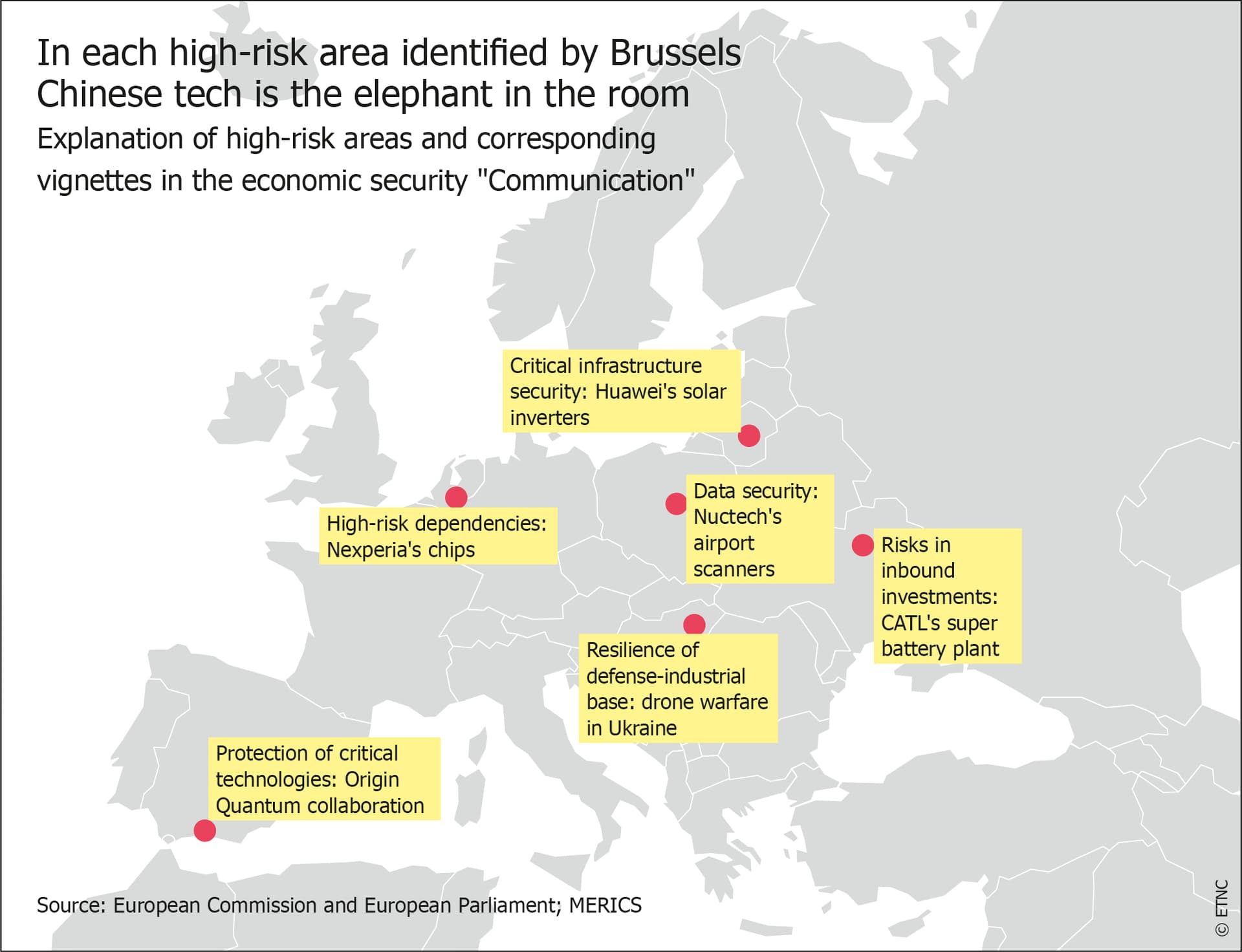
Industry groups are pressing for faster action. SEMI Europe welcomed the report’s emphasis on raw materials and had already pushed in November 2025 for a forward-looking Chips Act built around materials, equipment and front-end manufacturing, including 30 recommendations for a more resilient semiconductor ecosystem. The European Commission has said semiconductors are central to technological sovereignty and modern economies, and the vulnerability is clear: if Europe cannot build a sturdier chip base, autos, defense, industrial manufacturing and AI systems are likely to feel the strain first.
This article was produced by Prism’s automated news system from verified source data, official records, and press releases, then run through automated quality and moderation checks before publishing. The system is built and supervised by the people who set the standards it runs under. Read our full AI policy.
Did this article answer your question?