EU Lawmakers Clear Major Hurdle, Approving U.S. Trade Deal After Months of Delay
The EU Parliament voted 417-154 to approve the Trump trade deal today, but attached a "sunrise clause" requiring U.S. compliance before any tariff cuts take effect.
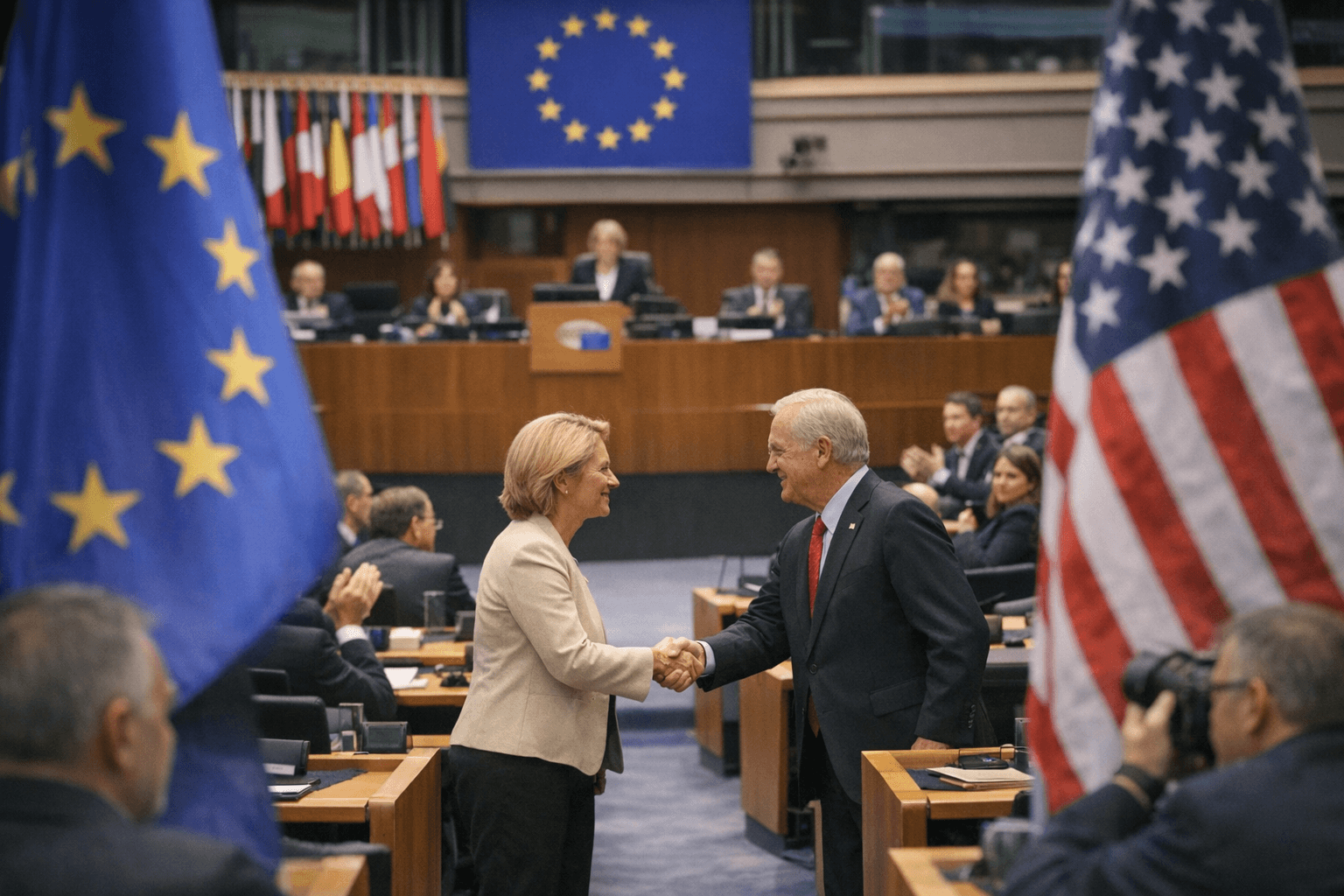
EU lawmakers approved the EU-U.S. trade deal struck in Turnberry, Scotland, in 2025, with a broad majority of political groups backing the agreement, 417 votes in favor, 154 against, and 71 abstentions. The vote, months in the making and repeatedly derailed by transatlantic tensions, represents the most significant step yet toward enacting a framework that sets the terms of trade between the world's two largest economies.
EU lawmakers had been debating legislation to enact parts of the EU-U.S. trade deal after twice suspending their work because they did not believe the United States was sticking to its side of the agreement. The European Parliament weighed proposals to remove EU import duties on U.S. industrial goods and improve access for U.S. agricultural produce, a key part of the deal struck in Scotland last July, as well as to continue zero duties for U.S. lobsters, initially agreed with Trump in 2020.
Initially criticized by MEPs as unbalanced and defended by the Commission as the best possible outcome, the deal sets U.S. tariffs on EU goods at 15%, while the EU eliminates duties on most U.S. industrial products. To address those concerns, lawmakers added a further amendment to introduce a "sunrise clause" to make EU import duty reductions conditional on Washington fulfilling its side of the bargain, a change EU officials said helped break the deadlock.
The approved text includes a "sunset clause" under which the deal expires in March 2028 unless both sides agree to extend it, as well as the sunrise clause making tariff preferences conditional on the U.S. respecting its Turnberry commitments. MEPs also linked tariff cuts on steel and aluminum to equivalent actions by the U.S.
The road to Thursday's plenary vote was anything but smooth. The trade committee suspended a vote in January in protest at Trump's demands to acquire Greenland and his subsequent threats to impose tariffs on European allies who opposed him. A vote in February was also paused after Washington imposed a blanket 10% import surcharge, which increased the overall charge due on some EU exports to the United States.
Swedish Liberals lawmaker Karin Karlsbro, who attended Tuesday's meeting, said the parliament had taken time to produce a satisfactory text without giving in to pressure to rush into a vote. Karlsbro, Renew Europe's shadow rapporteur on the file, was direct about what remained at stake: "We have not forgotten Greenland, the threats and the blackmail. Europe must be prepared to set conditions for the transatlantic relations moving onward." In her earlier remarks, she was equally unambiguous: "We hope that the U.S. will continue to show willingness to stick to the deal. We will not accept higher tariffs than agreed."
The parliamentary vote does not end the process. Representatives of parliament and EU governments will negotiate final texts before a final vote of approval by MEPs, not expected before April or May. The safeguards attached by lawmakers must still be approved by EU member states before tariffs on U.S. goods can be reduced to zero. What Thursday delivered was a clear political signal: the Parliament is prepared to move forward, but only on terms it believes Washington can be held to.
This article was produced by Prism’s automated news system from verified source data, official records, and press releases, then run through automated quality and moderation checks before publishing. The system is built and supervised by the people who set the standards it runs under. Read our full AI policy.
Did this article answer your question?


