EU sanctions Russian officials over abduction of thousands of Ukrainian children
The EU hit 16 officials and seven entities tied to abducting Ukrainian children, sharpening pressure on a campaign that has taken nearly 20,500 minors from Ukraine.
The European Union tightened the noose around Russia’s child-abduction apparatus on Monday, imposing sanctions on 16 officials and seven entities accused of helping deport, transfer, indoctrinate and place Ukrainian children for adoption. The move targets people and institutions the bloc says are part of a systematic wartime campaign that has reached nearly 20,500 minors since Russia’s full-scale invasion began in 2022.
The sanctions bring more than 130 people and entities under EU travel bans and asset freezes linked to the abductions. Brussels is not treating the case as a scattered set of crimes. It is framing the removals from occupied territory, the forced assimilation of children, and the push to erase their Ukrainian identity as a coordinated strategy of war. Latvian Foreign Minister Baiba Braže put that bluntly: “Russia is trying to erase their identity.”
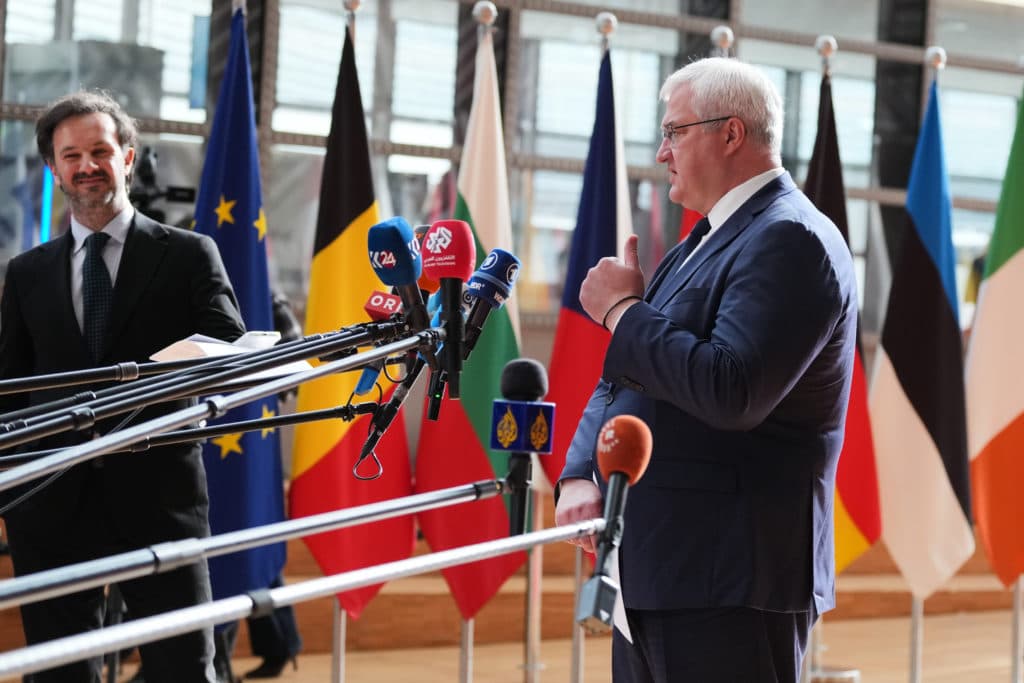
The European Council said the measures were adopted on 11 May 2026 and were timed to the Brussels meeting of the International Coalition for the Return of Ukrainian Children, a diplomatic effort co-hosted by the European Union, Ukraine and Canada. Canada said the coalition now has 49 members, including states and international organizations, and that the gathering focused on tracing children, verifying identities, supporting recovery and reintegration, and building pressure for eventual reunification.
The practical effect of the sanctions is clear even if their limits are too. Asset freezes and travel bans do not by themselves locate a child hidden behind a Russian passport, an institution or an adoption file. But they can constrain the officials, judges, administrators and child-welfare networks that make the removals durable, while signaling that Europe is trying to move from outrage to enforceable accountability. The EU has now adopted 20 sanctions packages against Russia since the invasion began, using economic and diplomatic pressure to weaken Moscow’s ability to wage war.
The issue has also hardened into an international legal case. In March, the United Nations Independent International Commission of Inquiry on Ukraine concluded that Russian authorities committed crimes against humanity through the deportation and forcible transfer of children, along with enforced disappearances. Ukraine says the returns are slowly mounting, but the task remains painstaking: President Volodymyr Zelenskyy said more than 2,100 abducted children had been brought home under Bring Kids Back UA, including 150 since the start of 2026.
The scale of the displacement remains staggering. UNICEF said more than a third of Ukraine’s children, 2,589,900, remained displaced in February, including nearly 1.8 million refugees abroad. Against that backdrop, the EU sanctions may not end the abductions on their own, but they raise the cost of denial, complicity and concealment, and they keep the fate of thousands of children at the center of Europe’s response to the war.
This article was produced by Prism’s automated news system from verified source data, official records, and press releases, then run through automated quality and moderation checks before publishing. The system is built and supervised by the people who set the standards it runs under. Read our full AI policy.
Did this article answer your question?