EU tariff cuts on U.S. goods take effect, with 2029 deadline
The EU dropped remaining duties on U.S. industrial goods and opened quota access for select farm and seafood imports, but the regime now runs to 2029.

The European Union removed the remaining customs duties on U.S. industrial goods as its side of the transatlantic trade deal took effect on July 1, turning a July 2025 political agreement into binding tariff rules. The package also gives preferential access to selected U.S. seafood and non-sensitive farm products, including lobster.
The Council of the European Union formally adopted the two implementing regulations on June 25, locking in the legal mechanics behind the deal. One regulation removes the remaining EU customs duties on U.S. industrial goods and opens tariff-rate quotas or reduced tariffs for certain seafood and agricultural exports. The other extends the duty-free treatment for lobster, including processed lobster, retroactively from Aug. 1, 2025, through July 31, 2030.
The main regulation stops applying at the end of 2029, and by June 30, 2029, the European Commission must deliver a full assessment of the impact on trade flows, tariff revenue and economic effects, including on small and medium-sized firms, along with a proposal on whether to extend the regime. The Council also built in a safeguard mechanism that lets Brussels move quickly if import surges cause or threaten serious injury to EU operators. It can also suspend tariff preferences if the United States fails to meet its commitments, undermines the joint statement or distorts balanced trade relations.

Tree nuts, dairy, fresh and processed fruits and vegetables, processed foods, planting seeds, soybean oil, pork and bison meat gained preferential access under the Commission’s proposal.
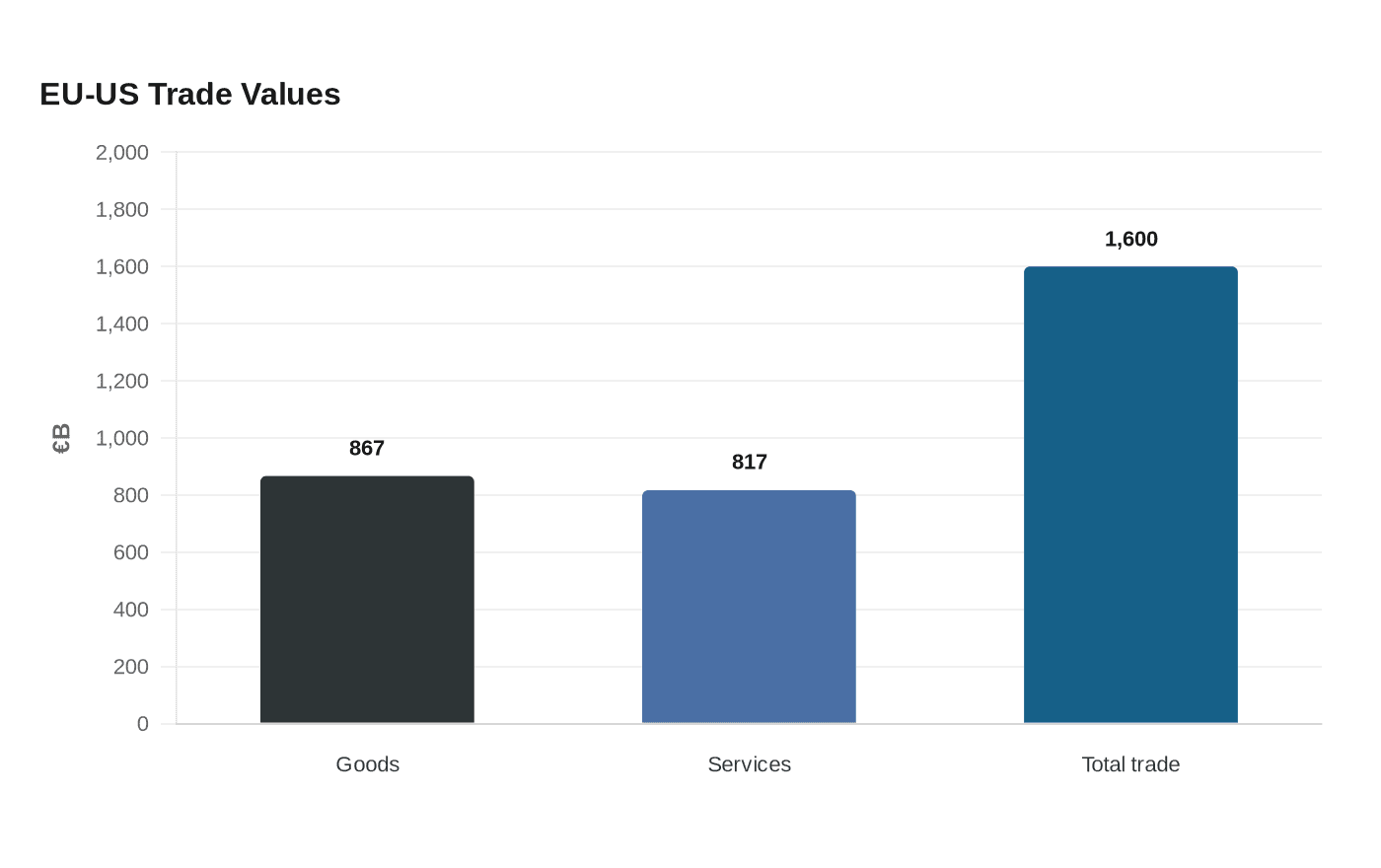
European Commission data put EU-U.S. trade in goods and services at more than €1.6 trillion in 2024, with €867 billion in goods and €817 billion in services, and firms on both sides had invested €5.3 trillion in each other’s markets in 2022. The U.S. side of the framework set a 15% tariff ceiling on most EU goods and gave special MFN-only treatment to sectors including aircraft and generic pharmaceuticals.
This article was produced by Prism’s automated news system from verified source data, official records, and press releases, then run through automated quality and moderation checks before publishing. The system is built and supervised by the people who set the standards it runs under. Read our full AI policy.
Did this article answer your question?

