EU trade surplus shrinks 60% as exports to US plunge
EU exports to the U.S. fell 26.4% in February as the bloc's trade surplus shrank to €9.1 billion, a sharp sign tariffs are already distorting transatlantic flows.
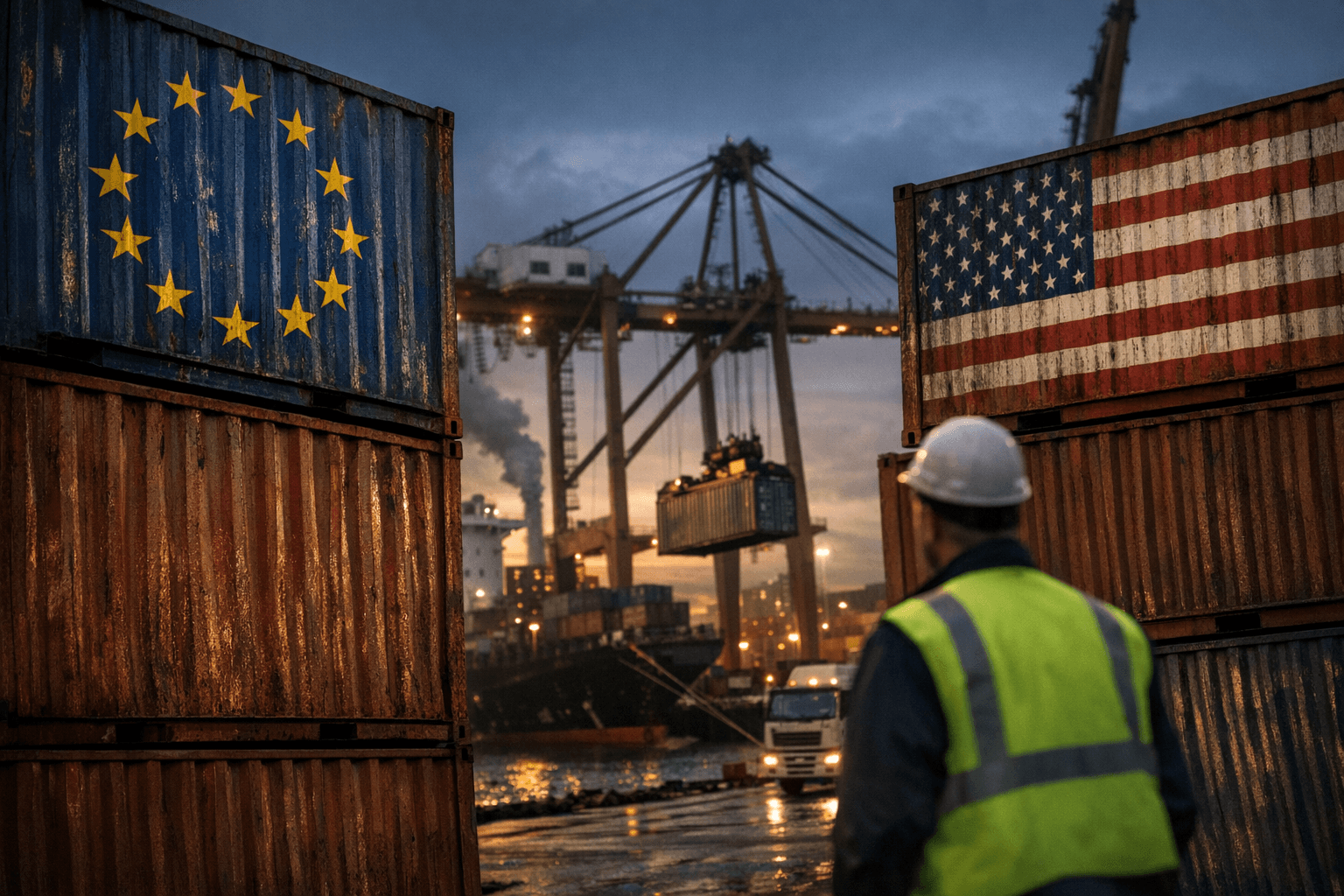
Europe’s trade cushion is thinning fast. The European Union’s surplus with the rest of the world fell to €9.1 billion in February, down from €22.9 billion a year earlier, as exports dropped 9.3% and imports declined 3.5%. The sharpest blow came from the United States, where EU shipments fell 26.4% while imports from the U.S. slipped 3.2%, underscoring how tariff pressure is feeding through to trade flows even before the full policy picture has settled.
The numbers point to more than a one-month swing. The euro area posted an €11.5 billion goods surplus in February, down from €23.1 billion a year earlier, with exports at €232.4 billion and imports at €220.9 billion. Even so, the monthly release showed one area of resilience: the euro area machinery and vehicles surplus jumped from €1.5 billion in January to €10.2 billion in February. That did little to offset the broader slowdown, especially as exports to China also fell and the transatlantic leg of trade weakened sharply.
The U.S. market matters because it is still the EU’s most valuable destination for high-end industrial and pharmaceutical goods. Eurostat said the top five export product groups to the United States made up 53.0% of all exports in 2025. Medicinal and pharmaceutical products accounted for 29.0%, road vehicles for 7.5%, and the strongest early-2025 gains came from organic chemicals, as exporters rushed shipments ahead of tariff implementation. That front-loading helped inflate comparisons, but it also reveals a behavioral shift: companies are no longer waiting to see whether tariffs will stick, they are trying to move inventory before duties hit.
The quarterly trend is even starker. The EU goods surplus with the United States narrowed from €81 billion in the first quarter of 2025 to €41 billion in the third quarter, then to €31 billion in the fourth quarter, the lowest since the second quarter of 2020. Brussels has repeatedly said the U.S. measures are unjustified, disruptive to transatlantic trade and harmful to businesses and consumers. In March 2025, the European Commission said it would reinstate suspended rebalancing measures targeting €4.5 billion of U.S. goods and prepare additional countermeasures affecting €18 billion of U.S. exports. It later said it was weighing restrictions on certain EU exports of steel scrap and chemical products to the U.S. worth €4.4 billion and preparing a broader list of U.S. imports worth €95 billion.
The policy message is clear: tariffs are already reshaping trade, not just prices. For Europe, that means more pressure on autos, industrial goods and chemicals if duties remain in place. For the United States, it means weaker imports, weaker exports and no easy victory in a trade conflict that is still unfolding across supply chains, corporate orders and political leverage.
This article was produced by Prism’s automated news system from verified source data, official records, and press releases, then run through automated quality and moderation checks before publishing. The system is built and supervised by the people who set the standards it runs under. Read our full AI policy.
Did this article answer your question?

