Judge rejects Bayer bid to block J&J prostate drug ads
A Manhattan judge let Johnson & Johnson keep touting Erleada’s survival benefit for now, saying Bayer had not shown the ads were likely false.

A Manhattan federal judge refused to stop Johnson & Johnson from advertising that its prostate cancer drug Erleada cut the risk of death by half, handing Bayer an early setback in a fight over how far drugmakers can push survival claims in a blockbuster market.
Judge Dale Ho said Bayer had not shown a sufficient likelihood of winning on its false-advertising claims or proved the kind of irreparable harm that would justify an immediate injunction. For now, that means Johnson & Johnson can continue using the disputed comparative message while the case moves forward, even as the underlying question remains whether a retrospective real-world analysis is strong enough to support a death-risk claim in promotion.
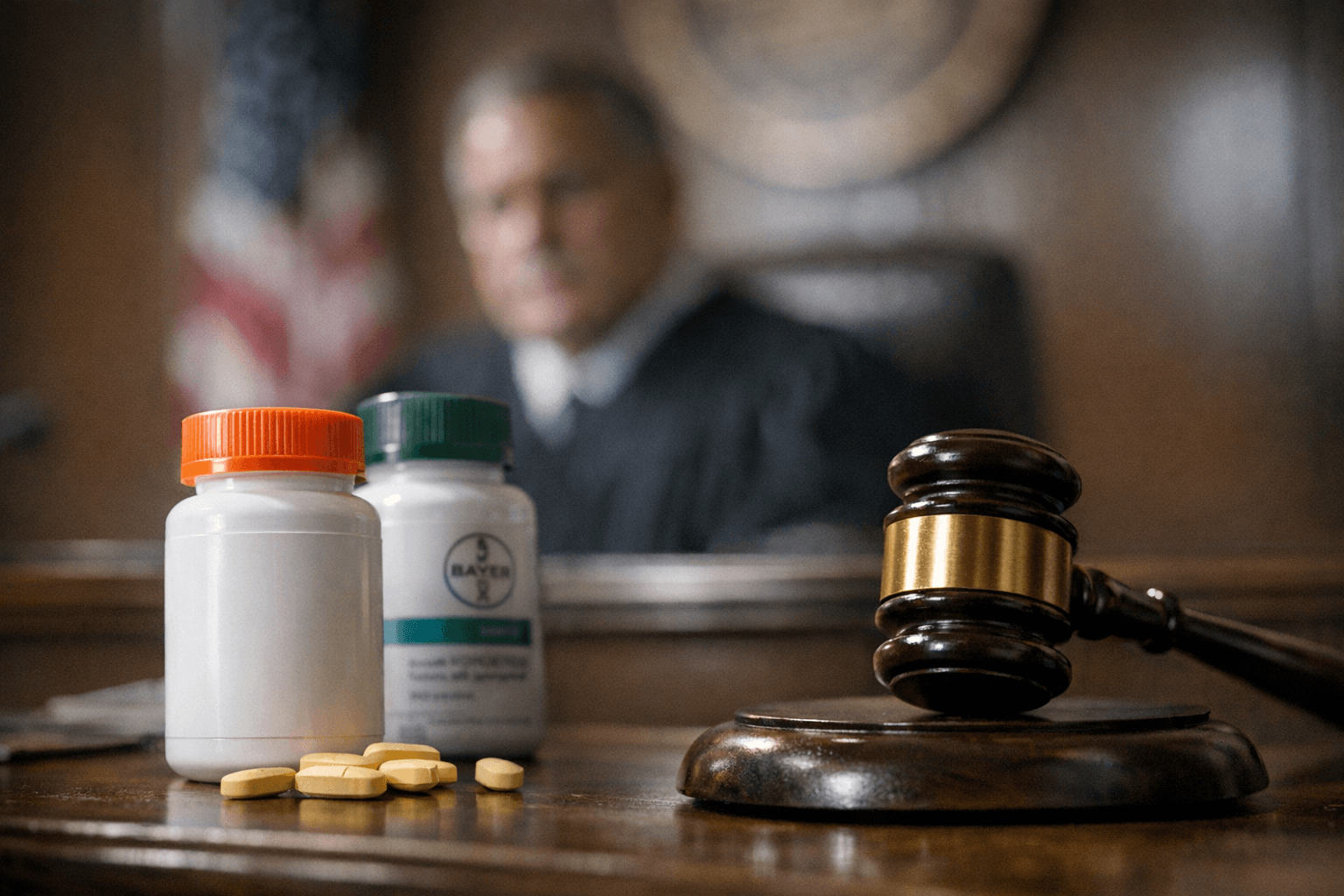
The lawsuit, filed February 23 in the U.S. District Court for the Southern District of New York, seeks preliminary and permanent injunctions as well as damages under the Lanham Act. Bayer said Johnson & Johnson’s campaign overstated Erleada’s benefits by leaning on a “51% reduction in risk of death” and on a study it says was methodologically flawed because Nubeqa was not approved for use without docetaxel during 97% of the study period and the Nubeqa group was five times smaller than the Erleada group. Bayer’s complaint said the promotional push included a press release and two presentations on Johnson & Johnson’s Medical Connect website.
The study at issue was not a head-to-head randomized trial. It was a retrospective, real-world comparison of patients with metastatic castration-sensitive prostate cancer treated in routine U.S. practice, and Johnson & Johnson said the findings were presented at the 36th Annual International Prostate Cancer Update in February 2026. Ho said the methodological choices were not so far outside the scientific mainstream that the claims were materially false or misleading at this preliminary stage, a ruling that suggests courts may be reluctant to treat scientific disagreement as deception before trial.
The commercial stakes are large. Reuters reported that about 313,780 men were diagnosed with prostate cancer in the U.S. in 2025 and 35,770 died from the disease. Nubeqa generated 2.39 billion euros in sales in 2025, while Erleada brought in $3.57 billion. In a market that big, the difference between a permitted promotional claim and a medically settled conclusion can shape prescribing, payer scrutiny and how aggressively oncology companies market survival benefits.
Johnson & Johnson said the ruling was “a win for scientific exchange and a strong win for patients.” Bayer spokeswoman Sue Ann Pentecost said the company still believed the full body of evidence supported its false-advertising claims and would pursue the case on the merits.
This article was produced by Prism’s automated news system from verified source data, official records, and press releases, then run through automated quality and moderation checks before publishing. The system is built and supervised by the people who set the standards it runs under. Read our full AI policy.
Did this article answer your question?