Eureka City Council to adopt Humboldt Regional Climate Action Plan
Eureka City Council adopted the Humboldt Regional Climate Action Plan as the city's climate policy, aligning local rules with county targets to cut emissions and guide future projects.
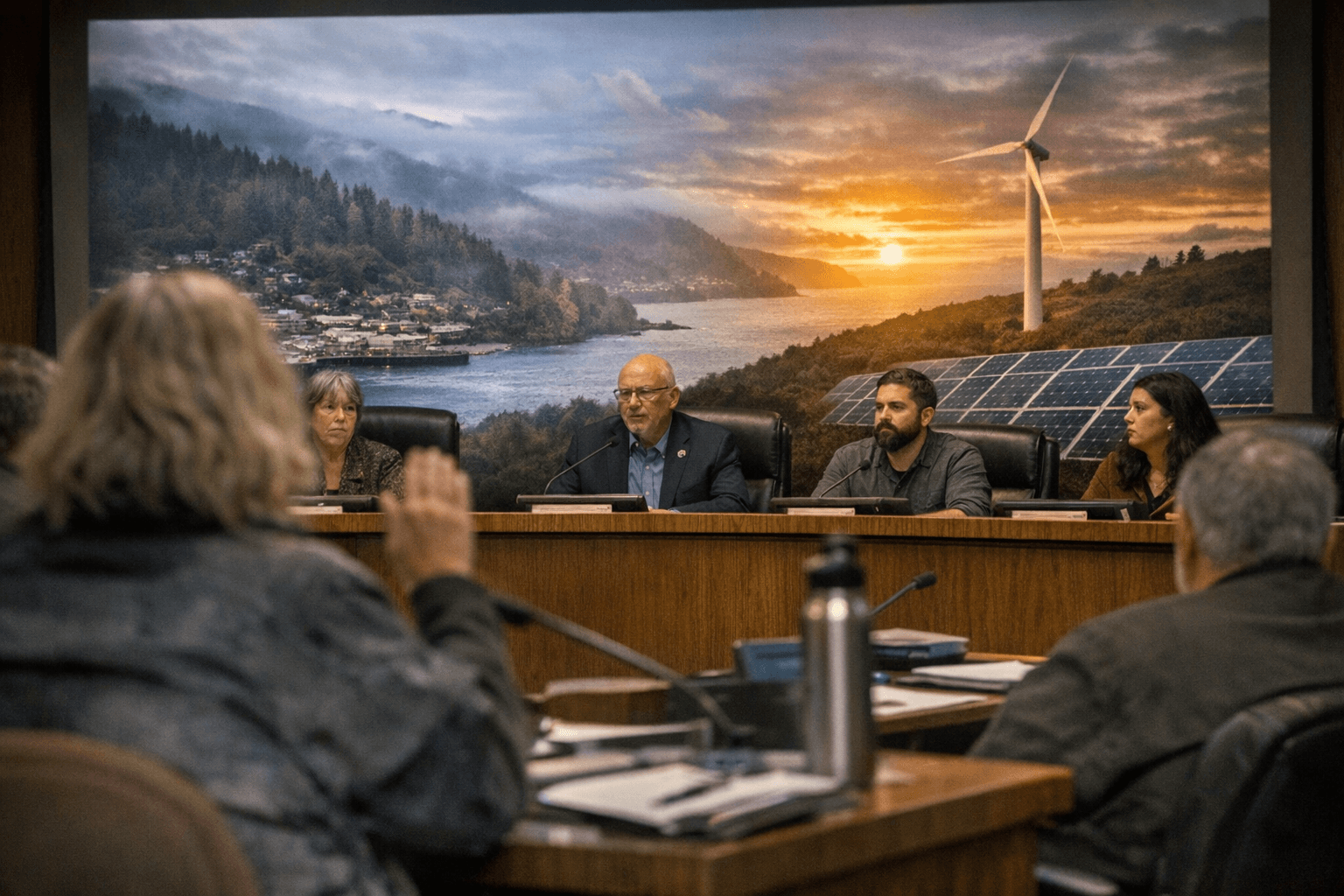
Eureka City Council voted on February 3, 2026 to adopt the Humboldt Regional Climate Action Plan (RCAP) as the city's official climate policy, bringing Eureka into alignment with a county plan the Humboldt County Board of Supervisors approved on December 16, 2025. The RCAP sets a regional target to reduce greenhouse gas emissions to 40% below 1990 levels by 2030 and to make progress toward statewide carbon neutrality by 2045, and it will be used to streamline future environmental review for projects that conform to the plan.
The RCAP emerged from a multi-year, multi-agency process that began in 2018–2019 and involved the Redwood Coast Energy Authority, the County of Humboldt and the seven incorporated cities of Arcata, Eureka, Blue Lake, Ferndale, Fortuna, Rio Dell and Trinidad. Additional partners who participated in planning discussions include the Humboldt Waste Management Authority, Humboldt County Association of Governments, Recology, Forestry Advisors and the Humboldt Transit Authority. Board-approved documents include the Final Humboldt Regional Climate Action Plan, appendices setting out the greenhouse gas inventory and measure quantifications, a CEQA GHG Emissions Streamlining Checklist and the Final Environmental Impact Report.
Transportation is identified in the RCAP as the largest contributor to county emissions, and the plan highlights measures to prioritize public transit, biking and walkable neighborhoods, expand access to electric vehicle charging, reduce vehicle travel and address building energy, electricity and natural gas use. The plan also addresses waste, water and wastewater, carbon sequestration and refrigerants. County materials and reporting emphasize the RCAP does not impose new immediate regulatory requirements; instead it outlines phased, programmatic actions for staff and agencies to pursue.
Adoption by Eureka will make the RCAP the City’s policy framework and allow the city to rely on the county-certified Environmental Impact Report for CEQA streamlining. Local reporting indicated the council’s adoption itself will not have an immediate fiscal impact, but implementation will require staff time and likely funding for a shared regional Climate Program Manager, plus formation of a Regional Climate Committee and eventual staff hires after partner jurisdictions complete their adoptions.
The plan’s path forward has drawn differing reactions from advocates and analysts. Jefferson Public Radio reported that supervisors adopted GHG thresholds described as “35% lower than the consultants' recommendation.” Wildcalifornia urged officials to adopt the RCAP without weakening it and to revert CEQA thresholds to consultants’ original levels, while Transportationpriorities welcomed edits to the plan’s infill definition but called the thresholds less ambitious than desired.
Board Chair Mike Wilson framed the stakes for the region: “I think we imagine sometimes that climate change is static, that if we do nothing, everything stays the same, but it's not. It's dynamic. It's moving forward. It's becoming worse, and we need to adjust for that. And everything we do will have a cost.” Planning Director John Ford said the goal is to “capitalize on what’s already happening.”
For Eureka residents the RCAP means local decisions on transportation projects, housing and energy upgrades will increasingly be guided by regional targets and by a phased implementation program that will roll out as partner cities and agencies adopt the plan. The next milestone is partner adoption across the region and formation of the Regional Climate Committee; the RCAP will be updated in 2030 to align with California’s 2045 carbon neutrality goal. For those who still want to review or weigh in on county materials, written comments for the county process were accepted via email at cob@co.humboldt.ca.us during the board review period and the full set of board-adopted documents is available through county planning channels.
Sources:
Know something we missed? Have a correction or additional information?
Submit a Tip