Euro Zone Inflation Hits Fastest Pace Since 2022, Energy Costs Surge
Euro zone inflation surged to 2.5% in March as energy costs jumped 4.9%, the sharpest rise in three years, forcing traders to bet on ECB rate hikes as early as April.
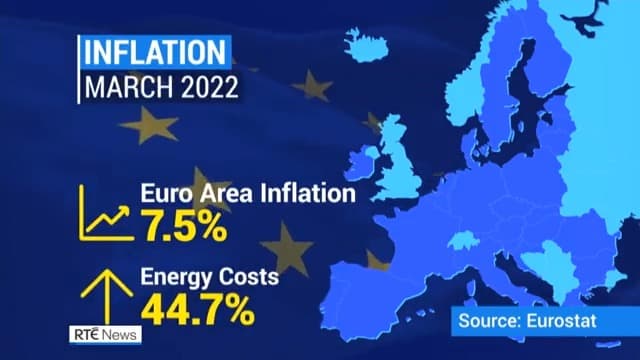
A 0.6 percentage point surge in euro area consumer prices in March delivered the bloc's fastest inflation reading since early 2022, propelled by an energy shock rooted thousands of miles away in the Middle East and landing squarely on household bills across the continent.
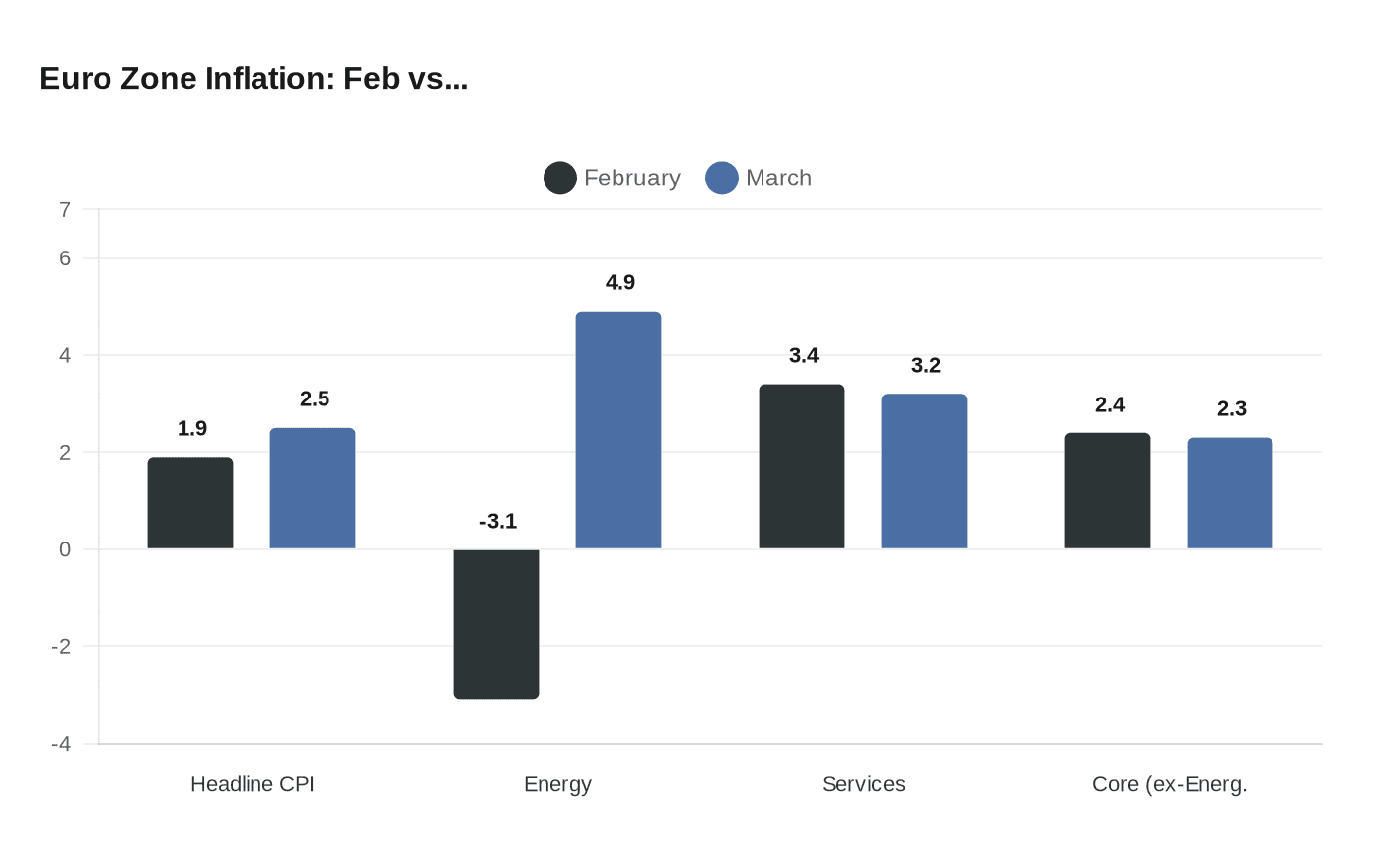
Preliminary data from Eurostat showed annual consumer price inflation climbed to 2.5% in March, up from 1.9% in February and past the European Central Bank's 2% target. The energy component told the most dramatic story: it swung from a -3.1% annual decline in February to a 4.9% gain in March, the sharpest such increase since February 2023 and the first annual rise in nearly a year. The catalyst was the military operation launched by the United States and Israel against Iran at the end of February, which disrupted oil and liquefied natural gas flows through the Strait of Hormuz and sent Brent crude above $110 a barrel, a rise of more than 50% since the conflict began.
Those crude prices do not stay on futures screens. They filter into utility bills, petrol pump prices, and heating costs, compressing real incomes in an economic bloc that imports the vast majority of its energy. Services inflation, which the ECB watches most closely as a gauge of domestic price pressure, actually eased slightly to 3.2% from 3.4%, and the core rate stripping out energy slipped to 2.3% from 2.4%. That distinction matters enormously for policy: it suggests the underlying wage-and-services dynamic has not yet broken loose, even as the headline rate accelerates.

The relief in core measures is unlikely to let the ECB stand still for long. Traders are now pricing two or three quarter-point increases in the benchmark interest rate by year-end, with the first move potentially coming as early as April. Financial markets moved sharply on the March data, with sovereign bond yields rising and the euro trading under pressure as investors reassessed how quickly the central bank would need to act.
ECB President Christine Lagarde had signaled at a Frankfurt conference last week that the bank would only move if inflation deviated "significantly and persistently" from target, while acknowledging that even a temporary overshoot could trigger action if it were large enough. At 2.5% and climbing, the March print tests that threshold. The ECB has already cut its 2026 growth forecast to 0.9% and revised its average inflation projection for the year up to 2.6%, a figure the OECD separately matched in its own revised forecasts.
The policy bind is unusually sharp. Raising rates to quell an energy-driven price spike risks compressing already-fragile growth; holding back risks allowing inflation expectations to drift higher and embedding the shock in wage negotiations. For euro zone mortgage holders on variable rates, a resumption of tightening would mean higher monthly payments within quarters. For savers, it could finally push deposit rates back to levels that offer a genuine return. For businesses relying on credit to finance operations, the cost of capital would rise at precisely the moment that energy input costs are also climbing.
The Strait of Hormuz disruption also underscores a longer-running vulnerability: Europe's energy security remains hostage to geography and geopolitics it does not control. Finance ministers, alongside ECB rate-setters, will be weighing that exposure when they reconvene at upcoming meetings to decide how much of this war-risk premium the euro zone economy can absorb before monetary policy has to absorb it instead.
This article was produced by Prism’s automated news system from verified source data, official records, and press releases, then run through automated quality and moderation checks before publishing. The system is built and supervised by the people who set the standards it runs under. Read our full AI policy.
Did this article answer your question?

