Euro zone private sector contraction eases, but growth stays elusive
Euro zone activity improved to 49.5 in June, but new orders fell again and growth still sat just below the line that marks expansion.

Euro zone private sector activity contracted for a third straight month in June, but the pace of decline eased as tourism and leisure demand picked up enough to soften the blow from weaker new business. The flash S&P Global Eurozone Composite PMI rose to 49.5 from 48.5 in May, still below the 50 threshold that separates growth from contraction, while the services PMI improved to 48.9 from 47.7.
The headline reading pointed to a region that was stabilizing, not recovering. New orders fell for a fourth consecutive month, showing that underlying demand remained fragile even as some travel-linked activity improved. Chris Williamson, chief business economist at S&P Global Market Intelligence, said the euro zone economy was showing “enough resilience to just about stay out of recession” and that the June survey was “indicative of unchanged GDP over the second quarter.”

The country breakdown underlined how uneven the bloc remained. Germany’s private sector contracted at its fastest pace in 18 months as the services downturn deepened, while France’s rate of decline eased as falls in manufacturing and services output slowed. Across the wider euro zone, modest output growth in some areas was not strong enough to offset the weakness in the core.
Labor market conditions also stayed soft. Employment fell slightly in June, leaving the private sector without job growth for a sixth straight month. Services payrolls edged higher, but manufacturing jobs continued to shrink, a split that mirrors the broader divide between a tentative rebound in tourism and leisure and the still-difficult industrial backdrop.
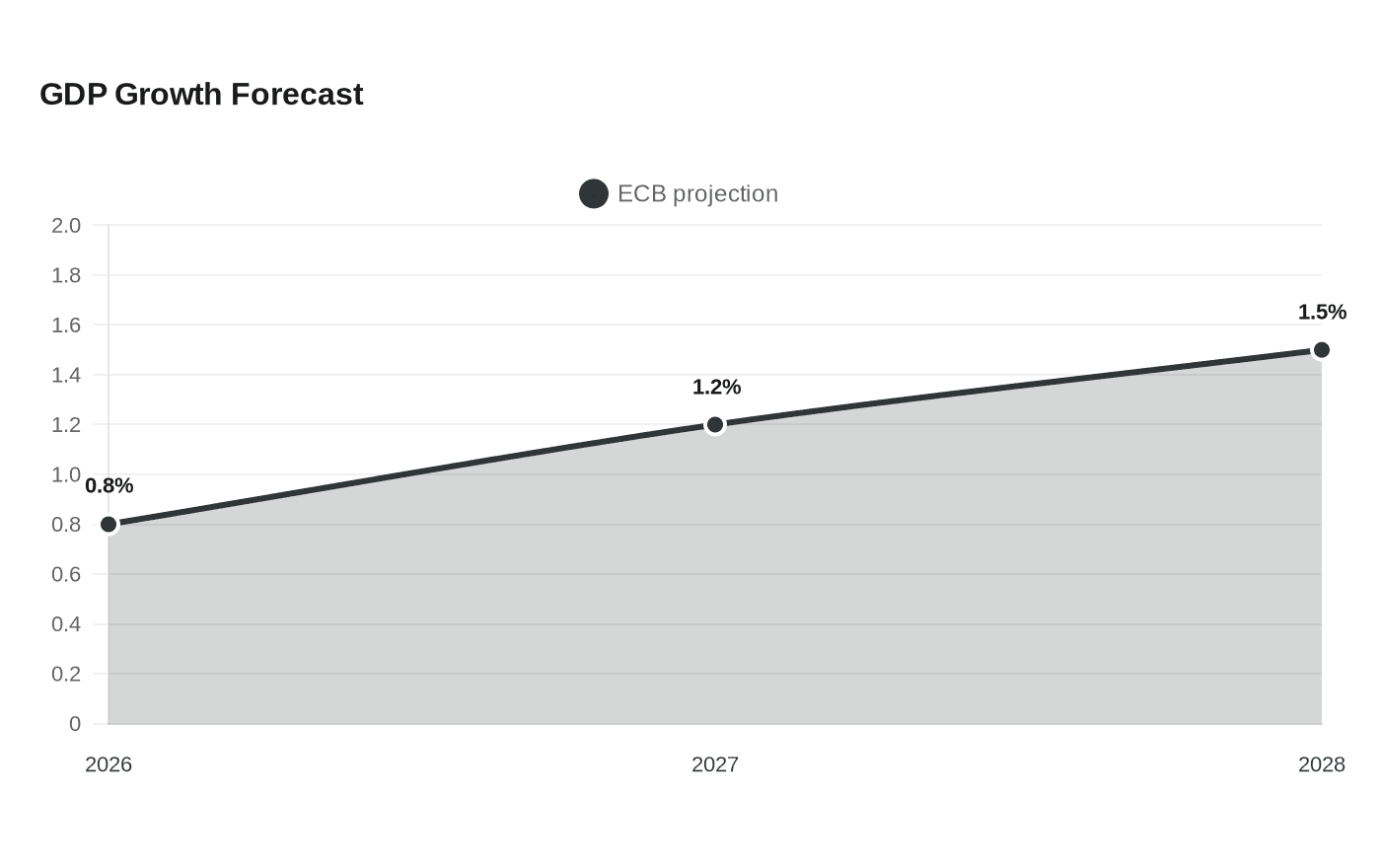
The data added another layer to the European Central Bank’s policy dilemma. Input costs rose at their slowest pace since just before the outbreak of war in the Middle East in February, and output price inflation also eased, suggesting some of the recent price pressure may be peaking. That comes as the ECB remains focused on inflation after raising interest rates on June 11, even as its June staff projections forecast only 0.8% GDP growth in 2026, 1.2% in 2027 and 1.5% in 2028. The central bank also said euro area real GDP contracted by 0.2% in the first quarter, based on a revised Eurostat estimate published on June 5. A Reuters poll at the start of June had forecast 0.1% second-quarter growth, making Williamson’s assessment a notable downgrade from that expectation.
This article was produced by Prism’s automated news system from verified source data, official records, and press releases, then run through automated quality and moderation checks before publishing. The system is built and supervised by the people who set the standards it runs under. Read our full AI policy.
Know something we missed? Have a correction or additional information?
Submit a Tip