Nasdaq futures tumble as global chip sell-off hits markets
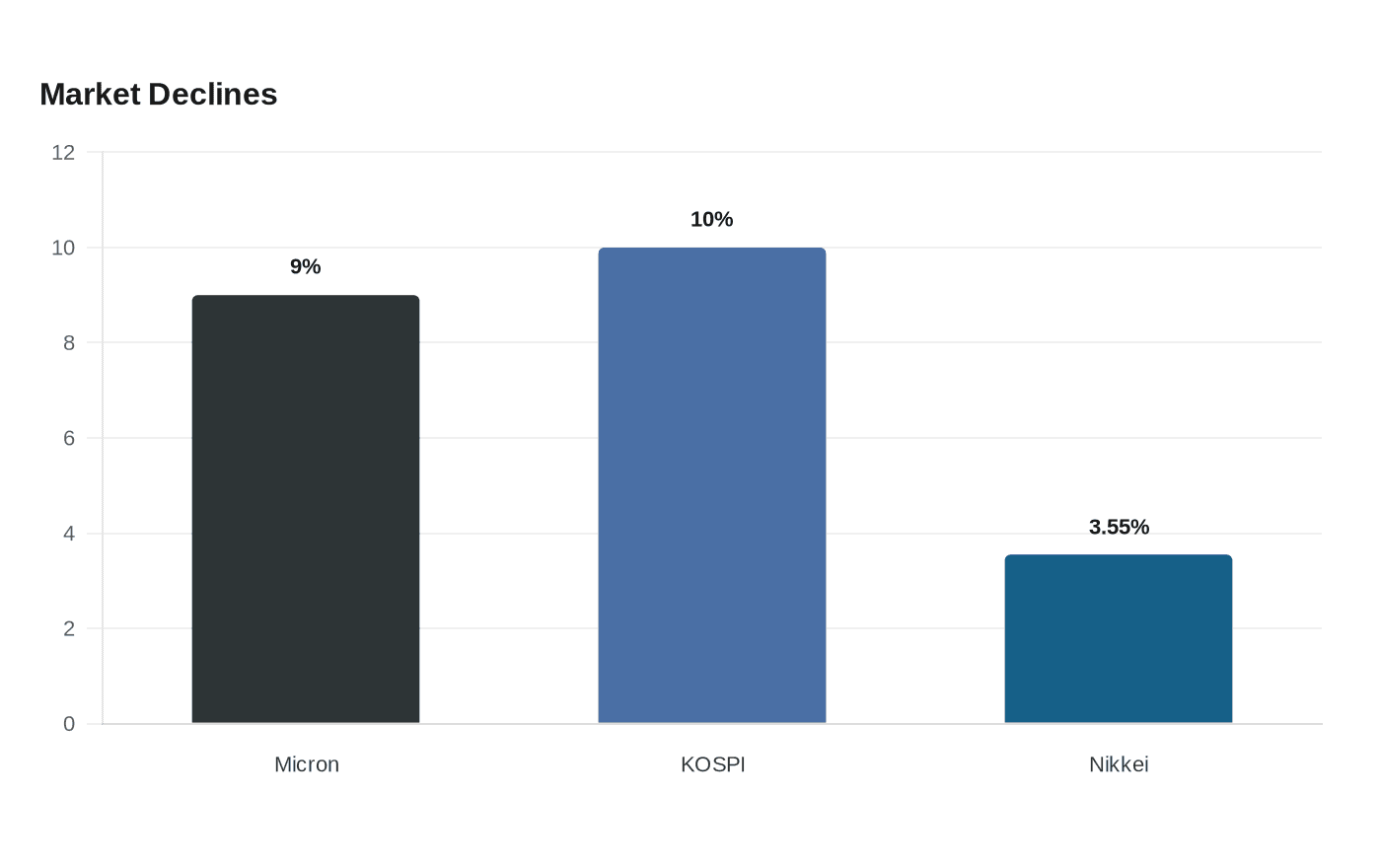
Nasdaq futures slid as Micron fell 9% and South Korea’s KOSPI sank 10%, jolting the AI trade and rattling markets from Seoul to New York.

Nasdaq futures sank as a global chip sell-off forced investors to confront a sharper question than they have been asking for months: which parts of the artificial-intelligence trade can still justify their valuations. Micron dropped 9%, and South Korea’s KOSPI fell 10%, a move severe enough to trigger a 20-minute trading halt as chipmakers led the retreat.
The damage spread quickly across the region. South Korea’s benchmark fell from a record high as investors dumped Samsung Electronics and SK Hynix, two companies that had helped power the market’s earlier AI rally. The scale of the drop underscored how concentrated the bet had become: when semiconductor sentiment reversed, the index had little cushion. Morningstar said the KOSPI’s move was the fourth such trading suspension this year, a sign of how violent the swings have become in a market dominated by chip exposure.
The pressure was not confined to Seoul. Japan’s Nikkei Stock Average closed 3.55% lower, while China’s Shanghai Composite Index and Hong Kong’s Hang Seng also fell, extending a rout that had already started after weakness on Wall Street. Nasdaq 100 futures were on pace to erase more than $1 trillion in market value as technology heavyweights and chip stocks sold off together, a reminder that the AI boom has tied the fortunes of chipmakers, software firms and index funds more tightly than many investors realized.

For U.S. households, the repricing matters because many 401(k) plans are heavily exposed to Nasdaq-linked stocks and funds. A sustained break in the AI trade would not just hit speculative names; it could weigh on retirement balances and on the semiconductor supply chain, from manufacturers to equipment suppliers and the jobs they support. The selloff also revived memories of an earlier June shock, when Broadcom’s AI outlook disappointment helped spark a chip rout that wiped out more than $1 trillion in sector value.
The latest moves suggest that investors are no longer willing to buy every dip in artificial intelligence and semiconductors. Higher rate expectations and broader risk-off positioning added to the pressure, but the message from markets was clearer than any policy speech: proof of earnings, demand and durable margins now matters more than the promise of an AI future.
This article was produced by Prism’s automated news system from verified source data, official records, and press releases, then run through automated quality and moderation checks before publishing. The system is built and supervised by the people who set the standards it runs under. Read our full AI policy.
Know something we missed? Have a correction or additional information?
Submit a Tip