Euroclear sues Russian central bank to block €220 billion ruling
Euroclear asked a Belgian court to stop a €220 billion Russian claim, setting up a fight over frozen state assets, sanctions immunity and Ukraine financing.
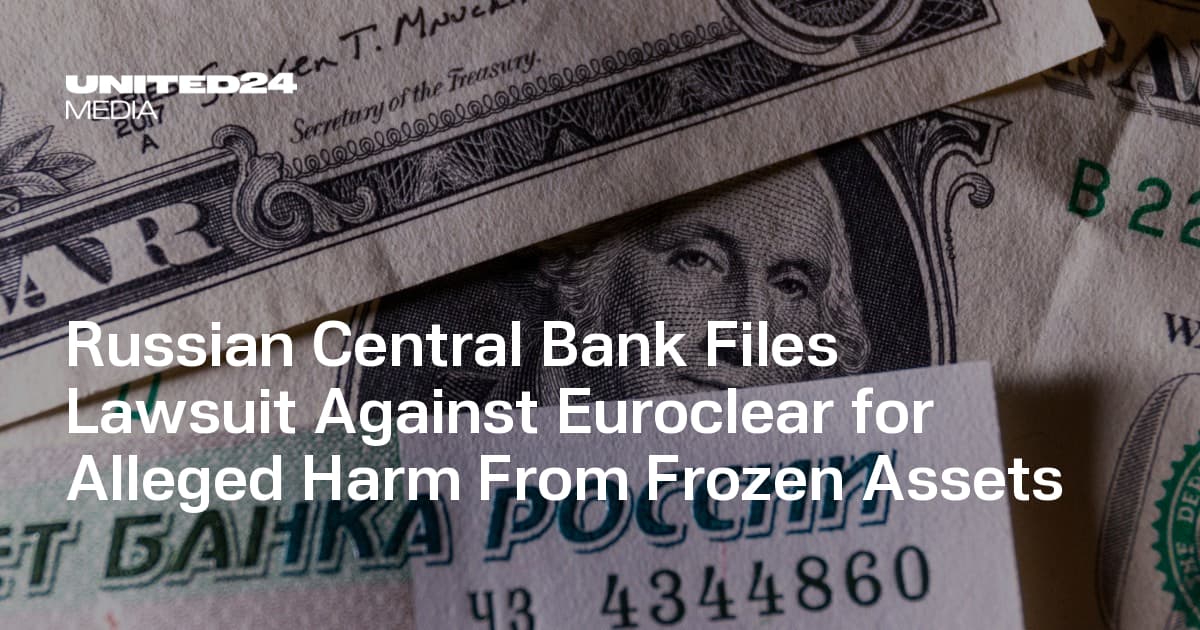
Euroclear has sued Russia’s central bank in a Belgian civil court to block enforcement of a Moscow ruling that would require the Brussels-based clearing house to pay about €220 billion in damages. The filing turns a sanctions dispute into a direct test of whether frozen sovereign assets can be turned into wartime compensation without shaking confidence in Europe’s financial plumbing.
The Moscow Arbitration Court ordered Euroclear to pay 18.17 trillion rubles, or roughly $249 billion to $252 billion, and granted immediate enforcement after a case that traces back to a Russian central bank lawsuit filed in December 2025. No seizure steps have been taken yet, but Euroclear is trying to stop the judgment from gaining any foothold in Belgium, where the company says Russian courts have no jurisdiction over its operations.

Euroclear spokesman Jorgen Muylaert said, "We consider the Russian courts do not have jurisdiction over Euroclear," adding that only Belgian courts matter for the company. Euroclear said its operations and financial position were unaffected by the Russian ruling, and that the Central Bank of Russia’s assets held at Euroclear Bank remain immobilised in line with international sanctions. The Russian central bank said it was aware of the Belgian lawsuit and was developing a defence strategy.
The legal fight carries wider consequences because Euroclear sits at the center of Europe’s frozen Russian asset regime. Roughly €300 billion in Russian foreign assets are frozen abroad, with about two-thirds in Europe and about €185 billion held at Euroclear. Some estimates put about €176 billion of the assets at Euroclear in cash by 2025, with the rest maturing later in 2026 and 2027. That concentration has made Euroclear a critical chokepoint in the sanctions architecture, and a target for Russian counterclaims.
Brussels has already begun tapping the proceeds from immobilised Russian assets for Ukraine. The European Commission said the first €1.5 billion transfer of proceeds was made available on July 23, 2024. The European Union has also moved to prohibit, on a temporary basis, any transfers of immobilised Central Bank of Russia assets back to Russia, while policymakers debate a broader reparations-loan plan built on those frozen funds.
Euroclear has warned that such use of Russian assets carries legal and financial risks, including retaliation in jurisdictions Moscow views as friendly, such as China, the United Arab Emirates and Kazakhstan. The Belgian filing shows that the dispute over sanctions is no longer just about who controls the cash. It is about whether Europe can weaponise immobilised state assets for Ukraine without opening the door to a wider campaign against banks, clearing houses and the cross-border settlement system itself.
This article was produced by Prism’s automated news system from verified source data, official records, and press releases, then run through automated quality and moderation checks before publishing. The system is built and supervised by the people who set the standards it runs under. Read our full AI policy.
Did this article answer your question?

