European and Middle Eastern carriers reroute flights as Iran tensions rise
Airlines rerouted or cancelled services after U.S. military deployments near Iran forced regulators and carriers to avoid key Middle East airspace.
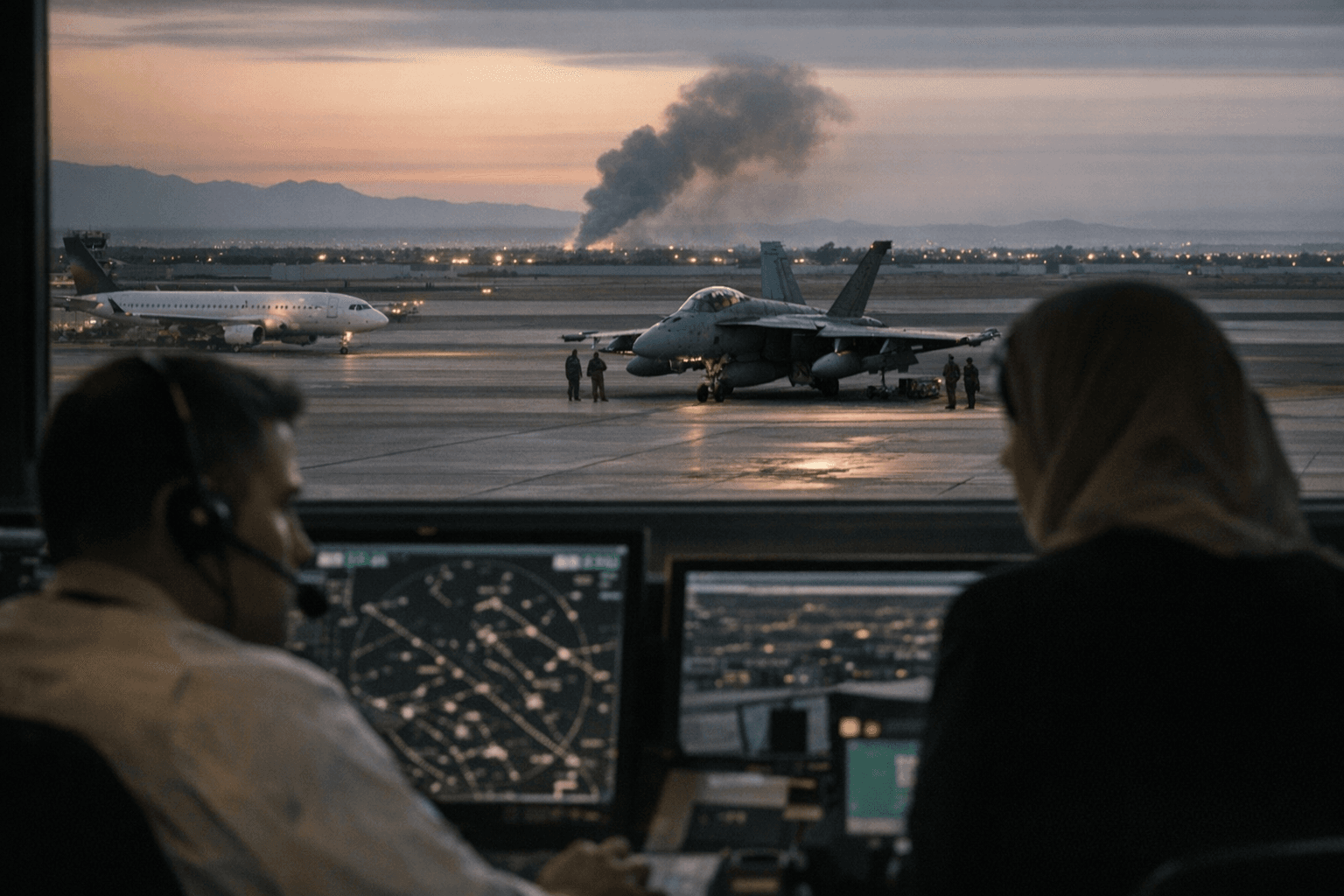
Airlines across Europe and the Middle East rerouted and in some cases cancelled flights as regional tensions around Iran intensified following U.S. military deployments to the area. Regulators and carriers avoided Iranian and Iraqi airspace and in several cases expanded restrictions into adjacent parts of the broader Middle East, forcing carriers to alter established transcontinental routes and schedules.
The disruptions were concentrated on routes linking Europe, the Middle East and South Asia, where standard corridors pass close to the Persian Gulf. KLM notably avoided large parts of Middle East airspace, lengthening flight paths between Europe and South Asia and reducing available seat and cargo capacity on those legs. The operational changes came on top of already tight airline schedules in peak winter travel, compounding delays and cancellation cascades at European and Gulf hubs.
The immediate economic effect was operational: longer diversions raise fuel consumption, crewing costs and maintenance scheduling complexity. For airlines that rely on narrow margins, those incremental expenses cut into fragile profitability. Cargo carriers faced particular pressure because the Europe-Asia freight corridor is a high-value artery for manufactured goods and time-sensitive shipments. Reduced capacity or route detours increase transit times and lift costs for shippers, with potential pass-through to manufacturers and consumers further down supply chains.
Regulatory actions underpinned the commercial moves. Aviation authorities issued advisories that prompted airlines to file new routings or suspend services on specific corridors. Those advisories reflect a broader risk-management approach by carriers and regulators: when geopolitical signals escalate, aviation actors prioritize safety and insurance compliance over schedule integrity. That conservatism can ripple through markets; insurers reassess premiums for flights traversing higher-risk regions, and that lift in insurance costs is typically passed to airlines as higher operational expenses.
The episode also highlights structural vulnerabilities in global air connectivity. The Middle East sits astride the shortest routes between many European and Asian cities; sustained avoidance of that airspace forces airlines to rely on longer polar or southern tracks that increase fuel burn and reduce frequency. Over time, persistent rerouting could shift airline network planning, encouraging carriers to redeploy aircraft to alternate hubs or to adjust fleet mix toward longer-range, more fuel-efficient models.
Policymakers face trade-offs. Authorities must weigh immediate safety concerns and geopolitical signaling against economic damage from sustained disruptions to trade and travel. For Europe, disruptions in air cargo capacity risk near-term friction in supply chains that are still adapting to post-pandemic realignments. For Middle Eastern economies that depend on hub transfer traffic and aviation-related revenue, prolonged avoidance could mean lost business and slower recovery in airport activity.
Looking beyond the immediate shock, the episode is likely to reinforce longer-term industry trends: increased operational hedging against regional instability, higher importance placed on flexible networks, and a tighter integration between foreign policy decision-making and transport regulation. For airlines already operating under narrow margins, those structural adjustments will add to costs that could influence fares, frequencies and the pace of fleet modernization in the coming years.
This article was produced by Prism’s automated news system from verified source data, official records, and press releases, then run through automated quality and moderation checks before publishing. The system is built and supervised by the people who set the standards it runs under. Read our full AI policy.
Did this article answer your question?


