European report warns Russia faces banking crisis under war strain
Russia’s banks are being kept afloat by war lending even as a European intelligence note warns that deeper sanctions could trigger an explosive crisis.

A two-page European intelligence note seen by Reuters warned that Russia risks an “explosive” banking crisis because lenders are carrying much of the burden of the war economy. The document, titled Note on the probability of a banking crisis in Russia in 2026, said banks have been pushed to extend subsidized loans to defense companies, homebuyers and other state-priority borrowers, while restructurings and government support mask the strain on balance sheets.
The warning landed as Brussels advanced its 21st sanctions package. On June 9, Ursula von der Leyen said the European Commission was targeting energy, financial services, crypto and trade, with fisheries included for the first time, a signal that Russian banks remain a central pressure point in the EU’s sanctions strategy.
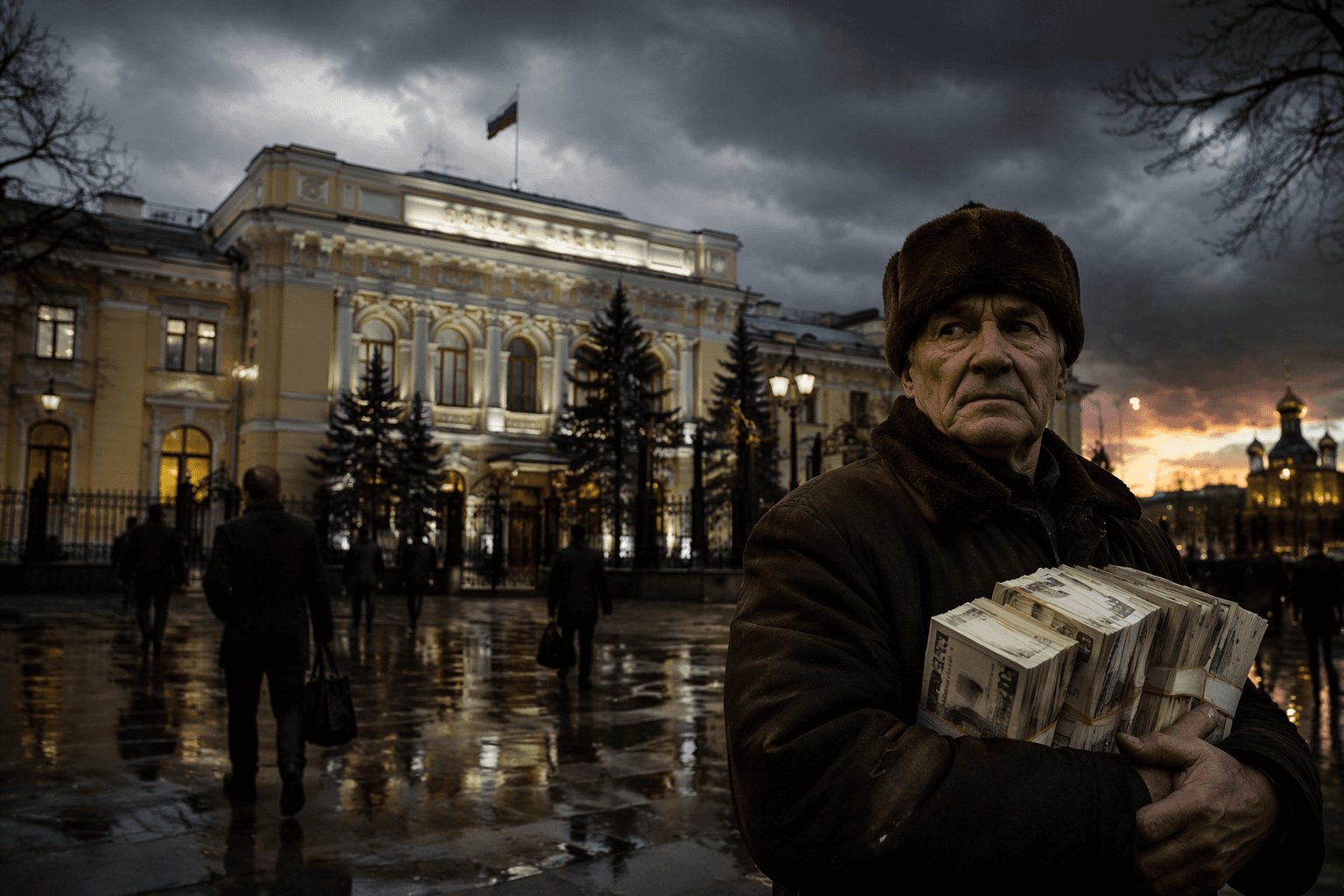
The timing matters because Moscow has been cutting back its own growth assumptions. Russia’s Economy Ministry lowered its 2026 GDP forecast to 0.4% from 1.3%, and Alexander Novak said the 2027 outlook was reduced to 1.4% from 2.8%. At the same time, the Bank of Russia said banking-sector net profit rose 20% in 2024 to 3.8 trillion rubles, and its forecast for the sector still pointed to 3.0 trillion to 3.5 trillion rubles in 2025 and 3.1 trillion to 3.6 trillion rubles in 2026, figures that help explain why officials can still argue the system is resilient.
The deeper concern is that reported profits may be obscuring a deterioration in credit quality. A Re:Russia analysis said the share of non-performing assets in the banking system exceeded 10% in early 2026, a level it treated as a crisis threshold, while also arguing that restructuring and state control have allowed the problem to stay latent. If that view proves correct, the next banking shock would not stop at lenders: it would hit subsidized war finance, household credit and the Kremlin’s ability to absorb sanctions without a wider domestic squeeze.
This article was produced by Prism’s automated news system from verified source data, official records, and press releases, then run through automated quality and moderation checks before publishing. The system is built and supervised by the people who set the standards it runs under. Read our full AI policy.
Did this article answer your question?