European stocks snap five-week rally amid Greenland trade fears
European equities closed lower, ending a five-week run as investors weighed trade fallout from President Donald Trump's Greenland threats.
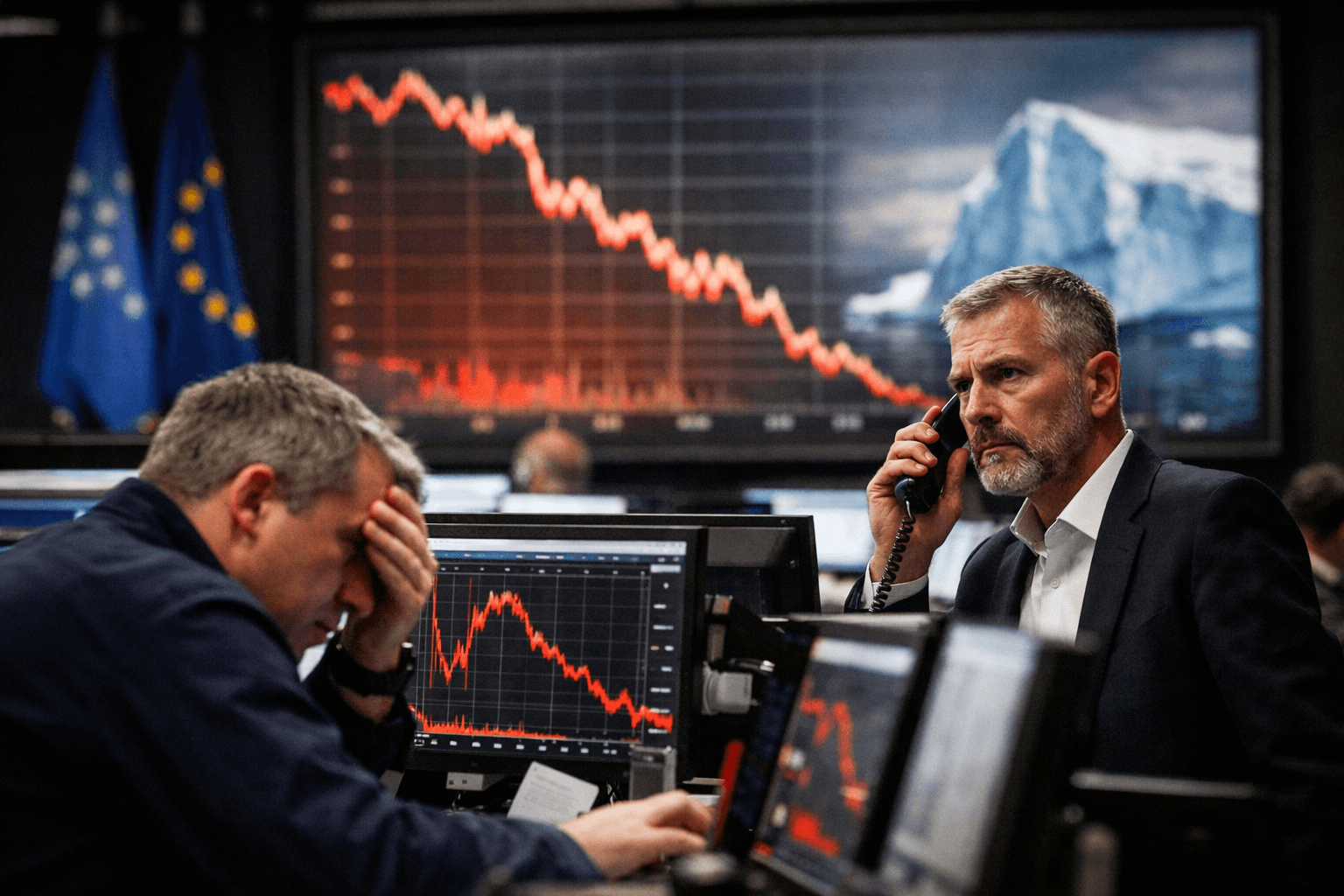
European equities closed lower on Friday and were set to record weekly losses, snapping a five-week run of gains as investors assessed the fallout from renewed trade tensions tied to U.S. President Donald Trump's threats around Greenland. The move underlined how quickly geopolitics can interrupt a market rally that had been driven by hopes of cooler inflation and steady growth.
Trading turned cautious as market participants reevaluated risk exposures that had benefited during the recent advance. The pullback reflected a broad reassessment rather than a single-sector selloff, with investors shifting toward safe-haven assets and away from cyclical names most dependent on cross-border trade. Portfolio managers cited increased policy uncertainty as the principal catalyst for reintroducing hedges and reducing directional risk.
The market reaction highlights a basic economic channel: the prospect of trade friction raises costs for exporters, complicates supply chains, and can shave profit margins through retaliatory tariffs or disrupted logistics. For Europe, where manufacturers and luxury exporters are tightly integrated into global value chains, even the threat of measures aimed at a narrow region can spill over into broader risk premia. Investors priced in a higher probability that businesses will delay hiring and capital expenditure decisions in the near term, damping growth expectations.
Policy implications extend beyond corporate strategy. Central banks monitor geopolitical shocks because sustained trade barriers can slow activity and reduce inflationary pressures, or conversely push up costs if tariffs are enacted. In that sense, the latest episode creates an awkward trade-off for the European Central Bank and other policymakers: respond to weaker activity with more accommodative settings, or maintain focus on inflation that remains above target in some areas. Markets will be watching upcoming central bank communications for clues about policy flexibility.
The reversal also speaks to a longer-term trend: markets have grown more sensitive to headline geopolitical risk after several years of compressed volatility. The recent five-week rally had trimmed fear indicators and boosted equity valuations. That tightening makes indices more vulnerable to fresh shocks, especially those that touch on trade relationships between major economies. The Greenland episode served as a reminder that political flashpoints can emerge from unexpected quarters and that uncertainty itself is a factor in financial conditions.
Looking ahead, investors will monitor official statements from Washington and European capitals, any concrete trade measures, and company-level earnings guidance for signs of direct economic impact. If tensions escalate into tangible barriers, analysts expect the effects to concentrate on exporters, shipping and logistics, and sectors with lean inventory models. If the episode fades, markets could recoup lost ground quickly given the durable fundamentals that supported the prior rally.
For now, the market mood has shifted from steady optimism to guarded caution, illustrating how geopolitics can quickly reprice risk and alter the policy calculus facing Europe's economic stewards.
This article was produced by Prism’s automated news system from verified source data, official records, and press releases, then run through automated quality and moderation checks before publishing. The system is built and supervised by the people who set the standards it runs under. Read our full AI policy.
Did this article answer your question?

