Europe’s digital sovereignty push collides with U.S. tech dependence
Europe is turning digital sovereignty into procurement, cloud, and legal policy. The result is a warning for Washington: allies now see U.S. tech dependence as geopolitical risk.
The sovereignty argument is moving from rhetoric to procurement
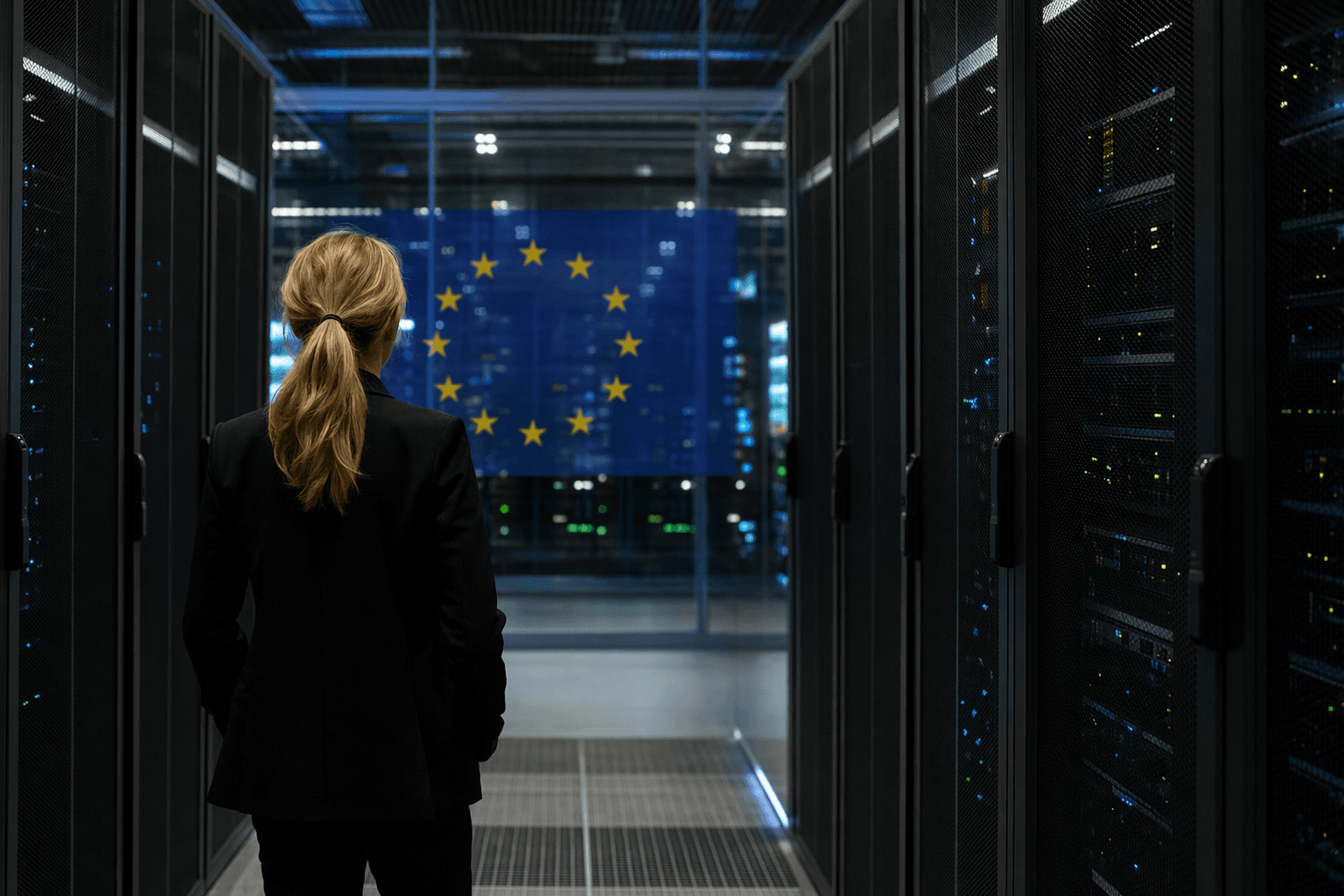
Europe’s digital sovereignty push is no longer a slogan about independence in the abstract. It is showing up in cloud contracts, software migrations, and legal risk assessments that treat dependence on American providers as a strategic vulnerability. The practical message from Brussels and several national capitals is blunt: keeping data on European soil is not the same as keeping it outside U.S. reach.
That distinction matters because Europe’s debate is no longer only about privacy. It is about who controls sensitive workloads, who sets the legal terms, and how much leverage an American vendor can carry into a European public-sector system. In that sense, the shift is less a tech preference than a governance decision, one that ties procurement to questions of sovereignty, security, and political resilience.
Why the CLOUD Act changed the calculus
The CLOUD Act sits at the center of Europe’s unease. Enacted by the U.S. Congress on March 23, 2018, the law allows U.S. authorities to seek data from U.S.-based providers even when that data is stored outside the United States. For European officials, that means a server rack in Frankfurt, Paris, or Amsterdam does not automatically shield public data from American legal process if the provider remains under U.S. jurisdiction.
The U.S. Department of Justice says the law was designed to speed access to electronic information for investigations involving terrorism, violent crime, child exploitation, and cybercrime. That framing helps explain why Washington treats the statute as an investigative tool. In Europe, however, the same law has become a symbol of extra-European reach, and a central reason governments are rethinking their dependence on American cloud and software companies.
France shows both the ambition and the contradictions
France captures the tension inside Europe’s sovereignty drive. The French government has taken steps to reduce reliance on Windows, signaling a broader desire to diversify away from U.S. software control. Yet the country has not broken cleanly with American technology, and in some sensitive areas it has doubled down on it.
Reporting says France’s domestic intelligence agency, the DGSI, renewed its contract with Palantir for three more years in December 2025. The agency has relied on Palantir’s Gotham software since 2015, after the Charlie Hebdo attacks, using it to centralize and process large volumes of information. That long-running relationship shows how security imperatives can override sovereignty goals when governments are dealing with intelligence, counterterrorism, and data integration at scale.
At the same time, France’s Health Data Hub is being moved from Microsoft Azure to Scaleway, a French cloud provider. The Health Data Hub has been a high-profile sovereignty dispute for years, and its migration is a clear sign that Paris wants highly sensitive health and public-sector data under European legal control. The split-screen result is telling: one part of the state is moving away from U.S. cloud dependence, while another continues to depend on an American analytics platform for core security work.
Brussels is turning sovereignty into purchasing power
The European Commission is also turning the concept into hard procurement. In April 2026, it announced a Sovereign Cloud call for tender worth up to €180 million over six years for EU institutions, bodies, offices, and agencies. The Commission said four providers were selected: Post Telecom, STACKIT, Scaleway, and a Proximus-led consortium that includes Thales and Google Cloud.
That mix matters because it shows what sovereignty currently looks like in practice. Europe is not building a sealed-off digital ecosystem that excludes every U.S. company. Instead, it is trying to create more room for domestic and regional providers in sensitive areas, while still using some U.S. technology inside broader consortiums and supply chains. The procurement model gives the Commission leverage over where the most sensitive data lives, who operates it, and which legal regime is most directly in play.
This is why the Commission has increasingly described sovereignty in terms of strategic procurement and control over sensitive workloads. Public bodies are not just buying infrastructure. They are deciding where legal exposure begins, where operational control sits, and how much strategic dependence they are willing to tolerate in sectors that matter most.
The real target is strategic vulnerability, not instant decoupling
The larger European goal is not to cut off American tech overnight. It is to reduce strategic vulnerability in health data, intelligence, public administration, and critical infrastructure. That is a narrower but more durable ambition, and it reflects the reality that Europe still depends on U.S. hardware, software ecosystems, and security tools in many layers of its stack.
Geopolitical unease, privacy concerns, and worries about U.S. political volatility are pushing the shift forward. European officials are calculating that data dependence can become a policy liability when legal rules, export controls, procurement preferences, or political priorities change quickly in Washington. Even when American firms remain embedded in European systems, their role is now being scrutinized through a sovereignty lens rather than a purely commercial one.
What this means for American tech firms and transatlantic ties
For American tech firms, the European turn is a warning that market share alone is no longer enough. Firms that once sold cloud, analytics, and enterprise software as neutral infrastructure now face a more political buying environment, especially in sectors that handle citizen records, intelligence data, or government operations. European clients are asking not only what a product does, but which legal system can reach it and how much control remains local.
For transatlantic relations, the issue is more delicate. Europe is not rejecting the United States as a security partner, and it is not trying to dismantle the transatlantic digital economy. But the spread of sovereign procurement shows that allies increasingly see digital dependence as a geopolitical risk, not just a business choice. That shift will shape future contracts, legal disputes, and diplomatic expectations long after the current wave of cloud tenders is signed.
This article was produced by Prism’s automated news system from verified source data, official records, and press releases, then run through automated quality and moderation checks before publishing. The system is built and supervised by the people who set the standards it runs under. Read our full AI policy.
Did this article answer your question?