Europe's First Hybrid Digital Automatic Coupler Locomotive Test Run Completed
A German regional railway completed Europe's first commercial Hybrid-DAC locomotive test, bridging century-old hook-and-buffer couplings with digital freight controls in a single connector.
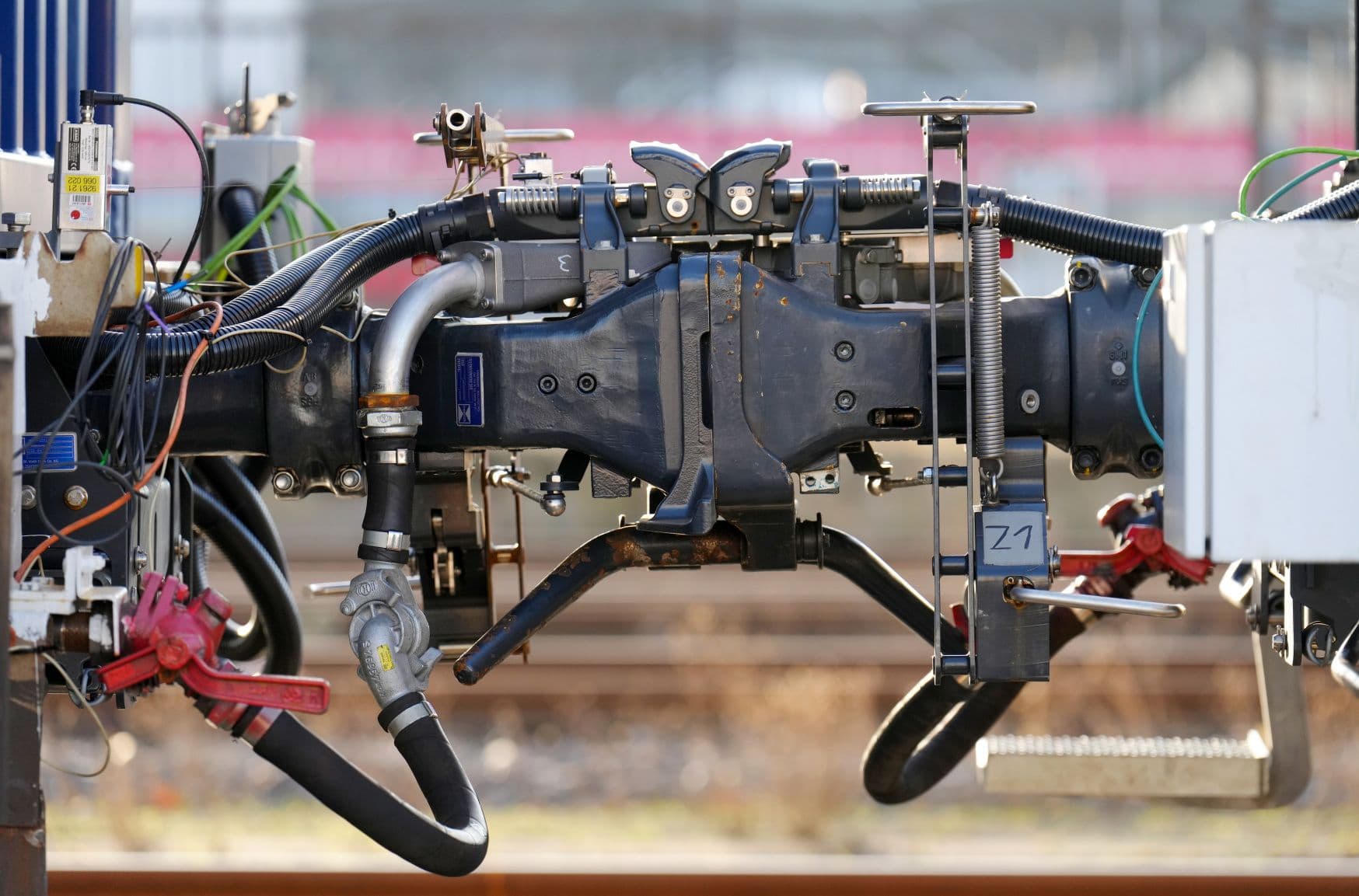
A locomotive belonging to Westfälische Landes-Eisenbahn hauled the first commercially operated train in Europe fitted with a Hybrid Digital Automatic Coupler on March 30, signaling a breakthrough for a continent whose freight network has long been divided between modern digitally enabled rolling stock and tens of thousands of wagons still running on 19th-century hook-and-buffer technology.
The test run, carried out under the DAC4EU programme, used a Voith CargoFlex hybrid coupler installed on a WLE locomotive. The device pairs a traditional mechanical coupling head with an integrated digital interface, allowing the locomotive to exchange brake commands and telematics data with retrofitted wagons that would otherwise be invisible to digital train management systems. Crucially, the CargoFlex head can be repositioned between automatic and manual coupling modes, preserving interoperability with the conventional fleet while enabling end-to-end data signaling along the train consist.
WLE operates roughly 120 kilometers of its own rail network in Germany and moves approximately 1.4 million tons of freight annually, most of it limestone and cement. That operational profile, short hauls carrying bulk industrial cargo, made it a practical test environment for a technology that must prove itself under real commercial loading conditions rather than controlled laboratory settings. The operator had already begun running the first pairs of DAC-equipped wagons in commercial service earlier this year before the Hybrid-DAC locomotive milestone was reached.
The core engineering challenge the Hybrid-DAC addresses is interoperability across a heterogeneous fleet. A fully automatic DAC-to-DAC connection delivers power, data and braking signals across the entire train in a single automated coupling event. The Hybrid variant extends those capabilities to legacy wagons whose owners face significant capital costs to replace conventional couplers outright. By acting as a bridge at the locomotive end, it allows mixed-mode train formations to participate in digitally managed operations covering brake propagation, asset tracking and remote diagnostics without requiring simultaneous fleet-wide replacement.
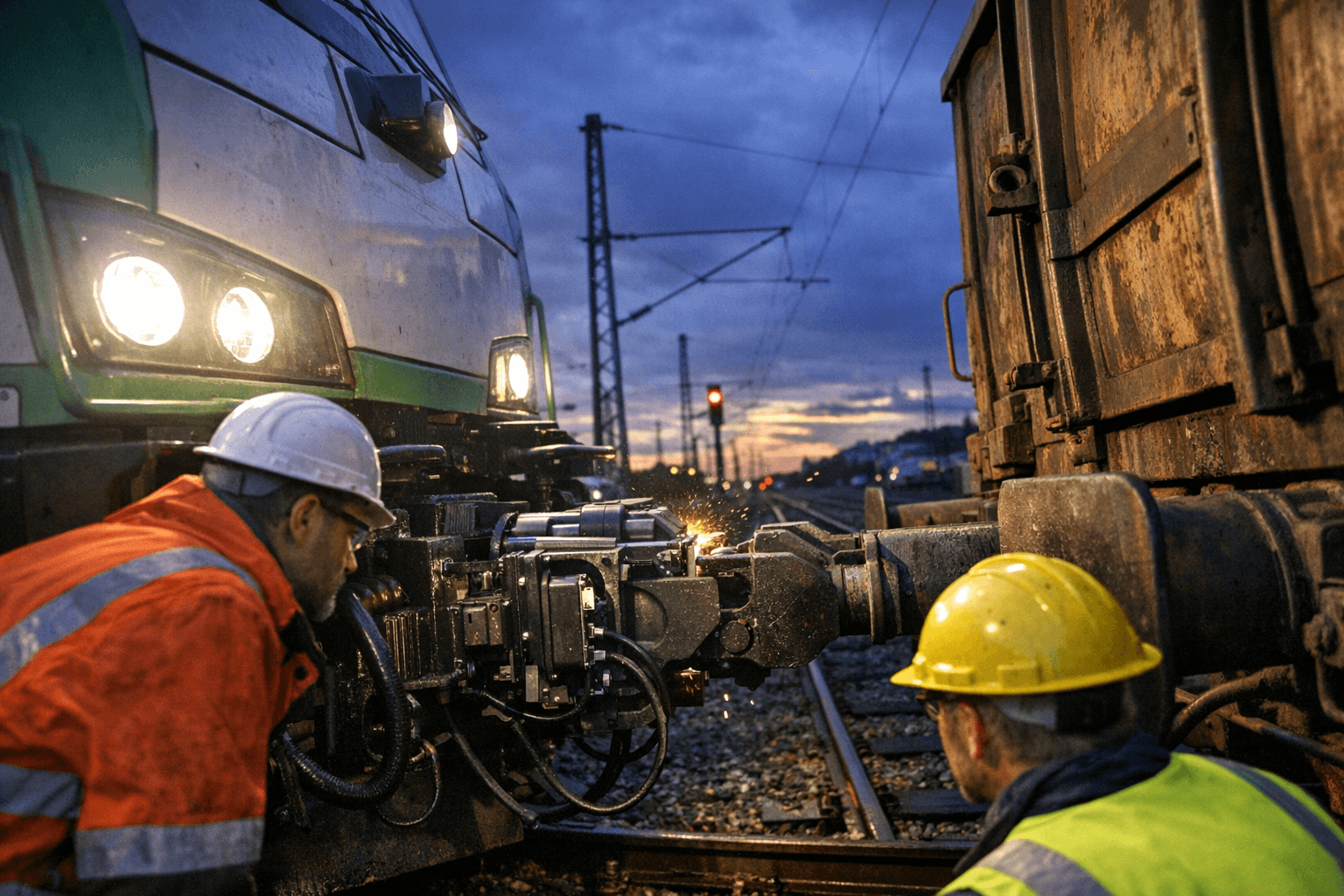
The DAC4EU consortium, led by DB and backed by ÖBB Rail Cargo Group, DB Cargo and SBB Cargo alongside wagon keepers including Ermewa, GATX Rail Europe and VTG, was established with German federal transport ministry funding to write specifications, run pilot deployments and build the evidence base needed for regulatory approval across European national safety regimes. The WLE milestone represents the programme's first validation of the Hybrid concept under commercial operating conditions, a prerequisite before expanded field trials and formal engagement with national safety authorities can proceed.
For policymakers managing a rail freight system that spans dozens of national borders and hundreds of wagon owners, the practical implication is a modernization pathway that does not depend on forcing immediate wholesale replacement of the existing fleet. Shippers moving goods across mixed-heritage supply chains stand to benefit from finer-grained operational control, more reliable scheduling and fewer shunting disruptions as digital capabilities extend into previously analog parts of the network.
This article was produced by Prism’s automated news system from verified source data, official records, and press releases, then run through automated quality and moderation checks before publishing. The system is built and supervised by the people who set the standards it runs under. Read our full AI policy.
Did this article answer your question?