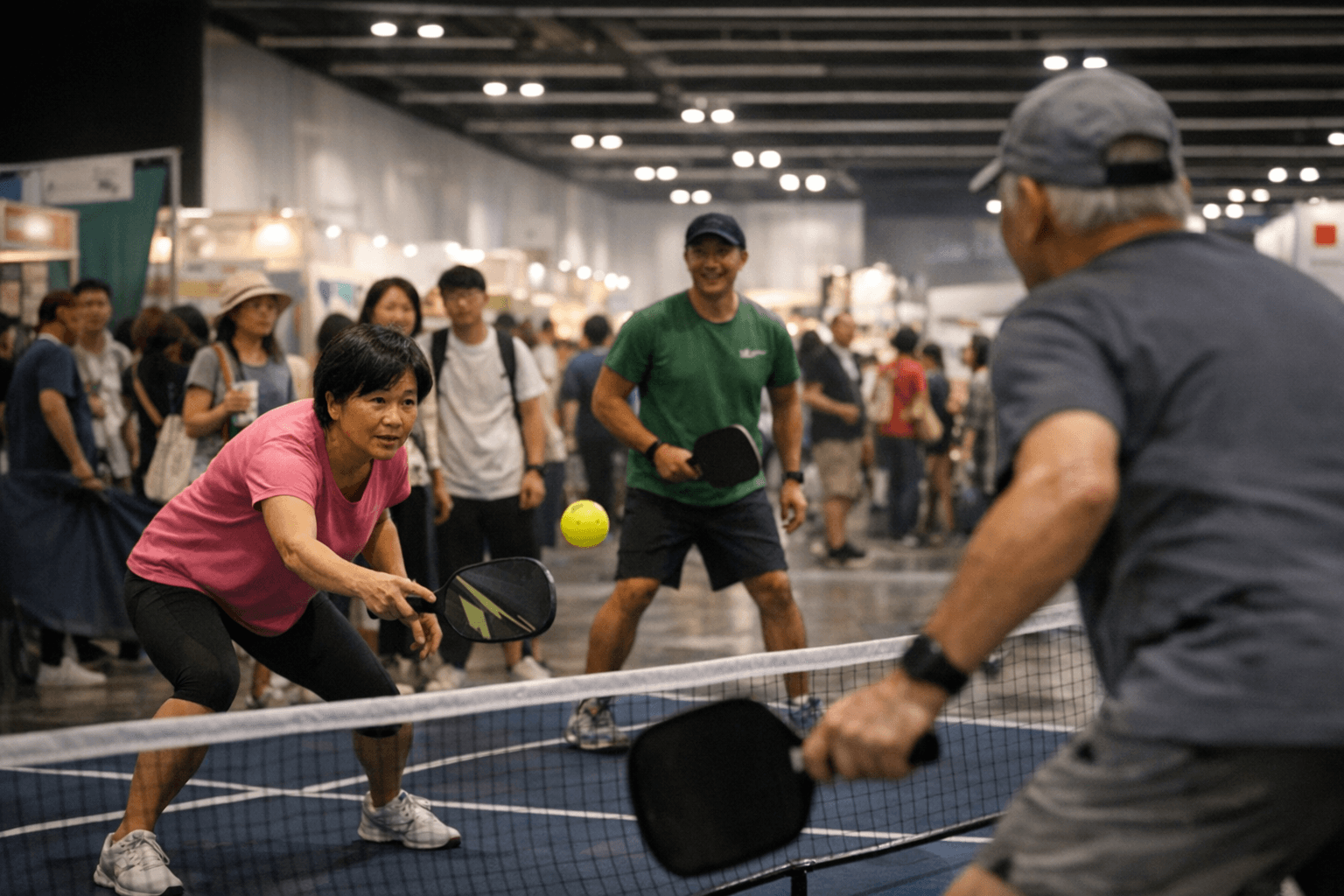
Checklist for Launching and Scaling Pickleball in Asia
Asia offers the biggest opportunity for pickleball growth; this checklist shows city managers and clubs how to launch and scale programs that build players and revenue.
Asia remains the highest-opportunity region for pickleball growth because of population scale and strong grassroots interest. For city sports managers, club operators and association staff the practical steps are straightforward: audit existing courts, prioritise community hubs, create clear membership pathways, and tie events to credible ranking systems. Those moves shorten time-to-play, spread cost, and turn casual foot traffic into sustained participation.
Begin with facility and court strategy. Audit multi-use tennis, basketball and futsal courts for dual-use conversion; retrofits typically cost far less than building dedicated courts and get players on court sooner. Aim for community hubs of four to eight courts, and plan temporary courts on stadium floors or large indoor halls for high-volume events. Provide a mix of indoor and covered-outdoor courts to manage tropical weather and air-quality concerns and to protect programming reliability.
Membership models should balance accessibility with coach-led revenue. Keep an affordable per-hour public booking rate, reserve low-cost non-peak slots, and run a separate lane of coached, paid programming. Offer family and senior bundles to reflect pickleball’s multi-generational draw and to increase retention across age groups.
Player development and officiating are core to quality growth. Start with weekly beginner clinics, progress to DUPR or local ranking events, and build junior tracks for U12, U14 and U16 talent identification. Invest early in referee and coach education so tournaments run smoothly and attract competitive fields. A credible officiating base accelerates sanctioning and sponsorship interest.
Community relations matter in dense Asian cities. Trial quieter foam or low-noise balls on residential or rooftop courts, set fixed hours, and publish a code of conduct to reduce neighbour complaints. These small operational choices prevent conflicts that can derail expansion.

Event calendars should be staged: grassroots socials, novice tournaments, open competitions and then international invitationals. Coordinate with national federations and seek DUPR or PPA/APP sanctioning when appropriate to enhance credibility and player pathways. For equipment and supply chain resilience, partner with manufacturers or regional distributors to improve warranty support and reduce shipping times; local availability of paddles and balls speeds adoption.
Funding and sponsorships hinge on local relevance. Approach banks, insurers and lifestyle brands for community-program sponsorships, and sell corporate pickleball challenges as activations that combine wellness and branding. Measure outcomes monthly by tracking court-usage hours, new memberships and event entries, and reinvest a percentage of revenue into youth programs to sustain the pipeline.
If operators follow this checklist—auditing spaces, segmenting access, building coach and referee capacity, managing neighbours and locking in supply and sponsors—Asia can scale pickleball with both grassroots authenticity and commercial sustainability. The next phase is converting interest into structured ecosystems: more courts, reliable events, and clear pathways from first dink to ranked competitor.
Know something we missed? Have a correction or additional information?
Submit a Tip